
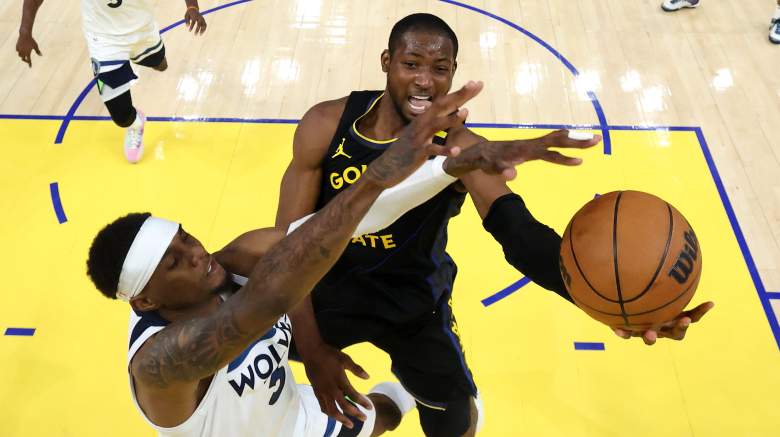
The Minnesota Timberwolves landed Jonathan Kuminga. Now comes the complicated part: actually putting him on the roster.
Minnesota agreed to a two-year, $12.4 million contract with Kuminga that includes a player option for the second season, filling the power-forward vacancy created by an offseason that sent Julius Randle and Naz Reid elsewhere. Kuminga chose Minnesota over the Los Angeles Lakers and other interested teams.
But the agreement cannot be finalized until the Timberwolves make another transaction.
That financial reality has put Josh Green, acquired alongside LaMelo Ball from Charlotte this summer, squarely in the spotlight. And one proposed solution would send him to the same Lakers team Minnesota just beat out for Kuminga.
NBA salary cap analyst Yossi Gozlan of Third Apron floated a possible deal in which Minnesota would trade Green to Los Angeles for Dalton Knecht and Jaden Hardy.
For the Wolves, the appeal is less about Green’s ability than the math required to finish their offseason.
Josh Green Emerges as Trade Candidate After Jonathan Kuminga Move
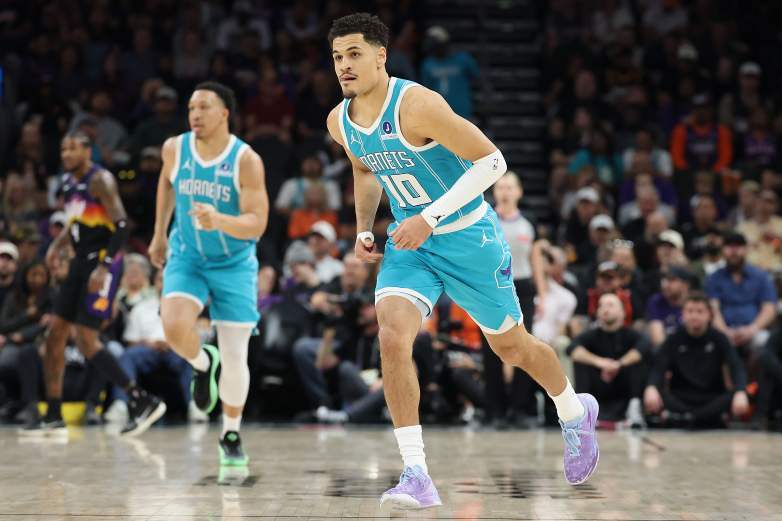
Minnesota is hard-capped at the second apron after aggregating salaries in its blockbuster trade for Ball. The Timberwolves have agreed to use the $6.1 million taxpayer midlevel exception on Kuminga, but they do not currently have sufficient room beneath that hard cap to complete the transaction while satisfying NBA roster requirements.
Green’s $14.7 million expiring salary provides the most obvious pressure valve.
Gozlan wrote that Minnesota could trade Green while taking back at least one player as long as it reduces payroll by at least $2.1 million. Alternatively, moving Green without taking salary back would need to generate at least $4.5 million in savings to accommodate Kuminga and another minimum signing.
The Lakers concept accomplishes the first objective.
Sending Green to Los Angeles for Knecht and Hardy would create the necessary apron room while giving Minnesota two potential rotation pieces. It would also help the Lakers reduce their roster from 16 standard contracts to 15 while keeping Los Angeles beneath its first-apron hard cap, according to Gozlan.
For Minnesota, adding two players rather than simply dumping Green could be particularly useful with Donte DiVincenzo expected to miss the season.
Green’s uncertain future isn’t new. Even before the Kuminga agreement, the Minnesota Star Tribune identified his expiring contract as one the Wolves could use to reshape their frontcourt following the Ball trade.
Kuminga has merely accelerated the decision.
Minnesota Faces Saturday Deadline on Green Decision
There is another reason Minnesota might need to move quickly.
Saturday is the NBA’s deadline for teams to waive a player and stretch his 2026-27 guaranteed salary. If the Wolves cannot find an acceptable Green trade, Gozlan identified waiving and stretching him as an alternative.
Doing so would spread Green’s $14.7 million salary into approximately $4.9 million cap hits over the next three seasons. That would create the immediate room necessary for Kuminga, but saddling the Wolves with three years of dead money would be a costly solution to a short-term problem.
A trade is therefore the cleaner path.
Minnesota has already paid heavily in draft capital to reshape its roster around Anthony Edwards, most notably in the Ball deal. That limits its ability to attach picks simply to convince another team to absorb Green.
Knecht and Hardy would at least return young players who could compete for minutes.
The irony is hard to miss. The Lakers tried to land Kuminga before he chose Minnesota. Now Los Angeles could potentially help the Timberwolves complete the very signing it lost.
For the Wolves, however, sentiment won’t matter nearly as much as arithmetic.
They got Kuminga to say yes. Their next move has to make the numbers say yes, too.
Timberwolves Could Make 2-for-1 Trade to Complete Jonathan Kuminga Signing