
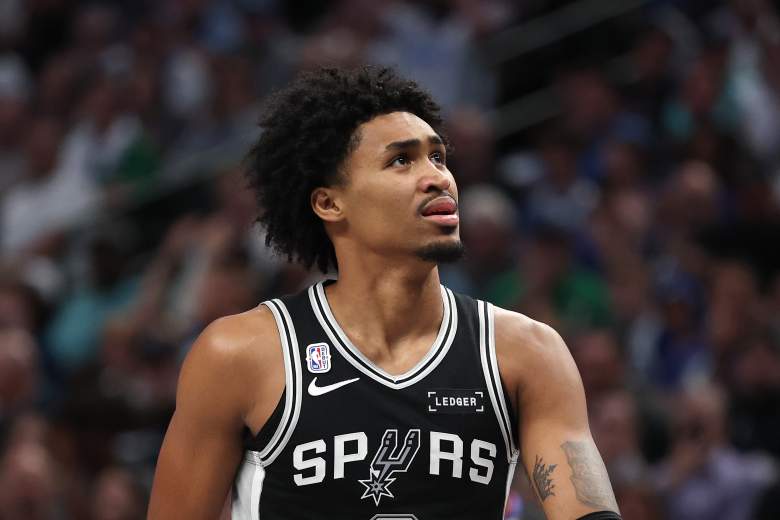
The San Antonio Spurs already had a ball-handling problem against the Oklahoma City Thunder. Dylan Harper’s injury made it a lot harder to solve.
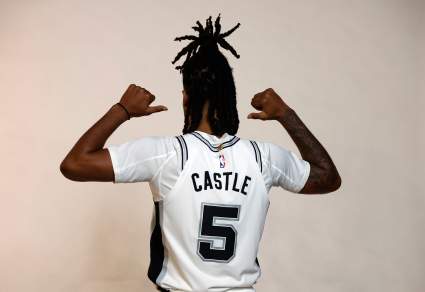
Harper left Game 2 of the Western Conference Finals with what the Spurs announced as a right hamstring injury and did not return. That forced even more responsibility onto Stephon Castle, who was already carrying a much heavier creation burden with De’Aaron Fox sidelined by a right ankle sprain. The Spurs lost 122-113.
The result has been one of the most concerning trends of San Antonio’s postseason run: turnovers.
The Athletic’s Jared Weiss posted on X that the Spurs have had three 20-turnover games since mid-November, with two of them coming in the first 48 hours of the Thunder series. Weiss also noted that Castle had 20 turnovers through the first two games.
That number is jarring, but the context matters. Castle is not simply making careless mistakes in a normal role. The Spurs are asking him to initiate offense, beat elite pressure, create late-clock shots and help stabilize lineups that were built to look different when Fox and Harper were available.
Against Oklahoma City, that is a brutal assignment.

Dylan Harper Left With a Right Hamstring Injury, and Stephon Castle Absorbed Much of the Responsibilities
Harper was starting because Fox was unavailable. Then Harper went down, leaving the Spurs without two of their most important guards in the middle of a conference finals game.
That is where Castle’s turnover issue becomes more complicated than a single-player critique.
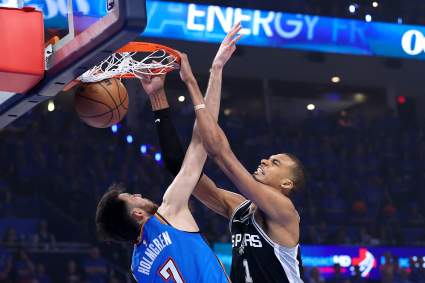
The Thunder are designed to punish young ball-handlers. They pressure the ball, crowd passing lanes and make routine entries feel rushed. The Express-News noted during Game 2 that the Thunder “force turnovers better than anybody,” and San Antonio had already committed 21 turnovers in Game 1 before turning it over 13 times in the first half of Game 2.
Castle had 17 points and 11 assists in Game 1, but he also committed 11 turnovers. NBA.com wrote before Game 2 that cutting those turnovers down would “go a long way” for San Antonio.
Instead, the issue followed the Spurs into Game 2.
That does not erase what Castle gives San Antonio. His physicality, defensive versatility and downhill pressure are central to why the Spurs can survive stretches without clean guard play. But playoff possessions shrink fast. Against a team like Oklahoma City, every loose pass becomes transition pressure, every live-ball turnover becomes a runout, and every empty possession puts more strain on Victor Wembanyama to clean up problems at both ends.
The Spurs can live with some mistakes from a young guard in a bigger-than-expected role. They cannot live with 20 turnovers from Castle through two games if Fox and Harper remain limited or unavailable.
The Spurs Were Already Reeling at the Guard Position Thanks to an Injury to De’Aaron Fox
Fox’s absence is the root of the problem.
Fox was a late scratch from Game 1 because of right ankle soreness, an injury that initially occurred during the previous series against the Minnesota Timberwolves. Spurs coach Mitch Johnson said before Game 1 that the issue was likely to linger as long as San Antonio’s postseason continued.
Fox then went through pregame warmups before Game 2 but was ruled out because of a right ankle sprain, according to the Express-News.
Without Fox, Harper moved into the starting lineup and gave the Spurs a major lift. NBA.com noted that Harper had 24 points, 11 rebounds, six assists and seven steals in Game 1 while replacing Fox.
That mattered because Harper’s rim pressure gave the Spurs another way to bend Oklahoma City’s defense. When Harper exited Game 2, San Antonio lost not only a scorer but also one of its few guards capable of getting downhill without needing a screen to create an advantage.
That left Castle in a tough spot: do more, against more pressure, with fewer release valves.
On Thursday in Game 2, Castle’s once again could not protect the ball against an elite Thunder defense.
With uncertainty around Harper and Fox going forward, all eyes will be on Castle’s ability to handle the ball.

Dylan Harper’s Injury Leads to Troubling San Antonio Spurs Trend