
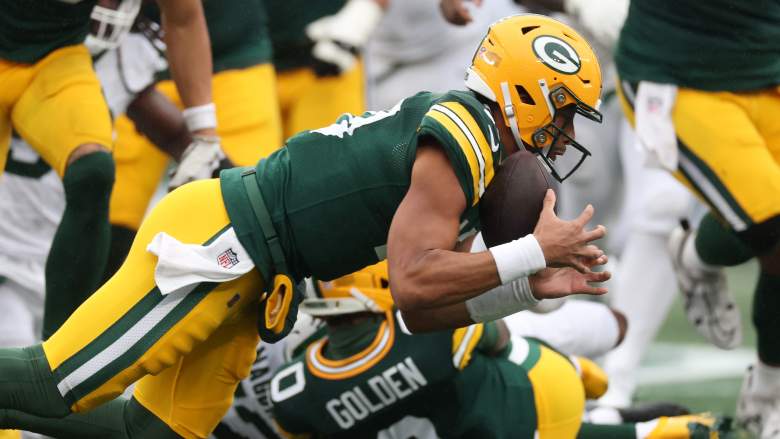
The Green Bay Packers escaped New Jersey with a win.
Their offensive line didn’t escape the scrutiny that followed.
Two numbers released Monday painted a grim picture of the protection in front of Jordan Love. Analytics guru Ryan Paganetti ranked Green Bay last in the NFL with an 18% pass block win rate through Week 2.

Raiders: 63% 👀 Browns: 61% Falcons: 59% Eagles: 58% Bills: 58% Lions: 58% Chiefs: 57% Commanders: 56% Patriots: 55% Cowboys: 54% 49ers: 53% Steelers: 52% Colts: 52% Texans: 51% Vikings: 51% Giants: 51% Bears: 51% Broncos:
RotoWire’s Ian Hartitz then noted that the Packers’ average time to pressure allowed was 2.36 seconds, also 32nd in the league.

2023: 2.64 seconds (5th) 2024: 2.63 (5th) 2025: 2.55 (21st) … 2026: 2.36 (32nd)
The 18% mark leaves the Packers four percentage points behind the 31st-ranked Arizona Cardinals and 17 points behind the Baltimore Ravens in 30th. It’s rare to see such separation after only two games, regardless of opponent or sample size.
The two figures reinforce each other. ESPN defines pass block win rate as the percentage of blocks sustained for at least 2.5 seconds. Green Bay’s average pressure is coming before that threshold.
It’s a dangerous world to live in for a team whose hopes are tethered to Love.
The Packers rallied from a 10-point fourth-quarter deficit to beat the New York Jets 20-17 in overtime Sunday, but Love finished with 145 passing yards. Green Bay managed 199 total yards and converted one of nine third downs.
Packers’ Protection Problem Goes Past Sack Total
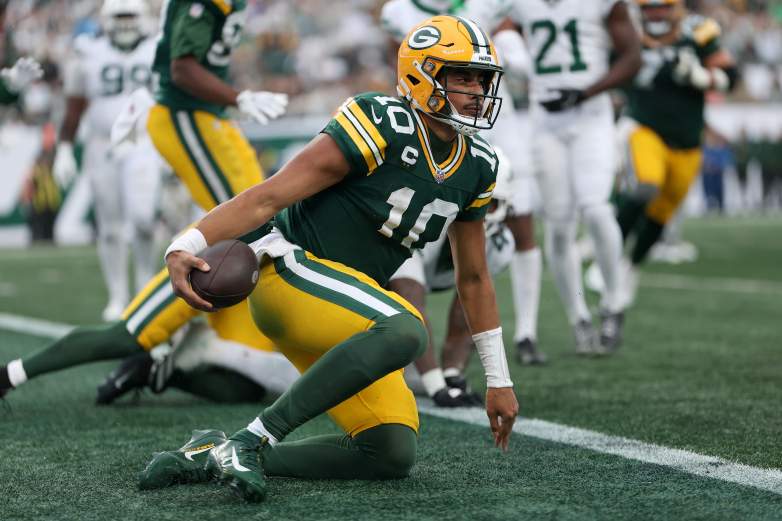
Love’s ability to avoid sacks can soften the appearance of a breakdown. Pressure still influences his feet, timing and options, even when he gets rid of the football.
That distinction became obvious during Green Bay’s 39-22 season-opening loss to the Minnesota Vikings. Love was officially hit 15 times and sacked four times. Offensive coordinator Adam Stenavich counted 18 hits, while Matt LaFleur called some of the protection failures “busts that absolutely should not and cannot happen.”
Green Bay adjusted against New York, leaning on quicker throws and moving pockets. Love absorbed one sack, although the offense scrambled to stay on schedule. He needed a late defensive stand, a 63-yard punt return and three double-digit gains in overtime to pull out the victory.
The time-to-pressure trend makes the opening fortnight harder to dismiss as one bad afternoon against an hostile Vikings defense. Green Bay ranked fifth in that category in 2023 at 2.64 seconds and fifth again in 2024 at 2.63. The Packers slipped to 21st at 2.55 seconds last season before falling to 2.36 through two games in 2026.
Injuries Give Packers a Short Time to Find Answers
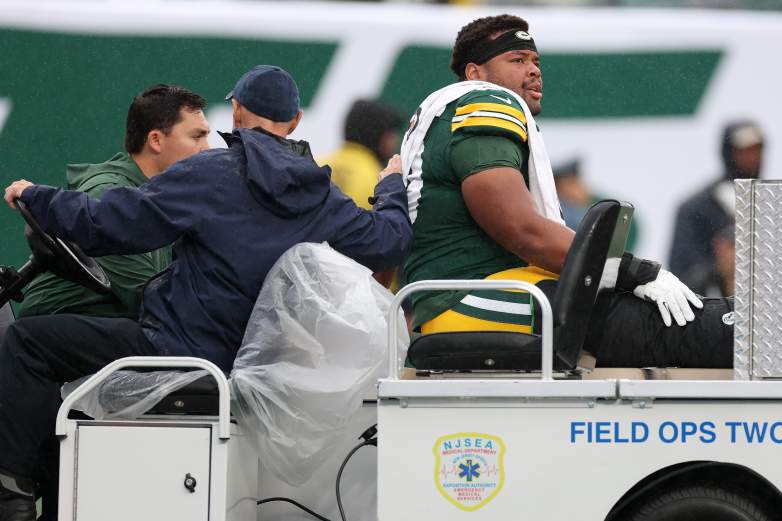
The situation grew more complicated during the Jets game.
Starting right tackle Zach Bako-Bewele injured his knee on Green Bay’s opening series. LaFleur said afterward that the injury didn’t look good and Bako-Bewele “could be out for a long time.”
Starting left guard Aaron Banks later exited with a toe injury. His replacement, Donovan Jennings, then hurt his hand, forcing rookie Jager Burton into the lineup. Rookie Anthony Belton replaced Bako-Bewele.
Losing Bako-Bewele would remove the group’s steadiest piece. He started 51 games over his first four seasons and helped Green Bay rank second in sacks allowed and third in sack percentage from 2023 through 2025, per his Packers biography.
The Packers listed Bako-Bewele, Banks and Jennings as estimated nonparticipants on Monday’s injury report.
With no full practice and a Thursday night home opener against the Atlanta Falcons looming, the coaching staff has not much of a shot to create cohesion.
Love has shown he can rescue an bumpy afternoon.
But Green Bay can’t make survival his weekly assignment.
Packers’ Jordan Love Faces Alarming NFL-Worst Problem After OT Escape