
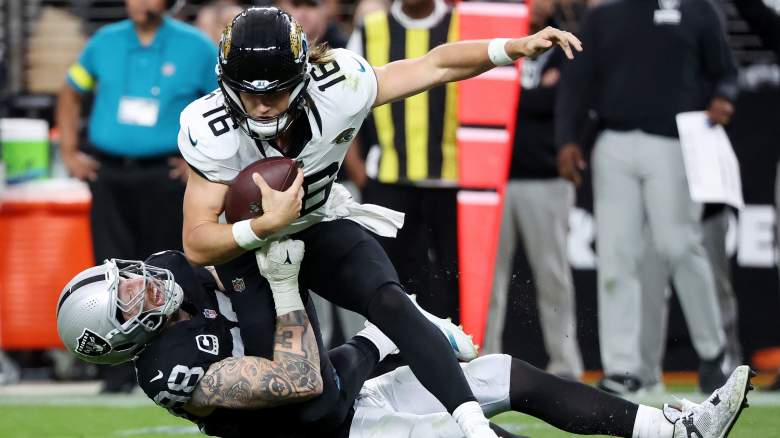
The Jacksonville Jaguars spent much of last season proving their offense could produce explosive plays.
Now comes the less complicated part: catching the football.
Jacksonville’s receivers dropped 40 of 417 catchable targets in 2025, producing an NFL-high 9.6% drop rate, per Pro Football Focus. It was the highest rate by an NFL offense since 2021 and repeatedly erased opportunities for a passing attack that otherwise showed significant progress.
The Jaguars still finished with 32 receiving touchdowns, tied for seventh in the league. Their pass catchers averaged 11.7 yards per reception and made 57 contested catches, with both figures ranking inside the top 10.
Those numbers offer what’s needed entering 2026.
Jacksonville does not need to rebuild its receiving corps to help Trevor Lawrence take another step. It’s much simpler than that, as the players already in place need to finish more of the opportunities he creates.
Jaguars Drops Wasted Trevor Lawrence’s Progress
Lawrence earned the first PFF passing grade above 80.0 of his career during his opening season in Liam Coen’s offense.
The system asked him to show greater patience in the pocket.
After ranking third-fastest in average time to throw across the 2023 and 2024 seasons, he fell to 21st in 2025 as Jacksonville incorporated more longer-developing concepts.
When those plays broke down, Lawrence became more dangerous as a runner.
He established career highs with 48 scrambles, 417 rushing yards, 16 explosive runs and 13 missed tackles forced. He also led NFL quarterbacks with four touchdowns on scrambles, according to PFF’s analysis.
The quarterback continued attacking tight windows even as the drops accumulated.
Jacksonville had a contested target on 21.4% of its passes, the second-highest rate by any team over the previous five seasons.
That aggressiveness increased after the Week 8 bye, when the Jaguars’ contested-target rate rose from 19% to 23.4%.
The problem extended throughout the offense. Twelve Jacksonville players dropped at least one pass, while Brian Thomas Jr. led the team with eight.
That made the problem difficult to isolate, giving Jacksonville reason to believe the figure can improve without a dramatic personnel change.
Parker Washington Gives Jaguars Reason for Confidence
Washington provided the strongest evidence that Jacksonville already has an answer within its receiving room.
After the bye, Washington caught 15 of his 20 contested targets. He finished the year as Jacksonville’s leading receiver with 58 catches for 847 yards and five touchdowns.
His emergence helped stabilize a group that also returns Thomas, Jakobi Meyers and Brenton Strange.
Thomas still produced 707 yards despite the drops, while Meyers added 483 yards and three touchdowns in nine games after joining Jacksonville. Strange caught 46 passes for 540 yards and three scores.
Travis Hunter also remains available for selected offensive packages while taking on a larger defensive role. Jacksonville’s media panel expects him to contribute in third-down and three-receiver situations, giving Coen another explosive option without requiring Hunter to carry the passing game.
Drops can fluctuate sharply between seasons, making some natural improvement likely.
The Jaguars should still treat the issue as one of their defining training camp priorities.
Lawrence already showed he can operate Coen’s offense and create when the original play breaks down. A few more completed catches could be the difference between another productive season and an offense capable of becoming one of the AFC’s best.
Jacksonville Jaguars’ Biggest Offensive Problem Threatens Trevor Lawrence