
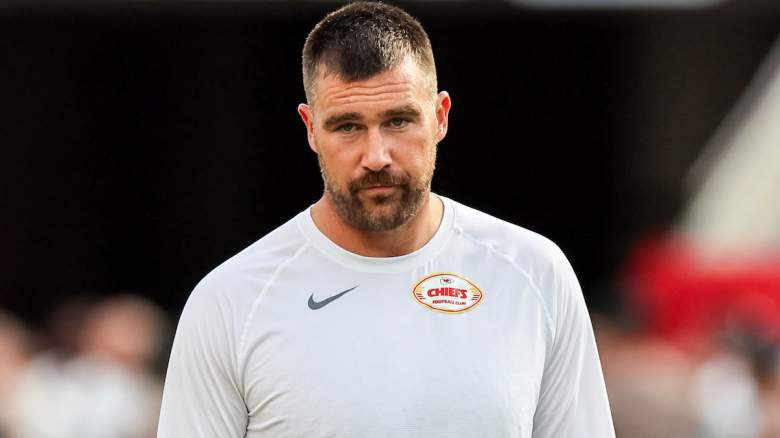
Travis Kelce turned up in federal court records Tuesday, named as a victim in a $35 million Ponzi scheme just as its architect was sentenced to more than a decade in prison.
U.S. District Judge Zachary M. Bluestone in St. Louis handed down an 11-year prison term along with a $31.35 million restitution order for victims, according to the U.S. Attorney’s Office for the Eastern District of Missouri. Prosecutors named the Kansas City Chiefs tight end among those victims in court, offering no loss figure and no suggestion that Kelce did anything wrong.
Why Athletes Like Kelce Can be Easy Marks
Texas securities regulators yanked Swiftarc Capital’s registration on June 7, 2022, and ordered Siddharth Jawahar to cease and desist from fraud. Henderson pointed out that order sat in plain sight the entire time.
“It wasn’t sealed or confidential. It was a public enforcement order posted on a state agency website, free to anyone who typed his name into a search box,” M&A attorney Kevin Henderson wrote in a lengthy explanation of how the scheme was able to succeed for as long as it did. The scheme ran another 18 months anyway, feeding on new investor cash to pay off earlier ones, according to the federal indictment against Jawahar.
Henderson’s diagnosis for how a star athlete winds up exposed to fraud on a large scale was simple — trust.
“Affinity fraud gets otherwise smart but unsuspecting people because it comes from trusted sources,” he wrote. “A teammate, a church member, your mastermind. Somebody you trust vouches for the deal and that vouch replaces due diligence.”
Another M&A attorney, Eric Pacifici, posting under the handle SMB Attorney, laid out the entire timeline and reduced the saga to one word describing both sides of the transaction. Greed.
Jawahar admitted guilt in January 2026 on three wire fraud counts, two years after a St. Louis grand jury indictment led to his Miami arrest. Prosecutors said he later pressured a victim over an FBI interview and asked his sister to erase data from his phone remotely.
Bluestone called the losses “enormous” and repeated a victim’s own word for what Jawahar did to their trust, saying that the convicted fraudster “weaponized” it.
Kelce has not publicly addressed the case. The exact size of his exposure, and which Swiftarc vehicle carried it, remains outside the public record even after Tuesday’s sentencing closed the criminal case against Jawahar.

How Travis Kelce’s Name Surfaced in Jawahar Fraud
Kelce’s connection to Jawahar predates the sentencing by several years. A June 2021 Forbes profile of NBA guard Gary Harris listed Kelce, Dallas Mavericks guard Tim Hardaway Jr. and Detroit Pistons center Mason Plumlee as fellow investors alongside Harris in the Swiftarc Venture Labs Fund. Harris said he’d heard about the fund from Plumlee, a former Nuggets teammate, then built his own relationship with Jawahar.
That single referral is precisely what Henderson zeroed in on days after the sentencing. Swiftarc’s own fund documents capped any one holding at 12 percent of capital, Henderson wrote in a detailed thread breaking down the mechanics. Jawahar blew past that ceiling anyway, parking 54 percent of the fund in a single stock by 2015 and 99 percent of it by 2019.
That stock was Philip Morris Pakistan, a thinly traded tobacco name that Jawahar kept marking at 4,000 rupees a share on investor statements while it actually sank to 3,230 in September 2019, then 1,760 by May 2020 and 541 by May 2022, Henderson wrote. He was “reporting book value to investors as if it came from somewhere independent,” Henderson said, in comments made on his social media channel.
How Did Travis Kelce Get Caught Up in a Ponzi Scheme? Lawyers Explain