
The New England Patriots have their initial 53-man roster. Now comes the more interesting part: figuring out what it actually tells us.
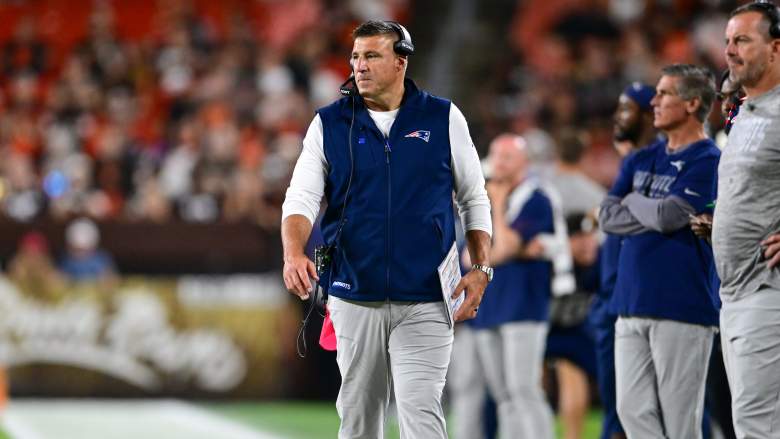
Mike Vrabel and the Patriots finalized their initial roster over the weekend after a summer of competition, injuries, trades and difficult decisions. New England kept 11 rookies, according to the team’s official analysis, while 41 of the 53 players were acquired since Vrabel took over in January 2025. That is not a roster being lightly tweaked. It is one that has been aggressively rebuilt.
And after reaching the Super Bowl last season, the standard is different now.
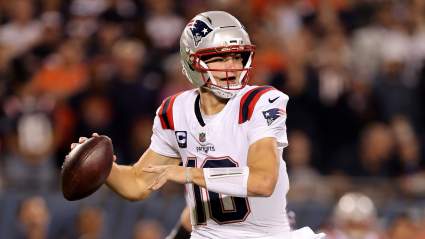
There are obvious strengths. Drake Maye has a dramatically improved collection of skill-position talent around him. The Patriots have high-end pieces throughout their defense. There is also a young core that should continue developing.
But the initial 53 also exposes some legitimate vulnerabilities, particularly at positions where one injury could test New England’s depth quickly.
Here are the five biggest takeaways from the Patriots’ initial 53-man roster.
1. Patriots Are Betting Heavily on Their Young Players
Perhaps the most revealing number on New England’s roster isn’t 53. It’s 11.
Eleven rookies survived cutdown weekend, including eight of the nine members of the Patriots’ 2026 draft class. Undrafted rookies Tanner Arkin, Channing Canada and Khalil Jacobs also earned spots.
That is a substantial amount of youth for a team coming off a Super Bowl appearance.
Some decisions were straightforward. Others weren’t.
Arkin gives New England a blocking-oriented tight end behind Hunter Henry and Eli Raridon. Canada emerged from a crowded battle for one of the final cornerback spots. Jacobs made enough of an impression at linebacker to survive a competition that included veterans.
Then there’s Behren Morton. Keeping a third quarterback is itself notable when every roster spot matters, but retaining Morton gives the Patriots control of the rookie rather than exposing him to waivers and hoping to get him onto the practice squad.
The larger point is that New England isn’t treating 2026 as a one-year push.
Vrabel and his staff are trying to win now while simultaneously developing the next layer of the roster. That’s an encouraging sign for the long-term health of the team, even if relying on so many inexperienced players carries obvious risk.
2. Harold Landry III’s Absence Leaves a Major Question on Defense
If there is one position group that should make Patriots fans uneasy entering Week 1, it’s edge rusher.
Harold Landry III will open the season on the physically unable to perform list, meaning he’ll miss at least the first four games. That leaves the Patriots leaning on a group that includes Dre’Mont Jones, Elijah Ponder, Gabe Jacas and rookie Quintayvious Hutchins.
There is upside there. There is considerably less certainty. That’s an important distinction for a team with championship expectations.
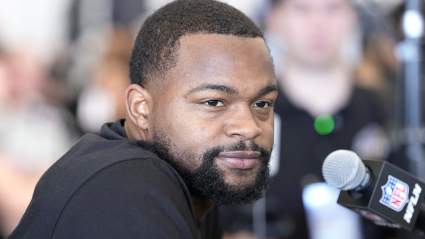
New England can feel much better about the interior of its defensive front with Christian Barmore and Milton Williams leading the way. The secondary is built around Christian Gonzalez, Carlton Davis III and Kevin Byard III.
The edge is different.
Until Landry returns, the Patriots need somebody from that group to become more than a rotational piece. If that doesn’t happen, opposing quarterbacks could have far too much time to attack an otherwise talented defense.
It’s probably the biggest gamble on the initial roster.
3. New England’s Offense Finally Has Real Depth Around Drake Maye
For years, Patriots roster conversations inevitably came back to what the offense didn’t have.
That’s no longer the case.
A.J. Brown changes the complexion of the passing game by himself, but New England didn’t stop there. Romeo Doubs joins DeMario Douglas, Mack Hollins, Kyle Williams and Efton Chism III in a receiver room that suddenly offers different skill sets instead of asking Maye to elevate an undermanned group.
The backfield has similar potential.
Rhamondre Stevenson and TreVeyon Henderson form the one-two punch, while New England’s late trade for Corey Kiner answered one of the final questions on the depth chart. The Patriots acquired Kiner from Arizona for a 2028 seventh-round pick rather than settling for one of their existing options or waiting for waiver claims.
That’s a small transaction that says something bigger.
The Patriots weren’t simply trying to fill 53 spots. When they didn’t like an answer, they went looking for another one.
Maye enters the season with legitimate receiving talent, backfield depth and multiple tight ends. For a franchise that spent years trying to manufacture offense around its quarterback, that’s a significant change.
4. Offensive Line Depth Could Become a Problem Quickly
The starting offensive line looks far more settled than it has in recent seasons.
The concern begins when you move beyond the starters.
Marcus Bryant landed on injured reserve with a designation to return after emerging as a potential swing tackle. New England subsequently acquired Walter Rouse from Minnesota, giving the Patriots another option behind starting tackles Will Campbell and Morgan Moses.
That trade wasn’t insignificant.
It was an acknowledgment that the Patriots needed another body at tackle after Bryant’s injury, particularly with young players filling prominent backup roles.
Caleb Lomu is intriguing. So is Rouse. But neither eliminates the concern.
The Patriots don’t need their reserve offensive linemen to be stars. They need them to prevent an injury from changing the entire offense. That’s particularly important with Maye now firmly established as the franchise’s most valuable asset.
New England looks better up front. Whether it is deep enough up front is a different question.
5. This Roster Was Built Like One That Expects to Win Now
This may be the biggest takeaway of all.
The Patriots are no longer assembling a roster around the idea of becoming competitive. They’re trying to win.
New England’s roster construction reflects that shift. Brown gives Maye a true No. 1 receiver. The Patriots added proven veterans to the offensive line and defense while simultaneously keeping a large rookie class. They made late trades to address depth concerns instead of simply accepting what remained on the roster.
There are risks. Edge rusher stands out. Offensive tackle depth deserves attention. Special teams ace Brenden Schooler beginning the season on the non-football injury list is another early complication.
But this roster doesn’t have to be perfect on Aug. 31.
It has to be good enough to survive the opening stretch and flexible enough for Vrabel and the front office to keep improving it.
New England is 31st in the waiver order after reaching the Super Bowl last season, making it more difficult to land coveted players through claims. The Patriots can still make trades and sign veterans who clear waivers, however, so the roster announced Sunday should be viewed as a starting point rather than a finished product.
The most encouraging part is that the questions surrounding this team have changed.
A year ago, the Patriots were still trying to determine how quickly they could become legitimate contenders.
Now they’re trying to figure out whether the roster around Maye is deep enough to finish the job. That’s a much better problem to have.
Overall Grade: B+
The Patriots deserve credit for constructing a roster with considerably more high-end talent and giving Maye an offense capable of stressing defenses in multiple ways. Keeping 11 rookies also gives New England developmental upside without sacrificing its veteran core.
The grade stops short of an A because the depth isn’t equally convincing everywhere.
Landry’s absence makes edge rusher an immediate concern, while the situation behind Campbell and Moses bears watching. Those aren’t cosmetic weaknesses. They’re positions where an injury or slow start could become consequential quickly.
Still, judged as an initial 53-man roster, New England has enough talent to contend immediately and enough young players to believe the roster can continue improving.
That’s a strong place to be heading into Week 1.
5 Biggest Takeaways From Patriots’ 53-Man Roster After Surprising Cuts