
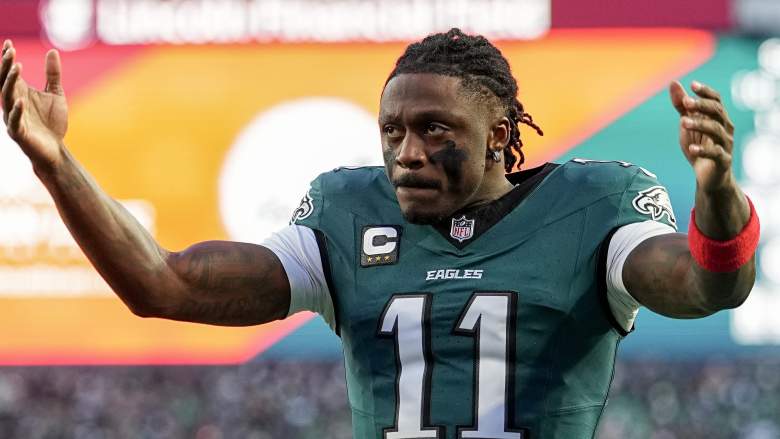
Last season, whenever A.J. Brown publicly challenged the Philadelphia Eagles offense, the easy narrative was obvious.
He was slandered as just another diva receiver complaining about targets, frustrated because the ball wasn’t coming his way enough.
It was lazy analysis then, and it looks even more misguided now.
Because if you actually listened closely to what Brown was saying throughout the season, Brown wasn’t acting selfishly at all. In many ways, he was doing something far more difficult. He was willing to risk being perceived as selfish in order to challenge problems he believed could eventually derail a championship-caliber team, like say a first round playoff exit at the hands of a wounded San Francisco 49er team at home.
Pro-phetic Football Talk
That distinction matters, and few national voices articulated it better than Mike Florio of ProFootballTalk during a revealing discussion last November on the Rich Eisen show that proved to be incredibly insightful and somewhat prophetic
“The Eagles offense continues to be one of the both most overblown and under blown stories in the NFL if that’s possible,” Florio said. “Because a lot of people are talking about it but not enough people are talking about it and none of the people are really getting down to the root cause. It isn’t just AJ Brown being a diva because he’s not.”
That line cuts directly to the heart of the entire debate.
Brown understood something many outside observers either ignored or refused to acknowledge. Winning games in the NFL can sometimes mask underlying issues, especially during the regular season. Teams convince themselves everything is fine because the record says it is. Hence the expression “winning is the ultimate deodorant.” Until suddenly it isn’t.
What Can Brown Do For You?
Florio went even further.
“He is sufficiently selfless that he is willing to come off as selfish by speaking out because we (the media and the gen pop) will react to someone like AJ Brown thinking he just wants more targets, he wants more catches, he wants more yards, he wants more touchdowns,” Florio explained. “No. He wants the offense to be better.”
That’s the key sentence.
Brown wasn’t demanding the ball simply to inflate his statistics. He was challenging stagnation. He was challenging predictability, challenging an offense that, at times, looked far less explosive than the talent on paper suggested it should have been, and clearly, his concerns proved valid.
In fairness to the emotional and lazy sports radio-brain-washed lower primates, Brown’s complaints also stemmed from him wanting to dominate the box score statistically and be recognized for his elite talent. After all, who wouldn’t?
Too often during stretches of last season, the Eagles leaned heavily on defense, field position, and situational football while the offense sputtered through long stretches of inconsistency and incompetency. Brown saw it before many wanted to admit it publicly.
“He wants the offense to be better,” Florio repeated. “His point is you can’t just say everything’s fine because we win the game. At some point the defense isn’t gonna bail us out. Special teams isn’t gonna bail us out. We need to gain yards and score points if we want to win games when they matter most.”
Misguided Leadership?
That isn’t necessarily diva behavior. You could say that’s leadership. Perhaps misguided, uncomfortable and public leadership at times, which isn’t always the best way to go, but leadership nonetheless.
Brown’s frustration stemmed from standards, not just perceived vanity, and internally, there appeared to be philosophical tension regarding how the offense should function. Florio hinted at that dynamic as well.
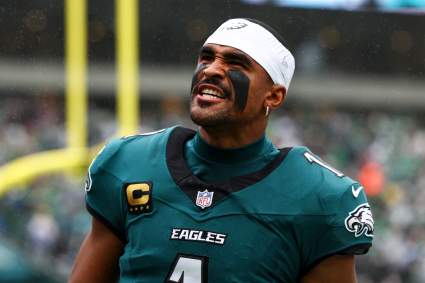
“There’s something going on between Jalen Hurts and AJ Brown,” Florio said. “You’ve got Brown saying winning isn’t enough. You got Jalen Hurts saying winning is enough, and you’ve got situations where AJ Brown is open and he’s not getting the football.”
Again, that quote matters because it highlights nuance that often gets lost in modern sports discourse. Brown was not saying wins didn’t matter. He was saying process matters too.
Championship teams can’t survive on narrow escapes forever. It’s not sustainable. Eventually, elite offenses must execute efficiently against elite competition in January. Brown understood that. He saw warning signs long before outsiders wanted to acknowledge them.
And history gave legitimacy to his concerns.
Florio referenced the collapse of the 2023 Eagles season as a cautionary example.
“Remember how it went two years ago,” Florio said. “They were 10 and 1 and the wheels came off.”
That reality lingered around the organization last season whether anyone wanted to admit it publicly or not. The Eagles knew better than anyone how dangerous it can be to ignore structural offensive issues simply because the win column looks healthy in October or November.
Brown wasn’t trying to embarrass the team. He was trying to prevent history from repeating itself. That’s a major difference.
It also takes a certain kind of personality to willingly absorb criticism for speaking honestly about uncomfortable realities. Brown knew exactly how the public would react. Star receivers who complain almost always get labeled selfish immediately. Yet he kept speaking.
Why?
Brown is Wired Differently
Because competitors wired like Brown are obsessed with maximizing potential. They see details others ignore. They feel offensive rhythm, timing, spacing, and explosiveness in real time. When something feels off, they don’t always stay quiet just because the scoreboard temporarily says everything is okay.
That mentality can occasionally create friction but it can also elevate teams.
In retrospect, Brown may deserve more credit, not less, for refusing to settle. The easy path would have been silence. Smile after wins. Avoid headlines. Keep frustrations internal and protect public perception.
Instead, Brown chose honesty and according to Florio, plenty of people around the NFL were paying attention in real time.
“There are a lot of people around the league asking that question,” Florio said regarding concerns about the offense.
That alone should tell Eagles fans something important. Brown’s critiques were never simply emotional outbursts from a receiver wanting more statistics. They reflected legitimate concerns about offensive sustainability from one of the smartest and most competitive players inside the building. Sometimes the most selfless player in the room is the one willing to risk being misunderstood in order to demand more from everyone around him.


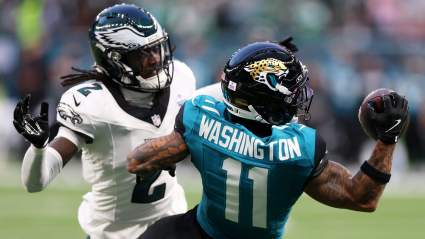

A.J. Brown Wasn’t the Eagles Problem Last Season, Lazy Analysis by Fans & Media Was