
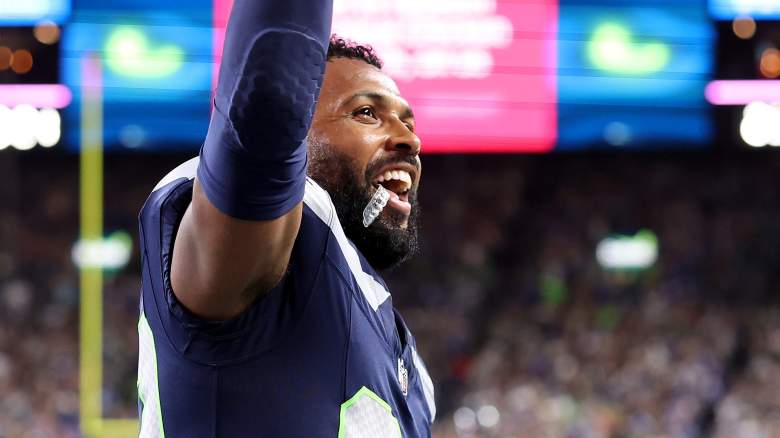
Seattle Seahawks safety Julian Love received a statistic this week that plenty of defensive backs would happily put on a résumé.
His response was considerably less enthusiastic.
Love was told he ranked sixth among NFL coverage players in yards allowed per route run, according to the metric cited by a reporter during his latest press conference. Rather than embracing the individual ranking, Love used it to explain why evaluating defensive backs — safeties in particular — can get complicated quickly.
“The competitor in me says I’m never appreciated enough,” Love said. But he added that the numbers reflect Seattle’s entire defense, pointing specifically to pressure generated by players such as Leonard Williams.
Then Love went further.
Unless the people producing those evaluations are inside the Seahawks’ meetings and know the exact coverage leverage, help responsibilities and assignments on a given play, Love argued, grading a safety cleanly can be difficult.
“Defense isn’t played in a vacuum,” Love said. “It’s an art.”
Julian Love Explains the Problem With Coverage Metrics
Love isn’t arguing that analytics are useless.
Quite the opposite.
He said analytics are important, but can become “dangerous if misapplied.” In Love’s view, one of Mike Macdonald’s strengths is understanding the story behind the data rather than treating the number as the story itself.
That distinction matters at safety.
A completed pass does not necessarily tell an outsider which defender was responsible for a receiver, where that defender was supposed to have help or what leverage the coverage required him to play.
A pressure can change the timing of a throw. A cornerback can funnel a receiver toward a safety. A safety can vacate an area because another coverage responsibility requires it.
The stat sheet sees the result.
The defense sees the assignment.
Love’s argument also becomes more interesting considering the number in question was flattering him. He wasn’t dismissing a grade because it made him look bad. He was cautioning against overvaluing one that made him look good.
That is a much harder point to dismiss.
Mike Macdonald Praised Love After Seahawks’ Week 1 Win
Love has plenty of conventional evidence working in his favor anyway.
He recorded six tackles and an interception in Seattle’s 13-10 Week 1 victory over the New England Patriots.
Macdonald’s assessment required considerably less statistical interpretation.
He said Love played a “dynamite game.”
Seattle’s defense helped rescue a game in which the Seahawks trailed 10-0 before scoring the final 13 points. The defense intercepted three passes during the comeback, while Love’s physical play early in the second half helped provide a jolt after a difficult opening half.
That performance also illustrated the larger point Love was making.
Seattle had injuries in the secondary and needed Rodney Thomas II to step into a larger role. Love said nobody inside the building “batted an eye,” describing Thomas as an experienced player whose preparation inspired confidence.
Love said the Seahawks don’t view players such as Thomas, Nehemiah Pritchett or Josh Jobe simply as backups.
They prepare them as starters.
Seahawks’ Secondary Gets Trey McBride Next
The argument won’t stay theoretical for long.
Seattle travels to face the Arizona Cardinals on September 20, giving Love and the secondary a matchup with tight end Trey McBride. Both teams enter Week 2 at 1-0.
Love called McBride one of the NFL’s best tight ends, praising his strength, route-running ability and work after the catch.
Arizona listed McBride as a non-participant in Wednesday’s practice because of a scheduled rest designation and a back issue.
If he plays, defending him will offer another useful example of Love’s point.
Someone will eventually get credited with the targets, catches and yards.
Seattle will be grading something more complicated.
Julian Love Reveals Problem With How Seahawks Defense Is Judged