
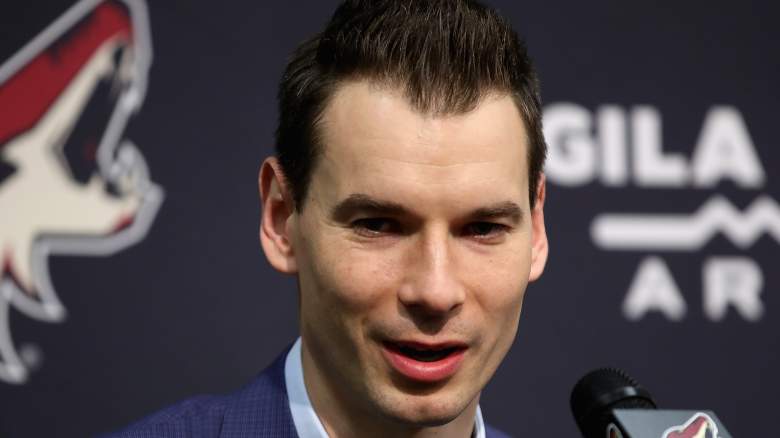
The hiring of Judd Brackett to the Toronto Maple Leafs front office was the first masterstroke by GM John Chayka. It signals that if the team can’t spend beyond the artificially imposed salary cap, it will, at least, be willing to splurge where it can.
But beyond the evident effort to modernize the front office and focus on maximizing player talent, the Maple Leafs are setting themselves up for a full-on rebuild.
The rebuild is not going to happen in 2026-27. It may not even happen the year after that. But from the way things are shaping up, the organization is setting itself up to go down that route should things go sideways in a hurry.
In the best of cases, Chayka is building a front office that can run things like the Carolina Hurricanes, Vegas Golden Knights, or Colorado Avalanche.
The Golden Knights, in particular, have a fantastic scouting staff that finds the best players to fit their system and playing style.
The Colorado Avalanche are another great example. They found a guy like Parker Kelly. Kelly should have been a fourth-line grinder who played under 10 minutes a night. Instead, the Avalanche scouts found him and turned him into a 20-goal scorer.
That’s the endgame here with Brackett and the Maple Leafs. Building a sustainable contender with very few draft picks, relying on savvy trades and free-agent signings.
But what if this iteration goes nowhere? That’s where Brackett becomes even more valuable.
Lining Things Up for a Maple Leafs Rebuild
Now, let’s assume for a minute that, despite the organization’s best efforts at this point, the team continues to slide. With two years left on Auston Matthews’ current contract, the Maple Leafs could be looking at a rebuild by the 2028-29 season.
The teardown will likely happen during the 2027-28 season, with Brackett leading the way at the scouting level. The focus will be on finding players across the board who could offer value with the capital the team has.
The point of such a rebuild is to accelerate the turnaround. Instead of wasting two or three seasons while the team accumulates draft picks and prospects and then tries to use those picks on impact players, the onus will be on maximizing what’s already there.
By the time the rebuild hits, the Maple Leafs will be ready to continue piling on the newly-acquired picks and prospects in trades and signings.
What to read next:
Which Path Seems the Likeliest?
So, which path seems the likeliest? Well, that depends on the decisions made this offseason. Chayka wants to bring in the best possible minds to the team’s front office. That aim also includes behind the bench.
From there, the Maple Leafs can maximize what they already have and add pieces that make sense at this point.
If that’s enough to get the team back into the playoffs next season, good. Otherwise, the outcome would need to undergo a thorough assessment. For instance, if the Leafs get close to the playoffs but fall short, there could be some optimism regarding the club moving forward.
If there is evidence of any more backwardation, it might very well be a signal for a rebuild. There is every indication that the organization is going for it this season. They are not going to sit on their hands and hope for the best. That’s why the path seems like the Maple Leafs will remain at least a borderline playoff team.
But it might take the Chayka regime a little longer to truly transform the team into a Stanley Cup contender.
Maple Leafs Positioning Themselves for Full-On Rebuild