

The Houston Astros may have avoided an arbitration hearing with Isaac Paredes, but the structure and timing of the deal are already fueling speculation that the agreement could be a prelude to a trade rather than a long-term commitment.
Houston and Paredes settled on a one-year, $9.35 million contract just ahead of an arbitration hearing, landing squarely between the two sides’ figures. On the surface, it looks like a routine compromise. Dig a little deeper, though, and the deal reads more like roster flexibility than stability for a club facing an infield logjam heading into 2026.
A Clean Arbitration Deal With Trade-Friendly Optics
Paredes, who turns 27 later this month, remains under team control through the 2027 season. The contract also includes a $13.35 million club option for 2027 that converts to a mutual option if he finishes in the top ten of MVP voting. Even if that option isn’t exercised, Houston still controls Paredes through arbitration next winter. From a front-office perspective, that’s a tidy, movable contract—affordable, short-term, and attractive to contenders looking for infield offense.
That’s where the intrigue begins.
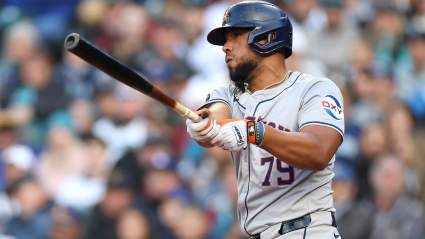
Paredes came to Houston as part of the Kyle Tucker blockbuster and produced when healthy, batting .254/.352/.458 with 20 home runs in just 438 plate appearances despite missing nearly two months with a hamstring injury. Under normal circumstances, that kind of production would cement a starting role. Instead, Paredes enters spring training as a man without a clear position.
The Astros crowd their infield with Carlos Correa entrenched at third base, Jeremy Peña at shortstop, and Jose Altuve returning to second after an underwhelming stint in left field. Despite a disappointing first year in Houston, Christian Walker remains locked in at first base with $40 million owed over the next two seasons. Yordan Alvarez will continue to soak up most of the designated hitter at-bats, with occasional time in left.
That leaves Paredes without a natural everyday home.
Infield Logjam Makes Paredes the Obvious Pressure Point
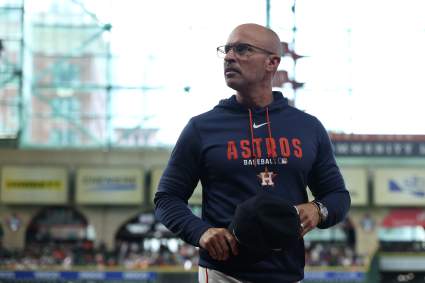
Astros general manager Dana Brown has consistently downplayed trade speculation, reiterating this week that the team still plans to keep both Walker and Paredes as part of its infield. Brown emphasized the value of depth over a 162-game season, especially with several veterans who could benefit from regular rest.
Still, arbitration settlements often reveal more than front offices let on publicly. By locking Paredes into a defined salary without the uncertainty of a hearing, the Astros have effectively clarified his market value. At $9.35 million, he’s expensive enough to matter but cheap enough to move, particularly for teams seeking power from the right side of the infield.
Unlike Walker, whose contract would require Houston to eat significant money to facilitate a deal, Paredes carries genuine surplus value. That’s why rival executives have reportedly kept a close eye on him, even as Brown maintains that no trade is imminent.
The Boston Red Sox have emerged as the most frequently mentioned suitor because they still haven’t resolved their infield situation after Alex Bregman’s departure and possess a surplus of controllable, left-handed outfield bats. While a one-for-one deal seems unlikely, the fit highlights why Paredes’ arbitration agreement matters. It makes salary matching easier and reduces procedural friction for a mid-spring or early-season trade.
For now, Houston can credibly argue that Paredes will see plenty of time as a multi-positional piece, spelling Correa, Walker, Altuve, and even Alvarez. Injuries alone could open a clear lane to everyday at-bats. But in a league where roster flexibility and financial efficiency drive decisions, this arbitration deal looks less like a vote of confidence and more like strategic positioning.
The Astros may not be shopping Isaac Paredes today. They’ve made sure, however, that if the right offer comes along, moving him will be simple.






Astros’ Infielder Arbitration Deal Fuels Trade Speculation