

The New York Yankees have spent much of the 2025 season chasing October, but this week they found themselves debating a different kind of opponent: the strike zone itself. Major League Baseball has confirmed that the ABS Challenge System will be in place for the 2026 season, and according to Randy Miller from NJ.com, the Yankees are already considering how to adapt to it.
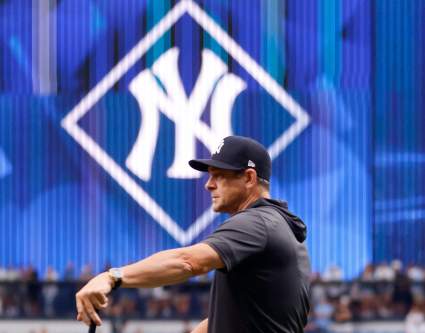
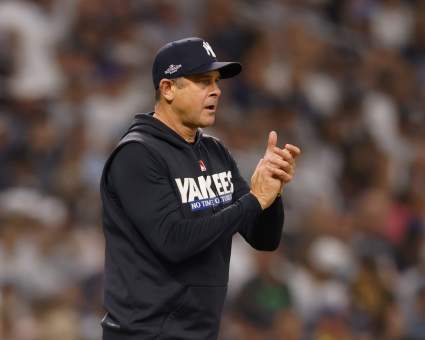
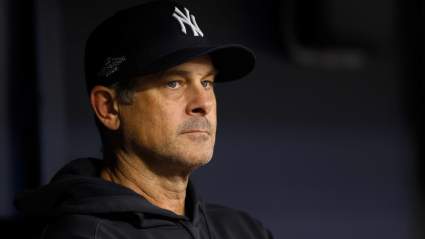
For a team that thrives on tradition, the idea of challenging balls and strikes through robot assistance feels less like a tweak and more like a reprogramming of baseball’s language. Aaron Boone admitted as much, conceding that he never wanted to see it arrive this soon. “Reading the tea leaves, it’s inevitable,” Boone said. “I’ve been not totally on board … but it’s going to be here.”
The Bronx Chess Match
What makes the Yankees’ reaction fascinating is that they aren’t treating ABS as just a rules adjustment; they’re framing it as a strategy, almost like deciding whether to bunt or hit-and-run. Boone himself suggested that New York will need to draft internal guidelines—what inning, what count, what leverage situation merits a challenge.
It turns the strike zone into a kind of chessboard. A borderline pitch in the second inning may be ignored, but with runners on base in the eighth? That becomes a pawn sacrifice worth making. Boone even hinted that New York might experiment with internal “challenge coaches,” teaching players to weigh emotion against probability in real time.
Ben Rice, the rookie catcher whose framing skills have been a talking point all year, called the system “weird” but also admitted it adds layers of cat-and-mouse. A catcher’s glove no longer fools the ump, but it might still fool the hitter into hesitating to challenge. “Guys aren’t going to challenge everything. You don’t want to be wrong,” Rice said. That’s clubhouse psychology as much as mechanics.
Winners, Losers, and Uncertainty
If Rice is cautiously curious, pitchers like Max Fried are far less convinced. “My gut feeling is it would go both ways,” Fried said, noting that he expects to lose some calls that used to break his way.
Third baseman Ryan McMahon gave perhaps the most pragmatic view: “I think around the league you’ll see more hitters for it and more pitchers against it.” That’s the simple math. But he also raised the possibility that it could stabilize umpiring itself—a safeguard for the nights when the strike zone feels more like quicksand than a rectangle.
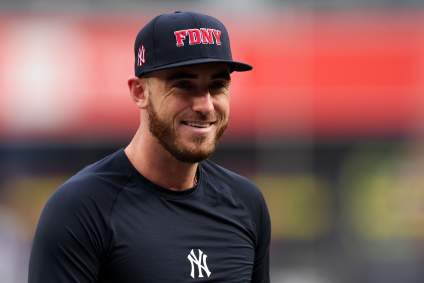
Outfielder Cody Bellinger went a step further, arguing that ABS could actually sharpen the game’s tension. With only two challenges, players won’t waste them on 1-0 counts, but on ball four or strike three? That’s where the drama spikes. Imagine a playoff crowd roaring not just at a pitch but at a team’s decision to risk its final challenge.
The Yankees are already rehearsing those scenarios in their heads. In a sport where managers talk endlessly about “controlling the controllables,” they now must prepare to contest what used to be uncontestable.
For decades, the strike zone has been baseball’s most mysterious, human, and maddening feature. Starting in 2026, it will become part of the Yankees’ playbook. Out of all the changes baseball has seen in recent years—pitch clocks, bigger bases, limited pickoffs—this one might be the most intimate. It doesn’t just change the pace of play. It changes the way players think.
And for the Yankees, who have built their identity on navigating October’s finest margins, that may end up being the ultimate test of adaptation.

Yankees See Robot Umps as Both Threat and Opportunity