
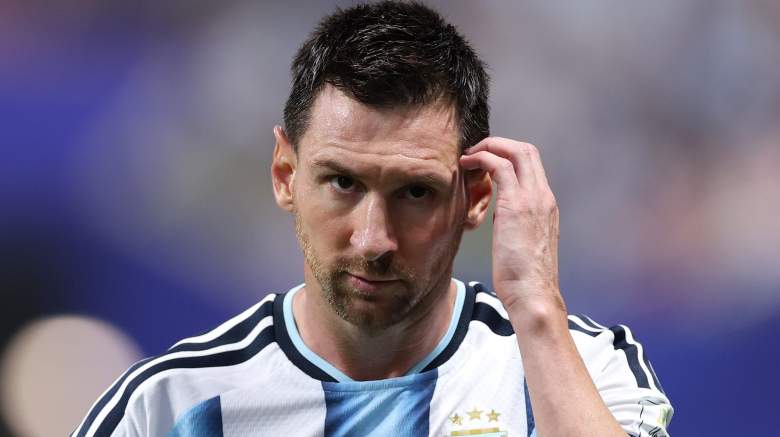
The thrilling 3-2 comeback win Argentina pulled off over Egypt at the FIFA World Cup 2026 Round of 16 will go down as one of the most memorable in football history.
Unfortunately, the victory won’t necessarily go down in the books for the most positive reasons. The match, predominantly spurred by comments from Egyptian players and coaching staff, has fueled online conspiracy theories.
Even New York City Mayor Mamdani publicly added to the “robbery” discussion.
And that’s just the thing. That narrative, warranted or not, has driven the discussion following the unforgettable match. The narrative intelligence firm dig.ai has looked into the online trends that have made this entire discussion viral all over social media.
The data uncovered shows that “robbery” talk has far outweighed any online celebration of Argentina’s remarkable turnaround.
“Despite more posts coming from the Arab/Egyptian category, the Global Neutral narrative (largely centered on the ‘robbery’ debate) has 2.5x more total views and 4.5x higher average views per post, a sign the controversy has become a global spectacle rather than a regional grievance,” Asaf Cohen, director of dig’s government and geopolitical intelligence division, declared.
That’s a truly interesting insight, as a cursory look through social media reinforces this narrative. In particular, the data show that this narrative isn’t centered on Egypt’s side of the equation. Instead, it seems more of a global perspective on what was otherwise a “local grievance.”
Argentina at the Center of Debate
Another interesting data point shows that this issue has driven significant debate among social media users.
“Global Neutral posts are the most interactive, generating 2.3 comments per 1,000 views, well above the Argentina/LATAM group’s 1.6, suggesting the controversy is more ‘debate-heavy’ than the celebration.”
The comments line up with the ongoing tussle among fans, not just of Argentina, but football fans around the world. The debate has honed in on the controversies regarding botched or missed calls. It’s that discussion that has overshadowed the match itself.
What to read next:
Online Debate Sparking Spike in Social Media Engagement
The spike in online engagement the Argentina-Egypt debate has generated is every marketing professional’s dream. According to dig’s research, the overall amount of online engagement has shot through the roof, focused solely on Argentina-related conspiracy theories.
“The match has generated over 358 million TikTok views in the last 48 hours, with the Arab/Egyptian sector contributing roughly 92.8 million of that total.”
The overall discussion seems rather one-sided across virtually every social media platform. It’s worth pointing out that it’s not just about defending one side or another. It’s more of a narrative centered on how the circumstances related to the match played out.
While some fans have accused Argentina directly of interfering in the match, it seems that the bulk of the blame has fallen on the officiating.
At this time, it’s unclear whether there is any substance to any of the online claims. While fans and users certainly have a right to their opinions, evidence will need to emerge in order for claims to gain any real traction.
But one thing is certain: Should Argentina win back-to-back FIFA World Cup titles, the conspiracy theory debate may only increase.














Argentina Comeback Win Fueling Wild Online Conspiracy Theories