
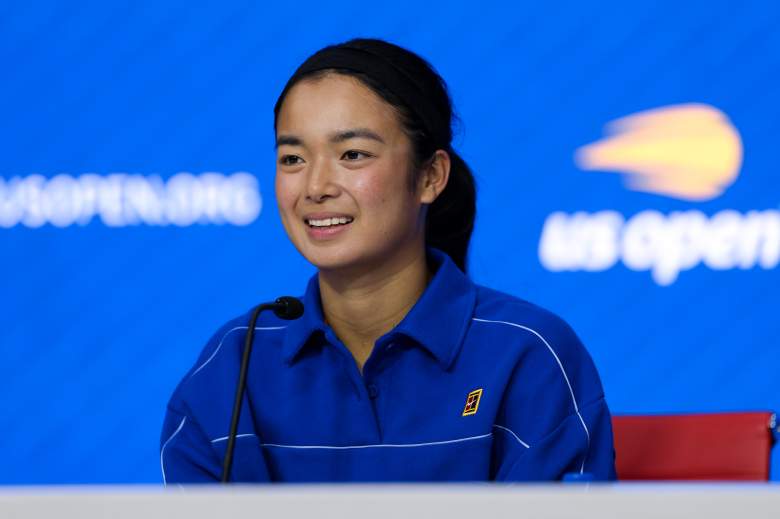
Alex Eala understands why Filipino tennis fans have embraced an irreverent nickname for her unconventional serve. She would still prefer something more positive.
During her US Open media day press conference, Eala was asked about “Fookelya,” a viral nickname fans have attached to her slower second serve.

The expression comes from Filipino gay slang and contains a vulgar reference to female genitalia. Within the tennis meme, however, supporters use it playfully to describe how Eala’s serve can fool opponents despite lacking the pace of the WTA Tour’s biggest deliveries.
A Filipino reporter explained that fans were reframing a perceived weakness as a secret weapon. The nickname had become prominent enough to appear on shirts and reach international tennis discussions.
Eala initially laughed and asked the reporter to explain it.
“Hindi siya masyadong positibong salita ’yon,” Eala said, noting that she did not consider it a particularly positive word.
After hearing the reporter’s explanation, Eala acknowledged that supporters probably meant it affectionately. She remained uncomfortable with the label.
“Hindi ko alam kung ano ’yung pakiramdam ko sa salitang ’yon kasi it’s not a very positive term,” Eala said.
In English, Eala explained that she was unsure how to feel when hearing the word because of how much she has struggled with the serve and how much work she has invested in improving it.
“And I love my serve,” she added.
Viral Alex Eala Meme Reaches International Tennis Podcast
Filipino fans had already turned Eala’s unconventional second serve into a viral meme before the US Open.
The nickname then moved beyond its original social-media audience.
Broadcaster Blair Henley discussed it on the international Love All Podcast, describing Eala’s delivery as unconventional but effective.
“It doesn’t have to look like Serena Williams’ serve to be effective,” Henley said.
That growing attention allowed Eala to address the expression herself. She did so without scolding supporters or suggesting that they intended to insult her.
“I think I would appreciate a more positive term,” Eala said. “But I don’t think they mean it in a bad way.”
Her coach, Joan Bosch of the Rafa Nadal Academy, has encouraged her to view the serve like a younger brother who needs patience, guidance and protection. In that relationship, Eala is the “ate,” the Filipino term for an older sister.
“Like my coach says, it’s like my little brother,” Eala said. “Parang ate ako sa serve ko.”
The comparison explains why the nickname reached a sensitive area. Eala does not view her serve as a punchline. She sees an evolving shot that she has worked to strengthen and learned to protect.
Why Eala’s Slower Serve Can Frustrate Elite Returners
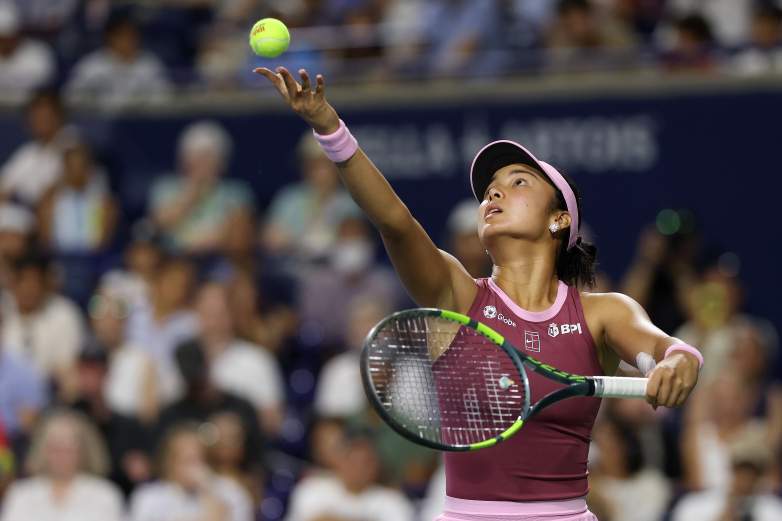
The discussion surrounding Eala’s delivery intensified after it disrupted some of the world’s best returners.
Before the Washington final, Jessica Pegula reportedly instructed a practice partner to slow down his delivery to help her prepare for Eala. Pegula understood that a returner accustomed to absorbing pace can struggle when required to create it.
Iga Swiatek encountered a similar problem during her loss to Eala at Wimbledon. Swiatek said Eala began serving “slower and slower,” creating a rhythm unlike the heavier deliveries she typically faces.
Former world No. 1 Andy Roddick later explained why Eala can “get away” with a slower serve.
The serve does not have to finish the point because Eala’s groundstrokes can punish an uncertain return. If an opponent fails to strike the ball cleanly, Eala can step forward and redirect her first groundstroke with pace.
Rick Macci, the renowned coach who helped develop Serena and Venus Williams, offered a more critical assessment before Eala’s US Open opener.
Macci praised Eala’s movement and early ball-striking but wrote that the serve “biomechanically has to be rewired” for her game to reach another level.
He also predicted that Eala would feel substantial nerves as her expanding fan base creates what he called an “Eala Earthquake” around her first-round match.

The two evaluations are not mutually exclusive. Roddick sees why the serve works now. Macci sees how much better it could become with improved mechanics.
Eala enters the US Open ranked a career-high No. 18 and seeded 17th in women’s singles. She will face American qualifier Mary Stoiana, whom she defeated 7-5, 6-2 in their only previous meeting at the W100 tournament in Landisville, Pennsylvania, in 2024.
Every delivery will be examined in New York, from its speed to its placement and unusual rhythm. The viral nickname will probably follow Eala onto the grounds, too.
She is not asking fans to stop celebrating the serve. She only wants them to give the little brother of her game a name carrying the same affection she has for it.
Alex Eala Makes Feelings Clear on ‘Fookelya’ Serve Before US Open