
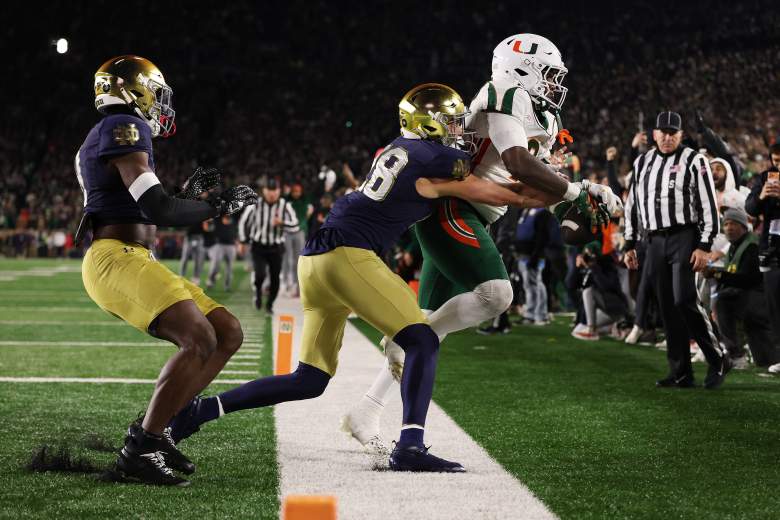
The Miami Hurricanes have heard plenty of debate surrounding their controversial matchup with Notre Dame, but one disputed play now has a particularly important voice weighing in. Former NFL referee Gene Steratore reviewed the incomplete pass involving Hurricanes tight end Elija Lofton, and his conclusion supports the ruling that benefited Notre Dame.
For Hurricanes fans who have watched the play repeatedly, Steratore’s explanation provides something more valuable than another opinion. It offers a detailed breakdown of why a receiver can secure the football, get both feet down and still fail to complete a catch.
The distinction matters, especially when the play happens in the end zone.
Gene Steratore Explains Why Notre Dame’s Catch Was Incomplete
During a breakdown shared by CBS Sports College Football, Steratore explained that catching a football in the end zone requires the same process as catching one anywhere else on the field.
“The process of the catch and making a catch complete is the same in the end zone as it is in the field of play,” Steratore said.
That point addresses one of the biggest sources of confusion surrounding the play. Unlike a runner crossing the goal line with possession, a receiver must complete the entire catch process before officials can award a touchdown.
Steratore identified three elements officials must consider: possession, getting the required feet down in bounds and completing the catch through the necessary time or football movement.
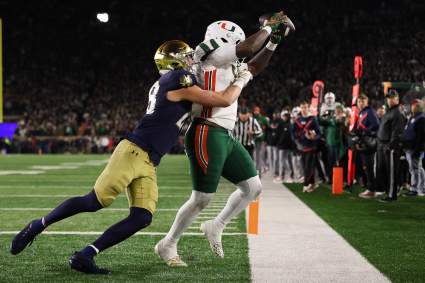
Lofton appeared to satisfy the first two requirements. However, Steratore believed the third element was missing when the football came loose.
“If you watch this play in real time, it’s an incomplete pass,” Steratore said. “It’s too quick.”
His final assessment left little room for confusion.
“Final decision: no catch in the Notre Dame-Miami game,” Steratore said.
Miami Hurricanes Have an Important Answer to the Controversy
For Notre Dame, Steratore’s explanation reinforces an important distinction between a play looking like a touchdown and actually meeting the rulebook’s requirements. Miami supporters can reasonably point to Lofton’s initial possession and his feet landing in bounds. Those details are relevant, but they do not automatically establish a completed catch.
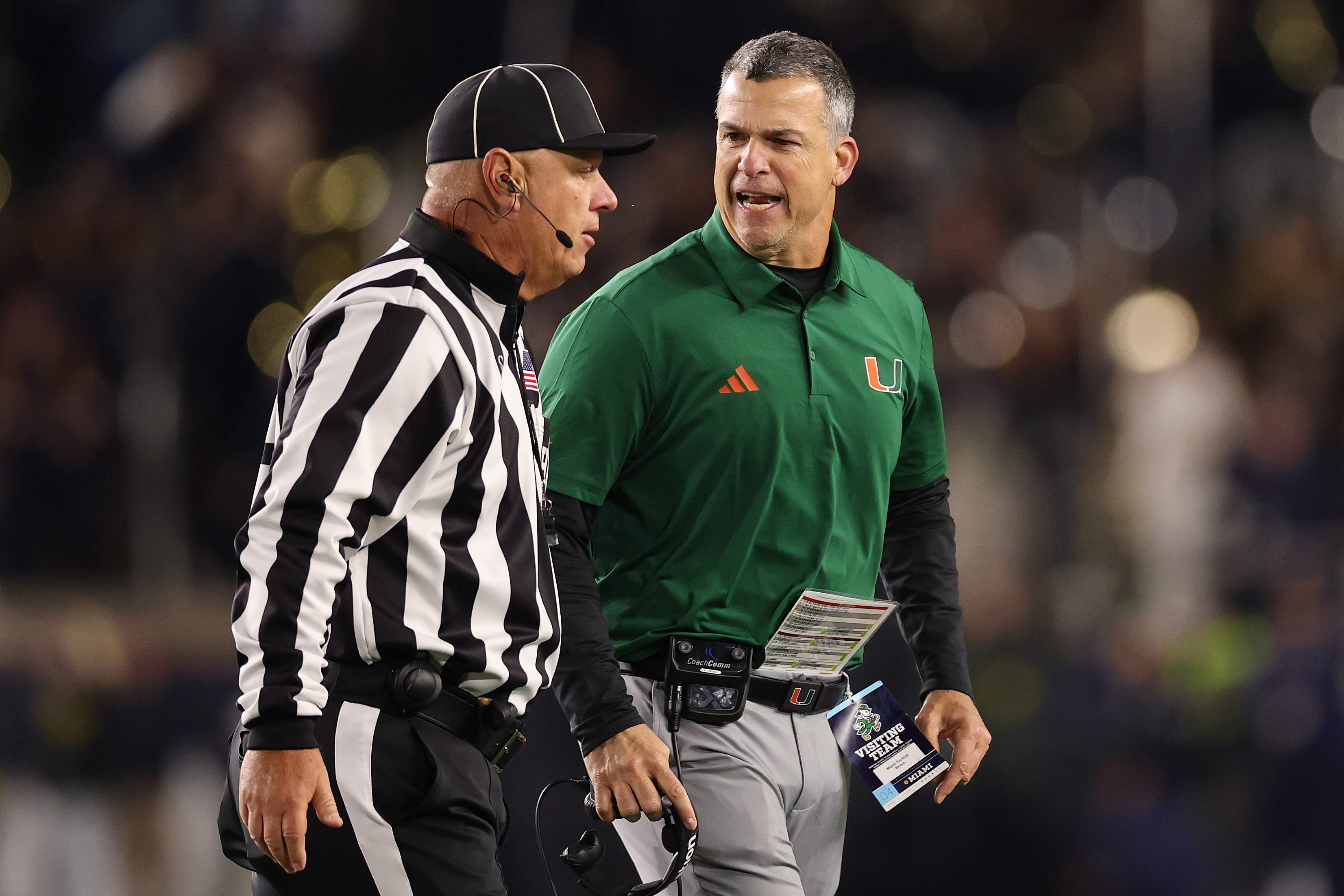
That is precisely why Steratore’s assessment carries weight. Rather than dismissing the controversy, he acknowledged what Lofton accomplished before explaining why the remaining requirement mattered.
Of course, his interpretation does not make every close catch ruling universally accepted. The time necessary to complete the process remains one of football’s more subjective officiating judgments.
Still, the Fighting Irish now have a respected former referee explaining why the disputed decision was defensible. For a program whose biggest moments often generate intense national discussion, that distinction is worth remembering.







Miami’s Controversial Notre Dame Ruling Gets Powerful Final Decision From Legendary Referee