
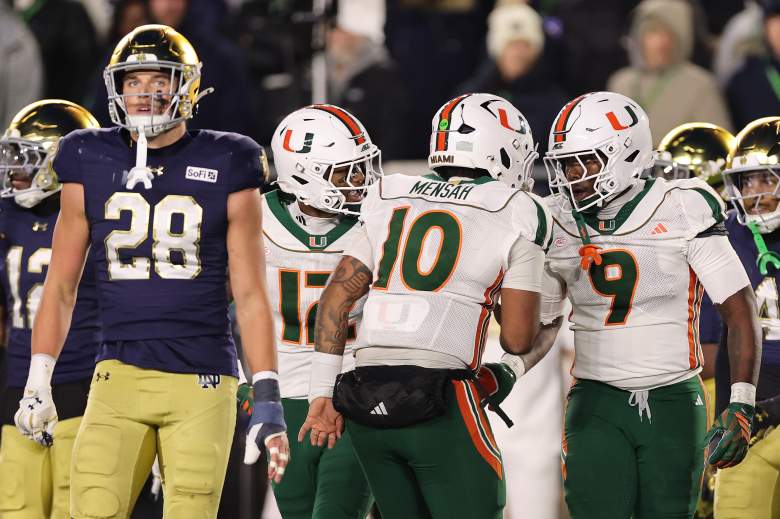
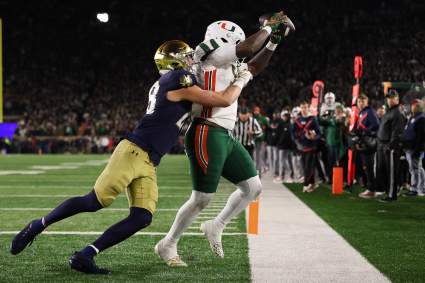
The Miami Hurricanes‘ disputed touchdown against Notre Dame has another layer, and this one brings an NFL star into the conversation. A resurfaced clip shared by X user @AidanDoc__ points to an A.J. Brown touchdown against the Los Angeles Rams as a comparison for Elija Lofton’s denied score. For Miami fans still demanding an explanation, the question is straightforward: What separates the two plays?
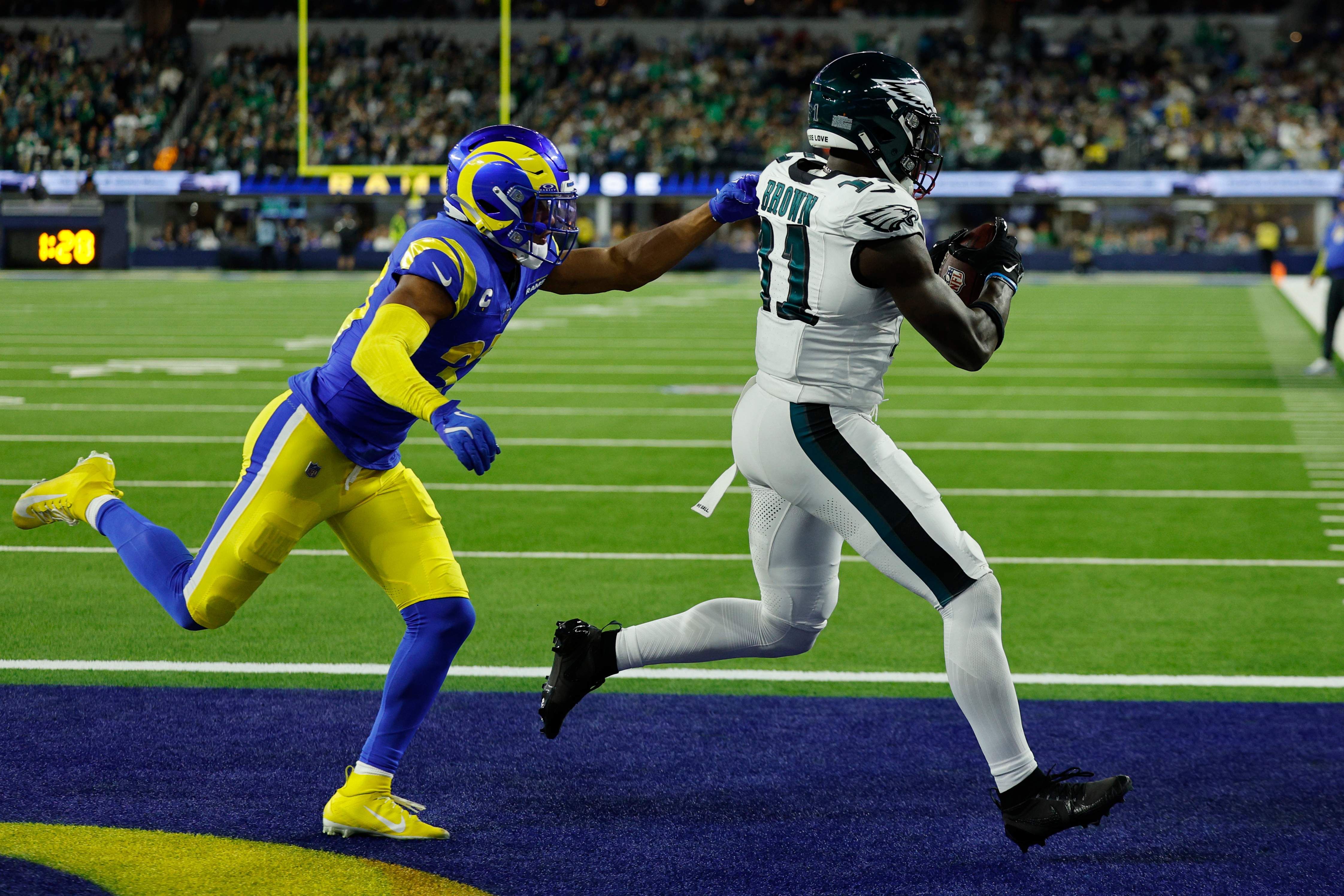
Brown caught the ball near the boundary before a defender knocked it loose, and the touchdown counted. Miami fans watched Lofton make what they believe was the same catch, only to get a different ruling. Put the clips next to each other, and it is easy to understand why Hurricanes fans want someone to explain the difference.
Exact same thing happened in the NFL about two years ago:
The NFL ruled it a TD. I don’t see why it isn’t one for Miami. https://t.co/JPjwCPgEkk
— Aidan Doc 🧸 (@AidanDoc__) November 8, 2026
It is a must-see comparison for anyone following the controversy, but the conclusion requires more than noticing similar outcomes on video. The relevant issue is when each receiver completed the catch. That is where this argument becomes more interesting than simply counting feet.
A.J. Brown Clip Adds Another Question to Miami’s Controversy
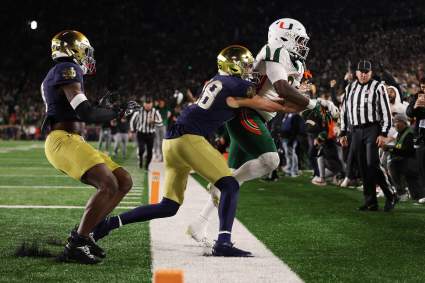
Lofton appeared to give Miami an opportunity to pull within an extra point of Notre Dame late in Saturday’s game. Instead, officials ruled the pass incomplete, and replay left that decision unchanged. Notre Dame won 31-24, handing the Hurricanes their first defeat.
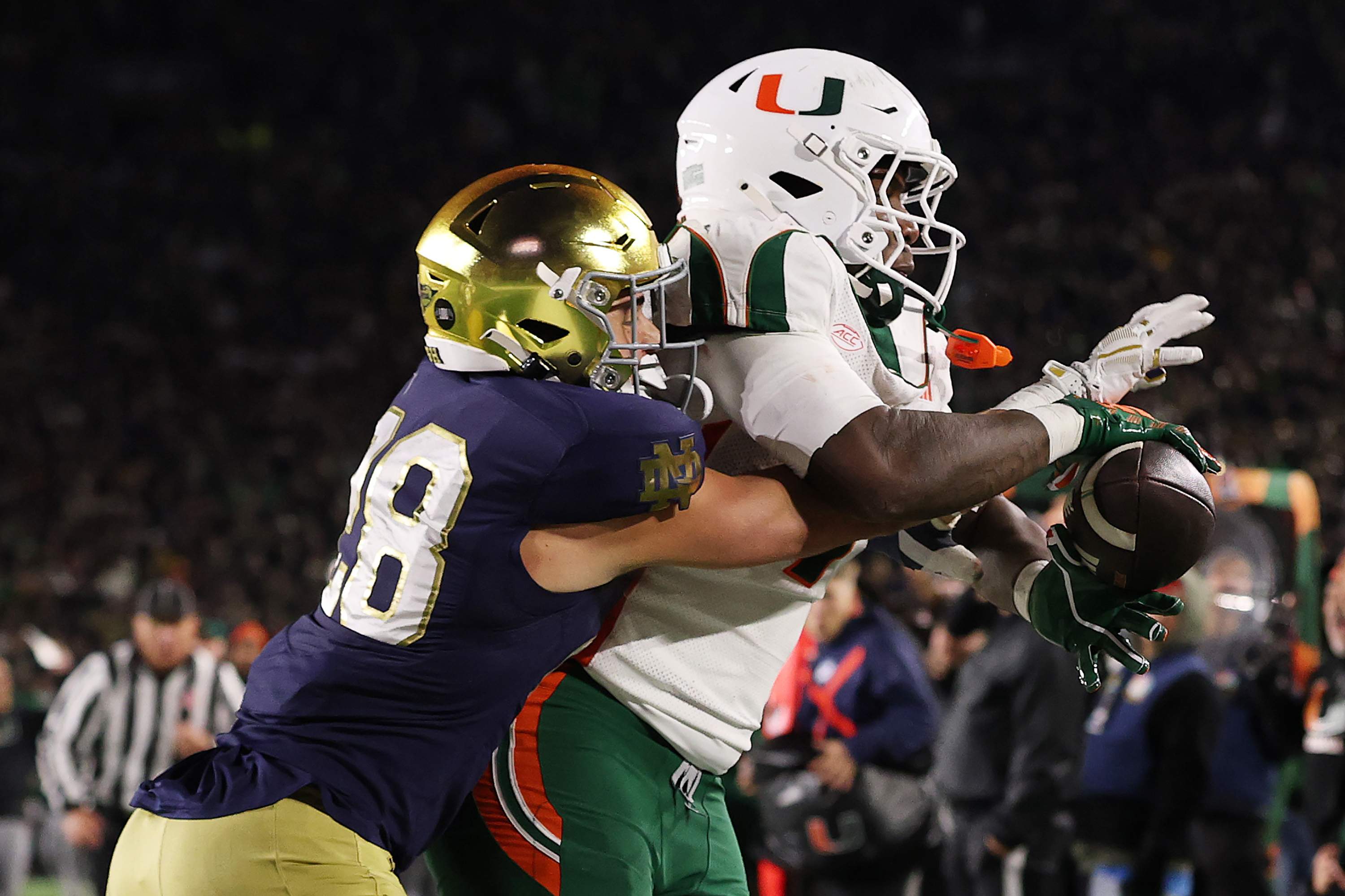
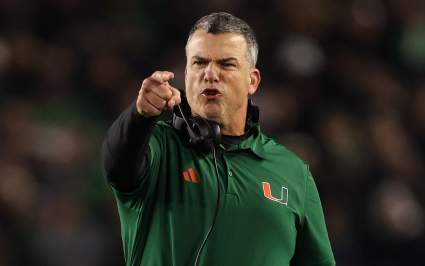
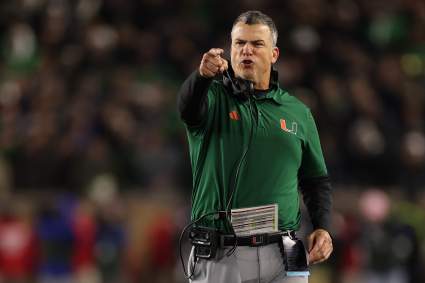
NBC rules analyst Terry McAulay supported the ruling, pointing to a slight bobble before the ball was knocked loose. Miami coach Mario Cristobal disagreed with the outcome. The Brown comparison now offers another way to scrutinize that explanation.
The NFL and NCAA do have different catch rules, including how many feet must touch inbounds. However, both require control and more than simply landing with the ball momentarily. The receiver must satisfy the applicable requirement involving an act common to the game or enough time to perform one.
That means identifying a meaningful difference between these catches matters more than dismissing the discussion because one happened on Sunday. The rules are not interchangeable, but neither does the NFL label automatically make the comparison irrelevant. Control and timing remain central questions in both settings.
Miami Fans Deserve More Than Another Catch-Rule Argument
The strongest argument for Miami is also the simplest to explain. If Brown established possession before the ball was dislodged, viewers should be able to understand what prevented Lofton from doing the same. A clear explanation would address control, movement and the timing of contact.
The resurfaced clip does not overturn Miami’s ruling or prove both plays were identical. It does give fans a concrete comparison worth examining. For a controversy built around competing interpretations of possession, that is a more useful discussion than telling frustrated viewers to stop trusting what they believe they saw.
No matter how much football you watch, one question never seems to go away: What the heck is a catch?
Miami’s Disputed Notre Dame Touchdown Takes Crazy Turn After Resurfaced A.J. Brown Clip