

A flat right-rear tire dropped Denny Hamlin from fourth place at Phoenix Raceway on Sunday, jolting his Chase push with 90 laps left.
Hamlin began the Freeway Insurance 500 trailing points leader Kyle Larson by 49 points, according to The Tennessean’s live coverage. The flat sent him as low as 29th on the track and, for a time, to fifth in the standings.
The tire went down around Lap 220 of 312 while Hamlin ran inside the top five, according to NASCAR reporter Jeff Gluck. The Joe Gibbs Racing driver fought the car through a slide, steered away from the wall and limped toward pit road, according to an eyewitness account.
Denny Hamlin’s Flat Tire Reshapes Phoenix Race
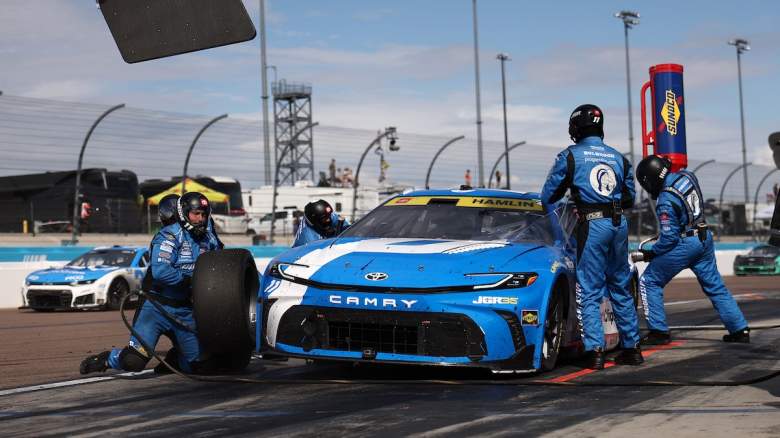
A speeding penalty compounded the damage. Hamlin entered pit road too fast on the damaged tire, and a penalized car cannot take a wave-around, so Erik Jones received the free pass instead, according to The Tennessean.
“Yep, I get it. Still got time though,” crew chief Chris Gayle told Hamlin over the radio, as quoted by Gluck. About 90 laps remained, leaving room for a recovery, though Larson’s lead and Hamlin’s Gibbs teammates Christopher Bell and Chase Briscoe all stood between him and the points race.
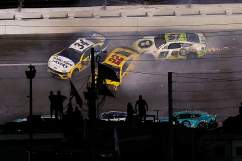
Cody Ware’s wreck brought out the caution. Ware backed into the wall around Lap 222 after his own tire problem, according to the Infield Report account. The yellow flag bunched the field and froze positions, and it gave Hamlin service under caution after he had already pitted. The penalty erased part of that benefit.
Tires were a problem before the green flag. Erik Jones lost a tire in Saturday practice.
Denny Hamlin Blames Teams for Phoenix Tire Failures
Phoenix’s March race drew 12 cautions covering 86 laps, many tied to tire failures.
“The lower the air pressure, the faster you’re going to be on the long run,” Hamlin said on the “Actions Detrimental” podcast. Teams keep trimming pressure after the first run of a race, he added.
“It’s not just the air pressure. It’s how much camber you’re putting with that air pressure,” Hamlin said. Camber helps over a short run. Low pressure helps over a long one. Teams chase both.
“The tires are blowing because they are overloaded for a sustained amount of time,” Joe Gibbs Racing crew chief Adam Stevens said, as quoted by Motorsport.com. Stevens said teams cannot locate the failure point for load, air pressure and camber until a car crosses it.
Drivers share the load. Analyst Todd Gordon said cars cutting across the apron on cold tires take a brutal hit, according to Motorsport.com.
NASCAR’s spec shocks contain internal limiters that stop cars from bottoming out. Once a car hits one, the tire alone absorbs the load, and low pressures let the sidewall belts crack until the tire bursts, according to Motorsport.com.
Goodyear brought back the same combination from March. Racing director Justin Fantozzi called the tires “proven on track at Phoenix,” as quoted by NASCAR.com’s staff report.
The race was still underway at 2:30 p.m. MST, leaving Hamlin’s finish and final points impact undetermined.
NASCAR’s Denny Hamlin Suffers Costly Setback During Phoenix Race