
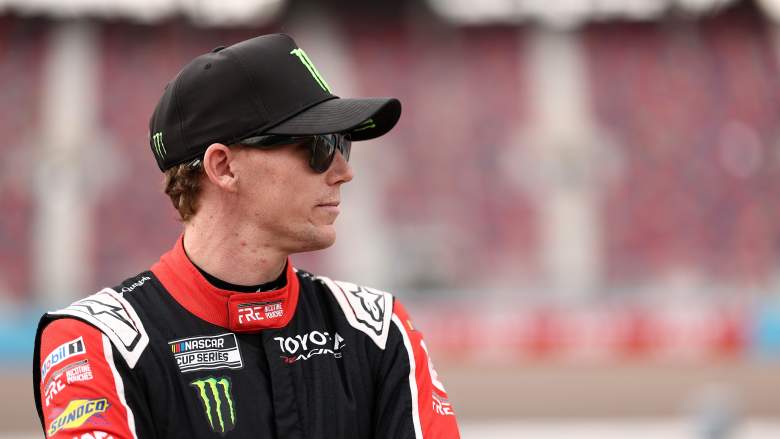
Riley Herbst and Michael McDowell have been here before. And after what happened Sunday at Phoenix Raceway, plenty of people are wondering whether their latest run-in was more than just another racing incident.
The two drivers tangled on Lap 44 of the Freeway Insurance 500, bringing out an early caution after contact in Turn 3 sent both cars spinning.
On its own, the wreck might not have generated much conversation beyond the usual debate over who was at fault. But Herbst and McDowell have some unfinished business dating back to New Hampshire, where their previous encounter ended with Herbst suffering a concussion.
That history immediately became part of the conversation at Phoenix, with several NASCAR reporters questioning whether Herbst had intentionally turned McDowell.

These two had been racing hard and it looked like Riley tried to take out McDowell on corner entry but took himself out in the process

Riley Herbst and Michael McDowell’s Phoenix Wreck Raises Questions
Herbst and McDowell had been racing hard for position when the No. 35 Toyota made contact with McDowell’s No. 71 Chevrolet entering Turn 3.
McDowell’s car turned sideways, and Herbst wound up spinning as well. Both drivers were caught up in the incident, which brought out the caution.
It didn’t take long for the speculation to begin.
“Crash!!! Herbst and McDowell! Revenge??” NASCAR reporter Jeff Gluck wrote on X shortly after the contact.
Gluck followed that observation with an even more pointed assessment.
“Sure looked like Herbst did that on purpose.”
Steven Taranto also questioned the move, writing that the two drivers had been racing aggressively before Herbst seemingly attempted to take McDowell out on corner entry, only to wreck himself in the process.
Dustin Albino was among those who immediately connected the incident to the drivers’ previous history.
“Riley Herbst dumped Michael McDowell and wrecked himself,” Albino wrote. “Remember, they have history from New Hampshire that resulted in a concussion for Herbst.”

Remember, they have history from New Hampshire that resulted in a concussion for Herbst.
#NASCARThose reactions captured why the incident attracted so much attention. It wasn’t simply that Herbst got into McDowell. It was who he got into, and what had happened between them before.
There has been no confirmation that Herbst intentionally wrecked McDowell, and the speculation shouldn’t be mistaken for an established account of his motives.
Still, the New Hampshire connection is difficult to ignore.
Their New Hampshire History Adds Another Layer to the Crash
The tension between Herbst and McDowell traces back to their Aug. 23 encounter at New Hampshire Motor Speedway.
The two were racing aggressively when contact between their cars escalated into a much bigger accident. Herbst’s No. 35 Toyota slammed into the outside wall, and Connor Zilisch subsequently became involved in the wreck.
Herbst suffered a concussion, an injury that ultimately forced him to miss the following Cup Series race at Daytona. Harrison Burton stepped into the No. 35 Toyota while Herbst recovered.
That made the New Hampshire incident considerably more consequential than a typical on-track disagreement. Herbst didn’t just lose a good finish. He missed time behind the wheel.
Fast-forward to Phoenix, and the same two drivers were once again racing in close quarters. This time, it was McDowell who got turned after contact from Herbst, although Herbst also wound up in the wreck.
The circumstances were enough to revive questions about whether there was lingering frustration from New Hampshire.
Of course, there is an important difference between a driver remembering a previous incident and deliberately seeking payback. Without hearing Herbst’s explanation, it’s impossible to say whether Sunday’s contact was retaliation, frustration in the moment or simply aggressive racing that ended badly.
But NASCAR has a long memory, particularly when two drivers have already had a collision with serious consequences.
Sunday’s wreck may have happened in a matter of seconds. The history behind it stretches back nearly two months, and that’s what made the reaction at Phoenix so immediate.
Riley Herbst Sparks Intentional Wreck Speculation After Michael McDowell Crash