
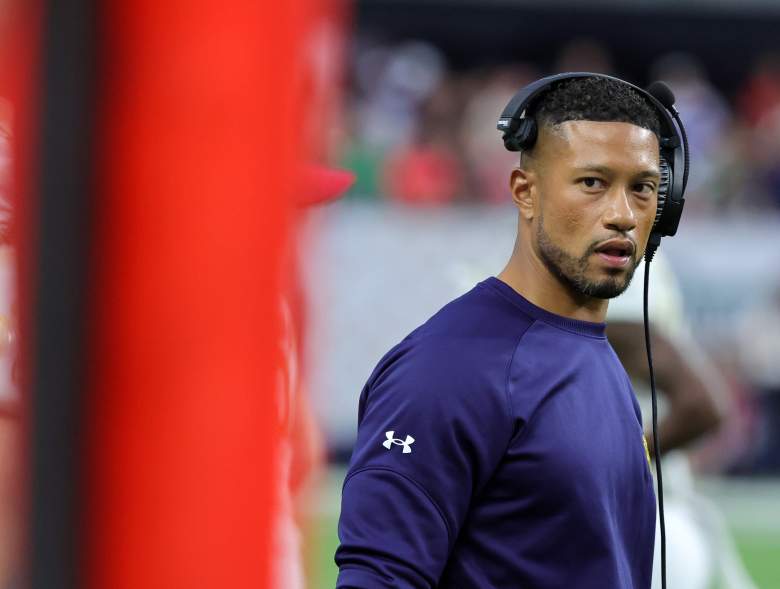
Notre Dame football head coach Marcus Freeman was left answering questions about a controversial officiating decision following the Fighting Irish’s 28-24 loss to BYU on Saturday, Oct. 17.
The controversy centered on Notre Dame’s final offensive play, when quarterback CJ Carr targeted wide receiver Jaden Greathouse near the end zone. The pass fell incomplete, and despite questions about potential defensive pass interference, officials did not throw a flag.
Freeman was asked about the decision afterward but declined to criticize the officiating crew. Instead, the Notre Dame head coach offered a brief description of the chaotic final sequence.
“It was chaos, man,” Freeman said, according to Pete Sampson of The Athletic.
Marcus Freeman Explains Notre Dame’s Final Play Against BYU
The controversial no-call immediately became a talking point following Notre Dame’s defeat, particularly given the importance of the final possession. However, Freeman’s postgame explanation revealed another interesting detail about the decision to target Greathouse.
According to Sampson, Freeman explained that the fade route was a reaction to BYU bringing pressure from that side of the field. The Fighting Irish had struggled to connect on that particular throw throughout the afternoon, making the decision especially interesting with the game hanging in the balance. That context adds another layer to the controversy.
While some Notre Dame fans may understandably focus on whether a penalty should have been called, the offensive execution deserves attention as well. The Fighting Irish had an opportunity to win the game, but their final passing attempt ultimately failed to produce the necessary result.
Freeman’s response also suggested he had little interest in turning the loss into a public argument about officiating. Rather than making accusations about the officials, he kept his explanation focused on what unfolded during the play.
Notre Dame Faces Questions Following Controversial Finish
For Notre Dame, the disappointing conclusion raises questions that extend beyond one potential penalty. The Fighting Irish entered the matchup with considerable expectations, and losing a close game against BYU will naturally invite scrutiny of the decisions made in critical situations.
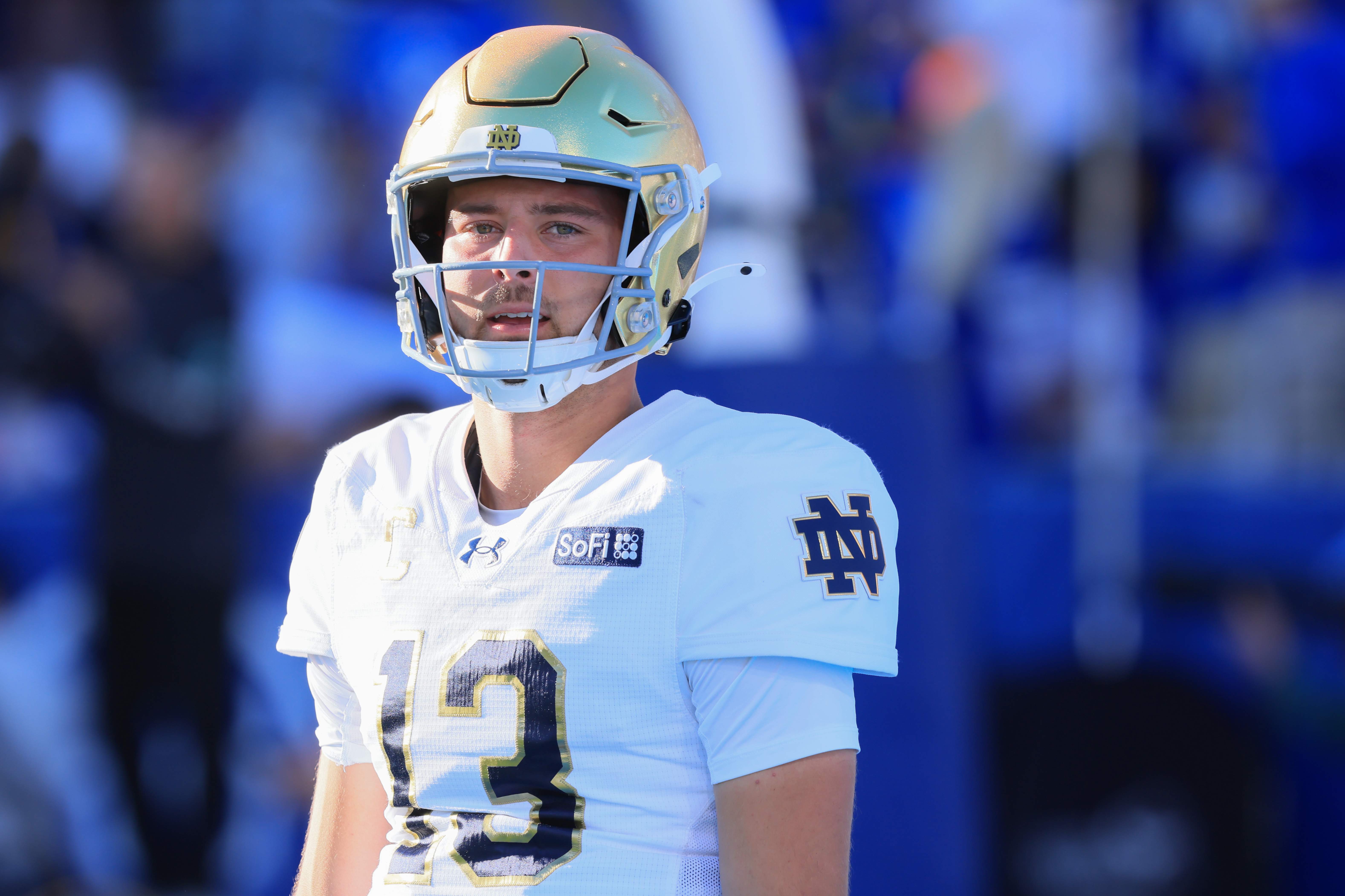
There is certainly room to question whether the officials missed a potential penalty. However, without a definitive ruling that the defender committed pass interference, it would be premature to suggest the outcome was decided solely by officiating.
The more important question for Freeman may be why Notre Dame found itself relying on a throw it had struggled to execute throughout the game. That does not mean the play call was necessarily wrong. BYU’s defensive pressure influenced the decision, and quarterbacks often must react quickly to what the defense presents.
Still, the final sequence left Notre Dame without the result it wanted and its head coach explaining a controversial ending. Freeman avoided blaming the officials, but the debate surrounding the final play is unlikely to disappear anytime soon. There are also some rumblings that there should have been a second on the clock. That would have obviously given Notre Dame another play. The debates regarding this contest won’t be ending anytime soon.
Notre Dame’s Marcus Freeman Breaks Silence on Controversial BYU No-Call