
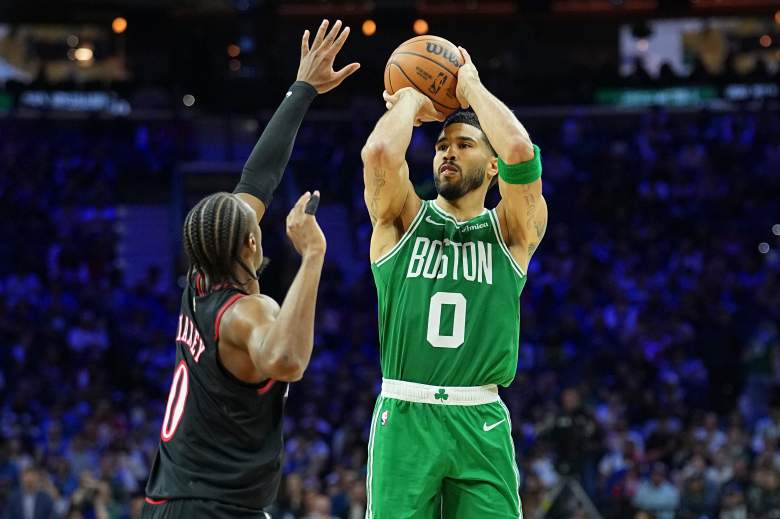
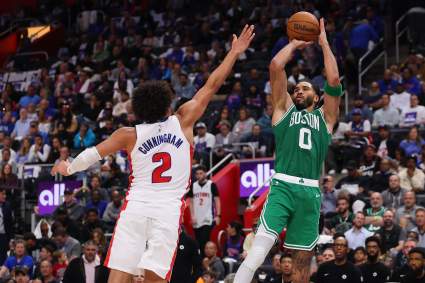
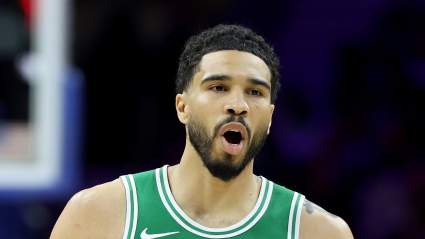
When Boston Celtics star Jayson Tatum exited Game 6 against the Philadelphia 76ers on Thursday night, concern quickly spread across the NBA. Tatum’s withdrawal from the game in the third quarter was ultimately attributed to left calf tightness, and though he’s currently slated to play in tonight’s Game 7, his condition doesn’t bode well for the Celtics if they are to continue their playoff run with advancement into the second round of competition.
Boston Celtics Star Jayson Tatum’s Calf Injury Has League-Wide Significance
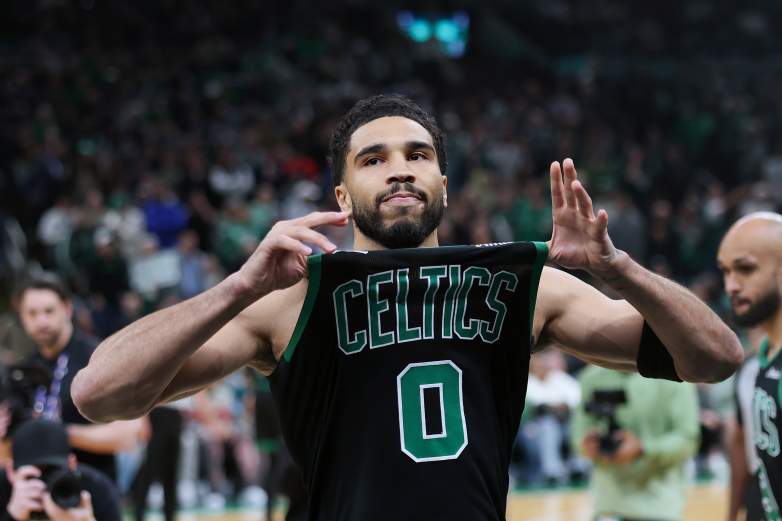
For Jayson Tatum specifically, any lower-body discomfort the forward expresses is an immediate flag for concern for the Boston Celtics because of his recent injury history. He spent much of the 2025-2026 NBA season recovering from a ruptured right Achilles tendon suffered during last year’s playoffs. Even though the injury that resulted in his absence in the fourth quarter of Game 6 earlier this week involved the opposite leg, the incident carries significant weight as it is symbolic of a growing trend in elite basketball and positions Tatum for a prolonged recovery if he continues to play with the discomfort.
Lower body ailments – including calf injuries, hamstring strains, ankle sprains, and Achilles issues – have all become common in the NBA, especially during campaigns involving increased physicality like the playoffs. Cutting, jumping, sprinting, and sudden deceleration place enormous strain on muscles and connective tissues as the lower body absorbs the majority of stress generated by explosive movement. The short term repercussions see players sidelined during pivotal moments of the NBA Playoffs, while long term impacts are experienced by individual players and league franchises.
The Boston Celtics aren’t the only NBA team to be plagued by longer lists of injured players. Per the NBA, the Minnesota Timberwolves have seen Donte DiVincenzo’s season come to an abrupt end with an acute Achilles injury, while Anthony Edwards is being treated for an injury to his left knee. Hamstring injuries have also been a critical storyline for several teams in this year’s playoffs. Lakers’ star Luka Doncic has been fighting through a hamstring injury, and the Oklahoma City Thunder have been reassessing Jalen Williams on a week-to-week basis after he endured a Grade 1 hamstring strain during Game 3 against the Phoenix suns. If anything, Jayson Tatum’s Game 6 exit is just the latest in a growing trend of lower limb injuries being seen in professional basketball players.
Jayson Tatum Playing Through Pain Poses Increasingly Severe Consequences
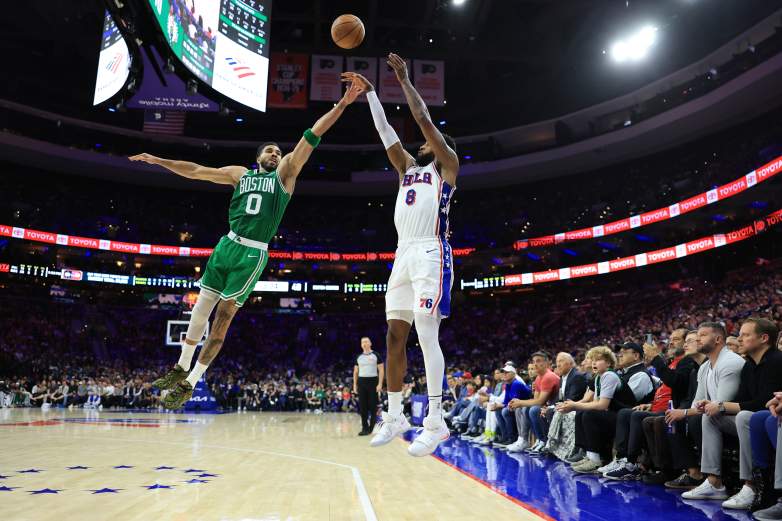
According to Banner Health, counterbalancing for one injury can place extra stress on surrounding muscle groups and joints in a dynamic which can result in what is known as a ‘compensation injury’. The occurrence of secondary injuries is becoming more and more of a reality across the NBA as the rate of lower body ailments are on the rise in a league-wide trend that was also observed in NCAA athletes during this year’s March Madness tournament.
Deep playoff campaigns force players into a physically punishing cycle of travel, short recovery windows, and maximum intensity basketball every other night. Unlike the regular season, postseason games feature heavier minutes, increased defensive pressures, and little opportunity for physical maintenance. Every possession matters, which often pushes players to compete through soreness and physical discomfort that would normally sideline them during the regular season. The resulting consequences of the NBA Playoffs’ physical and mental demands are felt by teams as their players face a greater multitude of health impacts.


Jayson Tatum’s Injury Carries Grave Weight Ahead of Boston Celtics’ Game 7 vs Philadelphia 76ers