
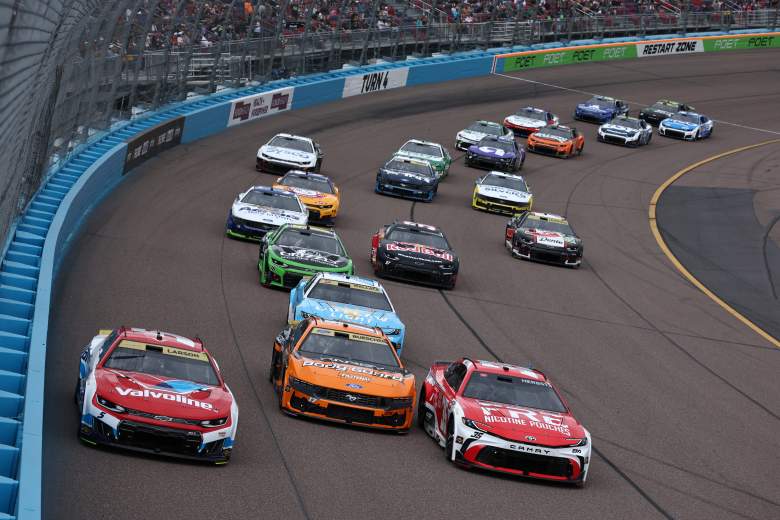
NASCAR plans to change the dogleg at Phoenix Raceway before the 2027 season after data raised concerns about the hard impacts drivers face when they cut across the apron.
The issue came to light at an August competition meeting, where officials reviewed the forces drivers experience as they descend from the banked section to the lower part of the track. The move has become standard on restarts, creating more passing chances and chaotic racing.
However, drivers say the sharp transition takes a toll on their bodies and cars, especially in the current NASCAR Cup Series Next Gen cars.
According to Motorsport reporter Matt Weaver, NASCAR wants to reduce the impact without removing the dogleg shortcut that has become a key part of racing at Phoenix.
NASCAR Plans Changes to Phoenix Raceway Dogleg
NASCAR is exploring ways to soften the Phoenix Raceway dogleg before the Cup Series returns in March 2027. Officials don’t want to remove the shortcut completely because drivers use it to gain positions on restarts.
The current layout took shape after NASCAR changed the track configuration in 2018. Since then, drivers have often cut across the apron to make passes, leading to close racing and multi-wide restarts.
However, the sharp drop from the banking onto the apron creates a hard impact. Data reviewed by NASCAR showed high g-force readings when drivers used the shortcut. Although Bubba Wallace estimated the forces might reach the 30s, the actual readings are understood to be in the low 10s.
“I don’t know exactly what it is that we’re pulling, thirtysomething Gs. I may be way off on that but it was high every time we cut the dogleg. It’s brutal. It looks cool on TV but it might not be cool when we’re 60 and struggling, right? I would change it from that standpoint for sure.”
Wallace also wants NASCAR to consider grass instead of turf, arguing that drivers would keep using the shortcut if the surface remained easy to cross.
NASCAR Drivers Share Concerns About Phoenix Dogleg
Several NASCAR drivers support changes to the Phoenix dogleg, but they want to keep the exciting restarts it creates.
William Byron believes smoothing the transition would reduce the impact without taking away the option to cut across the apron.
“I think smoothing it out is going to still allow for good restarts because with where the restart zone is, it’s better having that option. So I don’t think it’s going to go away completely.”
Byron said the current Cup cars take a harder hit than the O’Reilly Auto Parts Series cars. He recalled using the dogleg during a spring race and described the experience as much less severe in the O’Reilly car.
“In our cars, you’re really just kind of jumping down off the track and it just slams the front pucks or whatever and it’s pretty violent. So yeah, I would like to see a change. I think it deserves a look.”
Christopher Bell also described the experience as “really brutal rolling across” the apron, comparing it to the bus-stop curbs at Watkins Glen that NASCAR previously removed after similar concerns.
NASCAR Weighs Driver Safety Against Phoenix Restart Action
Joey Logano acknowledged the physical toll but warned that changing the dogleg too much could affect the racing.
“I don’t really know the fix because I think the dogleg is cool. It’s a big storyline for everybody. The restarts are chaotic because of it.”
Logano added that a smoother surface might encourage drivers to use the apron every lap, while turf could reduce the shortcut’s value.
“If you leave it, I mean it’s quite the jarring moment. I don’t want to go down there. It hurts,” he said.
Tyler Reddick also cast doubt on whether preventing drivers from cutting the dogleg would address the safety concerns. He said NASCAR should consider other options to reduce the impact and noted that car setup and driver seating position also matter.
NASCAR is expected to review possible changes with drivers, teams and engineers in the coming months. The aim is to make the Phoenix Raceway dogleg less punishing while preserving the passing chances and restart action that have made it a key feature of the track.

NASCAR Faces Pressure to Fix Phoenix Raceway’s Brutal Dogleg