
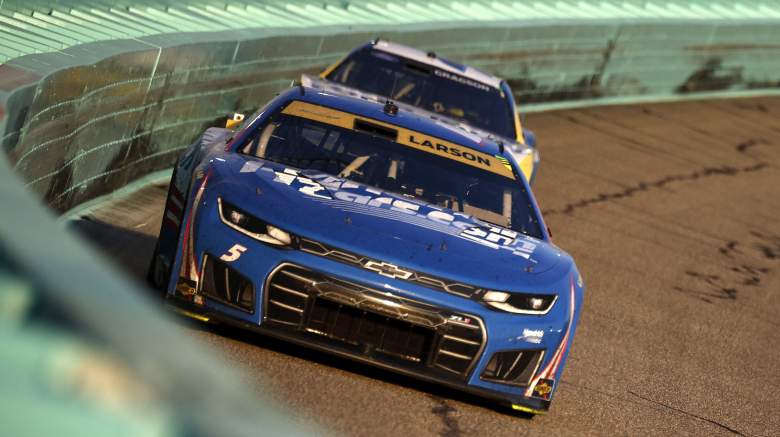
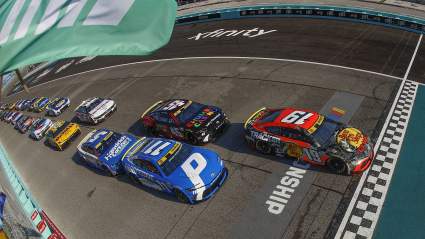
NASCAR’s return to Homestead-Miami Speedway for its championship finale was one of the most anticipated changes to the 2026 schedule. But just days after the season concluded, the sport received some disappointing news.
Television ratings for Sunday’s NASCAR Cup Series championship race are in, and the numbers reveal a noticeable decline from last year’s finale at Phoenix Raceway.
The Nov. 8 race averaged 2.471 million viewers on NBC, down from 2.774 million for the 2025 championship race at Phoenix, according to figures shared Thursday by Sports Business Journal’s Adam Stern.

➡️ NASCAR averaged 2.419 million viewers during the 2026 Cup Series campaign, down 2% from last year (2.479 million).


That’s a loss of approximately 303,000 viewers, representing a nearly 11% year-over-year decline.
The race also earned a 1.37 television rating, compared with a 1.45 rating for last year’s finale.
The results are particularly noteworthy given the excitement surrounding NASCAR’s decision to bring championship weekend back to Homestead for the first time since 2019.
NASCAR Championship TV Ratings Reveal Significant Decline
Homestead’s return was a major storyline throughout the 2026 season.
The South Florida track hosted NASCAR’s championship finale from 2002 through 2019, producing some of the sport’s most memorable title battles before Phoenix took over in 2020.
For many fans, bringing the championship back to Homestead was a welcome change. The track’s progressive banking, multiple racing grooves and reputation for exciting competition made it a popular choice to host the season’s biggest race.
But the television audience didn’t follow the enthusiasm.
Sunday’s championship broadcast attracted nearly 11% fewer viewers than the previous year’s finale, a considerably steeper decline than NASCAR experienced across the entire season.
According to Stern, the 2026 Cup Series averaged 2.419 million viewers per race, compared with 2.479 million in 2025.
That’s a decrease of approximately 2% for the full season.
The contrast is difficult to ignore. While NASCAR’s overall audience remained relatively close to its 2025 numbers, the championship race experienced a much more substantial drop.
Of course, the figures alone don’t explain why fewer people tuned in. The change in venue, competition from other sports and the circumstances surrounding the championship could all influence television viewership.
Still, the numbers present NASCAR with something to examine as it looks ahead to 2027.
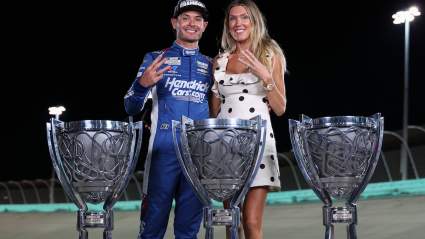
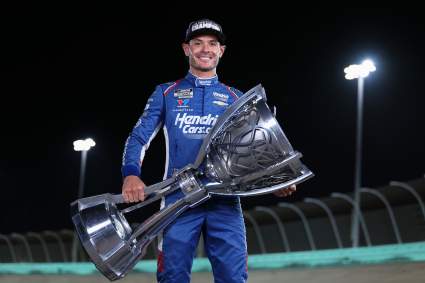
Kyle Larson Clinches Third NASCAR Championship at Homestead
Sunday’s finale featured an unusual championship storyline.
Kyle Larson secured his third NASCAR Cup Series title before the race was even halfway over, clinching the championship at the conclusion of Stage 1.
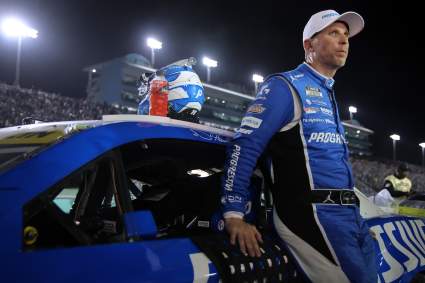
The Hendrick Motorsports driver entered the finale with a commanding advantage in the standings, leaving Denny Hamlin and Christopher Bell with little room to close the gap.
Once Larson collected enough points to mathematically eliminate his challengers, the championship was decided with much of the race still remaining.
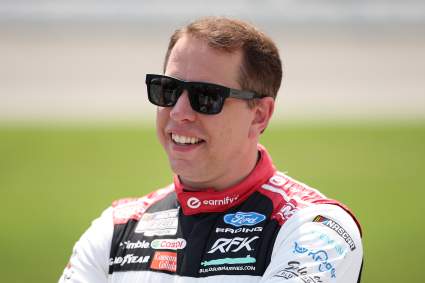
Ryan Blaney ultimately won the race, while Larson celebrated his second consecutive Cup Series championship and third overall.
Whether the early championship clinch affected viewership remains unclear. The publicly reported average audience figures do not establish how many viewers tuned out after Stage 1.
Nevertheless, the ratings add another layer to the discussion surrounding NASCAR’s championship format.
The sport returned to a traditional Chase-style system for 2026, replacing the winner-take-all finale that had defined its championship format in recent years.
That change meant the title could be decided before the checkered flag, exactly what happened at Homestead.
For NASCAR, the challenge moving forward will be finding ways to make its championship finale a must-watch event, even when the title itself is no longer up for grabs.
Homestead delivered the setting many fans had wanted. The television numbers, however, suggest the sport still has work to do when it comes to attracting a championship-sized audience.

NASCAR Receives Concerning News Following Championship Finale at Homestead