
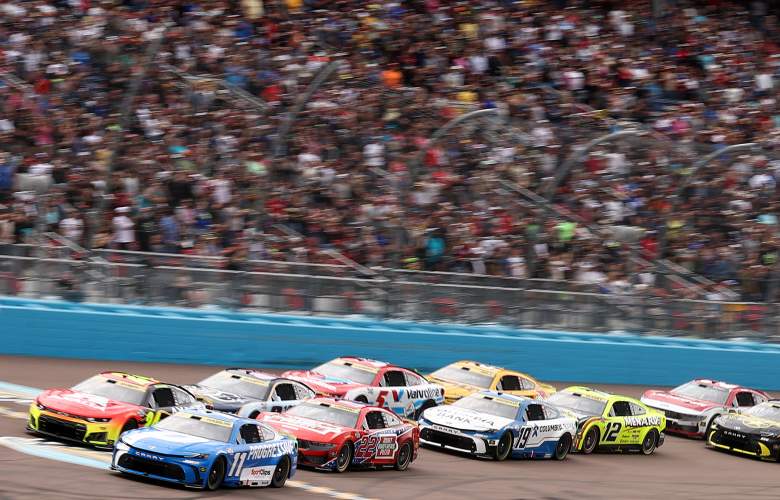
The 2026 NASCAR season has seen several high-profile penalty decisions, with fines, lost championship points, and disqualifications putting drivers under scrutiny for their actions on and off the track.
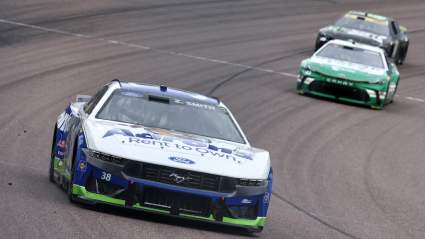
Recent decisions have raised questions about how officials judge driver intent and apply the rule book. Zane Smith received a $50,000 fine after hitting Carson Hocevar following the race at Phoenix Raceway.
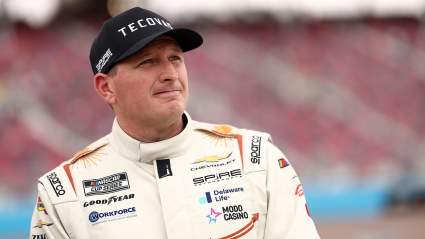
Days earlier, NASCAR decided not to penalize Ricky Stenhouse Jr. and Michael McDowell after a post-race confrontation at Charlotte Motor Speedway.
Ryan Preece also received a $50,000 fine and lost 25 points after his incident with Ty Gibbs at Texas Motor Speedway.
These cases show how NASCAR penalties depend on the circumstances, the available evidence, and the rules involved. They also explain why drivers and fans keep questioning the consistency of NASCAR’s decisions.
NASCAR Penalties Raise Questions About Driver Retaliation
Smith received a $50,000 fine after he drove into the rear of Hocevar’s No. 77 Chevrolet following the Freeway Insurance 500 at Phoenix on October 18. The clash came after an earlier on-track incident between Ross Chastain, Carson Hocevar and Smith during the race.
NASCAR penalized Smith for violating rules against conduct that jeopardizes the safety of the event or its participants. The decision followed an earlier meeting between Smith and Hocevar after their on-track dispute at Chicagoland Speedway.
Mike Forde, NASCAR’s vice president of racing communications, explained the penalty on the Hauler Talk podcast. Officials had warned both drivers about their ongoing conflict, and NASCAR believed Smith had ignored that warning.
Forde said the message to the drivers had been clear: “If you guys can’t figure it out, we will help you figure it out.”
The Charlotte incident involving Stenhouse and McDowell ended differently. NASCAR reviewed their post-race contact after the Bank of America 400 on October 11 but issued no penalties. Forde said officials held a lengthy discussion before deciding against punishment because the confrontation was quickly defused in the pits.
The two cases show why NASCAR penalties do not depend on contact alone. Officials also consider the circumstances and any previous warnings.
NASCAR Penalties Put Ryan Preece and Kyle Busch Under Scrutiny
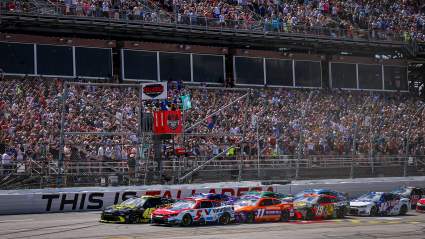
Ryan Preece received a $50,000 fine and a 25-point deduction after contact with Ty Gibbs during the May 3 Cup Series race at Texas Motor Speedway. The incident sent Gibbs into the Turn 3 wall, ending his race.
Before the contact, Preece had criticized Gibbs over the team radio and said he was “done with him.” NASCAR reviewed the radio messages, video, and available data before issuing the penalty.
Preece’s team appealed the decision, but the National Motorsports Appeals Panel upheld the penalty on May 27. The panel said the evidence did not clearly support either side’s interpretation of the incident, but Preece’s comments showed he chose not to give Gibbs any breaks.
Kyle Busch avoided a penalty for his collision with John Hunter Nemechek during the same race. NASCAR reviewed the available evidence and found insufficient grounds to punish Busch for deliberately wrecking Nemechek.
The different outcomes highlight how NASCAR penalties rely on evidence, including radio communication, video footage, and vehicle data. Officials must determine whether contact resulted from deliberate actions, racing circumstances, or problems with a damaged car.
NASCAR Penalties Show How One Decision Changes Results
NASCAR penalties also affect finishing positions and championship points when drivers break specific racing or technical rules.
At Texas, Preece lost 25 points and was fined $50,000. The penalty hurt his Cup Series standing, and the appeals panel upheld the decision.
The O’Reilly Auto Parts Series race at Las Vegas Motor Speedway provided another example on October 3. Brandon Jones was disqualified after a post-race inspection found that four or more lug nuts on his No. 20 Joe Gibbs Racing Toyota were not safe and secure.
Jones crashed during the race after losing control and collecting Justin Allgaier. The disqualification dropped Jones to the back of the field and removed the seven stage points he had earned.
These incidents involve different sections of the NASCAR rule book, from driver conduct to vehicle safety. Each decision affects drivers and teams, whether through fines, lost points, or changes to race results.
NASCAR penalties remain an important part of enforcing fair competition and protecting drivers. However, the recent cases show why officials must explain their decisions clearly. Consistent enforcement and transparent reasoning help drivers understand the rules and give fans a clearer picture of why similar-looking incidents sometimes lead to different outcomes.

NASCAR’s Latest Post-Race Penalty Disputes Raise Serious Questions