
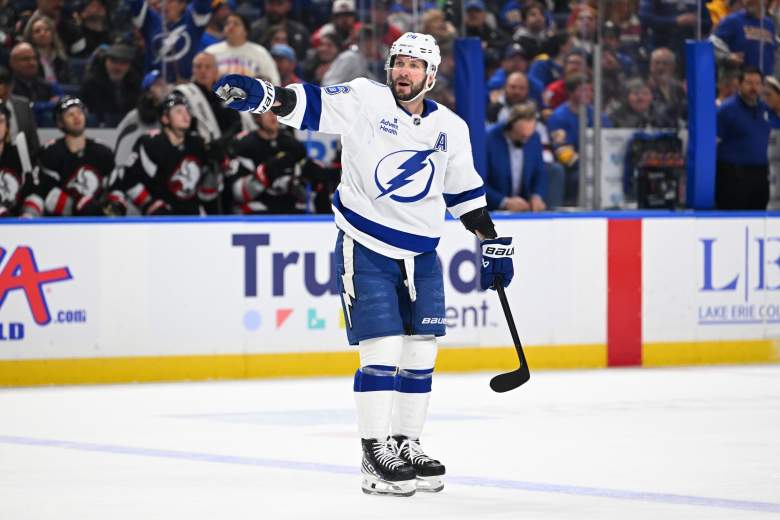
The Minnesota Wild got a pretty good look at what Nikita Kucherov can do when he faced the Tampa Bay Lightning. Kucherov picked up two power-play points, including the overtime winner, in a 4-3 Tampa Bay victory. It was another reminder that he’s still one of the NHL’s most dangerous offensive players.
So it’s easy to understand why the idea of bringing him to Minnesota has caught people’s attention. Kucherov is reportedly looking for a new home, and Chris Schad of Gone Puck Wild, citing The Athletic’s Joe Smith, has raised the possibility that Wild general manager Bill Guerin could look his way if Quinn Hughes doesn’t re-sign long-term.
The $20 Million Kucherov Question
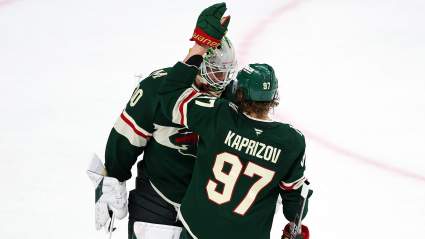
There’s an obvious attraction here. Imagine Kucherov playing alongside Kirill Kaprizov. Even Kaprizov has admitted he’d love to play with him. “I would love to play with him. Just try to be open for him and he’ll find you. I’d love to play with him. Maybe. You never know.”
That’s the sort of combination that gets fans dreaming about what might be possible. But there’s another side to this conversation, and it has very little to do with hockey skills. It’s about money, age, and what Minnesota might have to give up to make it happen.
The biggest concern is the reported price. According to The Athletic’s Chris Johnston, Kucherov’s camp could be looking for a six-year contract worth around $20 million per season.
That’s a lot of money for any player. It’s an especially big commitment for someone turning 34 next season. Nobody is questioning Kucherov’s ability. He’s won two Stanley Cups and two Hart Trophies, and he’s still producing at an incredible level. But a six-year deal would carry him to age 40. That’s a long time to be paying that kind of money to a player who is bound to slow down at some point.
Minnesota also has some important contracts to think about. Quinn Hughes, Jesper Wallstedt, Brock Faber, and Matt Boldy are all players the Wild will need to keep in the picture as they build for the future. Spending $20 million a year on Kucherov could make those decisions a whole lot harder.
Tampa Bay has already faced a similar choice. General manager Julien BriseBois allowed Steven Stamkos to leave rather than make a huge long-term commitment to a franchise star. That wasn’t an easy decision, but it showed how quickly the salary cap can change how a team views even its best players.
Losing Hughes Would Create a Different Problem
There’s another part of this worth considering. Minnesota’s priority should be figuring out what happens with Quinn Hughes. If he re-signs, the Wild will have a major commitment on their blue line. If he doesn’t, they will have a pretty significant hole to fill.
Kucherov might be an exciting replacement in terms of offensive production, but he doesn’t replace what Hughes brings as a defenceman. Those are two very different jobs, and Minnesota shouldn’t confuse the two simply because a superstar might be available.
Wild fans can certainly enjoy the thought of Kucherov and Kaprizov playing together. Who wouldn’t? But there’s a difference between liking the idea and making it work for six years under the salary cap.
Sometimes the biggest move a team can make is knowing when not to. Unless Kucherov’s price and contract term come down considerably, Minnesota might be better off putting its money toward the players it already has and keeping its options open.







Wild $20M Dream Could Become a Costly Mistake