
The Boston Red Sox would be betting two major league outfielders and a pitching prospect on Ronald Acuña Jr.’s health in one proposed offseason blockbuster.
That deserves a closer look before anyone starts building a lineup around his name.
In an October 19 article for FanSided, Christopher Kline outlined five hypothetical Boston trades involving Acuña, Ketel Marte, Joe Ryan, Mason Miller and Elly De La Cruz. The piece openly presents ambitious ideas. These are proposals, with no reported negotiations attached.
Still, each package needs to answer the same questions: What does Boston actually improve, what does it sacrifice, and why would the other team agree?
Here is where each falls short.
1. Ketel Marte: The Position Problem Remains
Proposed trade: Boston receives Marte. Arizona receives Jake Bennett and Henry Godbout.
Marte would improve plenty of lineups. The problem is how this proposal addresses Boston’s priorities.
FanSided identifies shortstop as the bigger need, then suggests adding a second baseman and getting creative with designated hitter opportunities. Finding at-bats doesn’t solve the defensive hole at shortstop.
There is also a meaningful cost. If Bennett is the dependable young starter described in the proposal, Boston would surrender inexpensive rotation help alongside Godbout.
Arizona would need to believe that return justifies losing Marte’s offense. Boston would need to explain why using Bennett this way creates more value than addressing shortstop directly.
Marte’s trade-veto rights add another requirement: his approval.
The target is understandable. The proposed roster solution remains incomplete.
2. Ronald Acuña Jr.: Boston Would Be Buying the Rebound
Proposed trade: Boston receives Acuña. Atlanta receives Wilyer Abreu, Jarren Duran, and John Holobetz.
This deal does reduce Boston’s outfield numbers. Two outfielders leave, one arrives, and the remaining group could feature Roman Anthony, Ceddanne Rafaela and Acuña.
The concern is the price of that upgrade.
Acuña finished 2026 at .255/.345/.451 with 20 home runs in 107 games. Abreu hit .248/.327/.446 with 24 homers.
The OPS difference was .796 to .773. That comparison does not capture defense, baserunning, or future potential, but it shows why Acuña’s reputation cannot substitute for a projection.
Boston would be surrendering Abreu, Duran’s remaining rebound potential and Holobetz to wager on a much larger future separation.
Health belongs at the center of that calculation. Acuña has suffered ACL tears in both knees. His ceiling remains enticing, but Boston would concentrate more of its outfield’s expected production in one player’s availability.
Atlanta has its own reason to hesitate: Acuña’s two $17 million club options offer affordable access to that upside. Why exchange it for a package partly dependent on Duran recovering his value?
Acuña could outperform the outgoing players. The proposal needs to demonstrate why that outcome is likely enough to justify the investment.
Questioning his competitiveness supplies no useful evidence for that decision.
3. Joe Ryan: A Reasonable Target With an Unproven Price
Proposed trade: Boston receives Ryan. Minnesota receives Justin Gonzales and Sadbiel Delzine.
This is the most defensible of the five ideas. A quality starter can help Boston, particularly if the organization doubts its rotation’s durability.
The objection is asset allocation.
FanSided begins with Boston’s broken offense, then spends a premium position-player prospect and another young arm on pitching. The lineup problem would still require a separate solution.
Ryan is controlled through 2027, with free agency afterward. That makes this a limited window to collect a return on the prospect investment.
The article’s suggestion that Minnesota would be trading him at peak value also needs scrutiny. A final season of control limits his value, even if his performance makes him attractive.
Possible labor disruption does not automatically strengthen Boston’s case, either. If fewer games were played, the acquiring team would also receive fewer opportunities to benefit.
Boston should investigate Ryan. This particular price requires a clearer explanation of why pitching should consume those assets first.
4. Mason Miller: The Bullpen Upgrade Has an Opportunity Cost
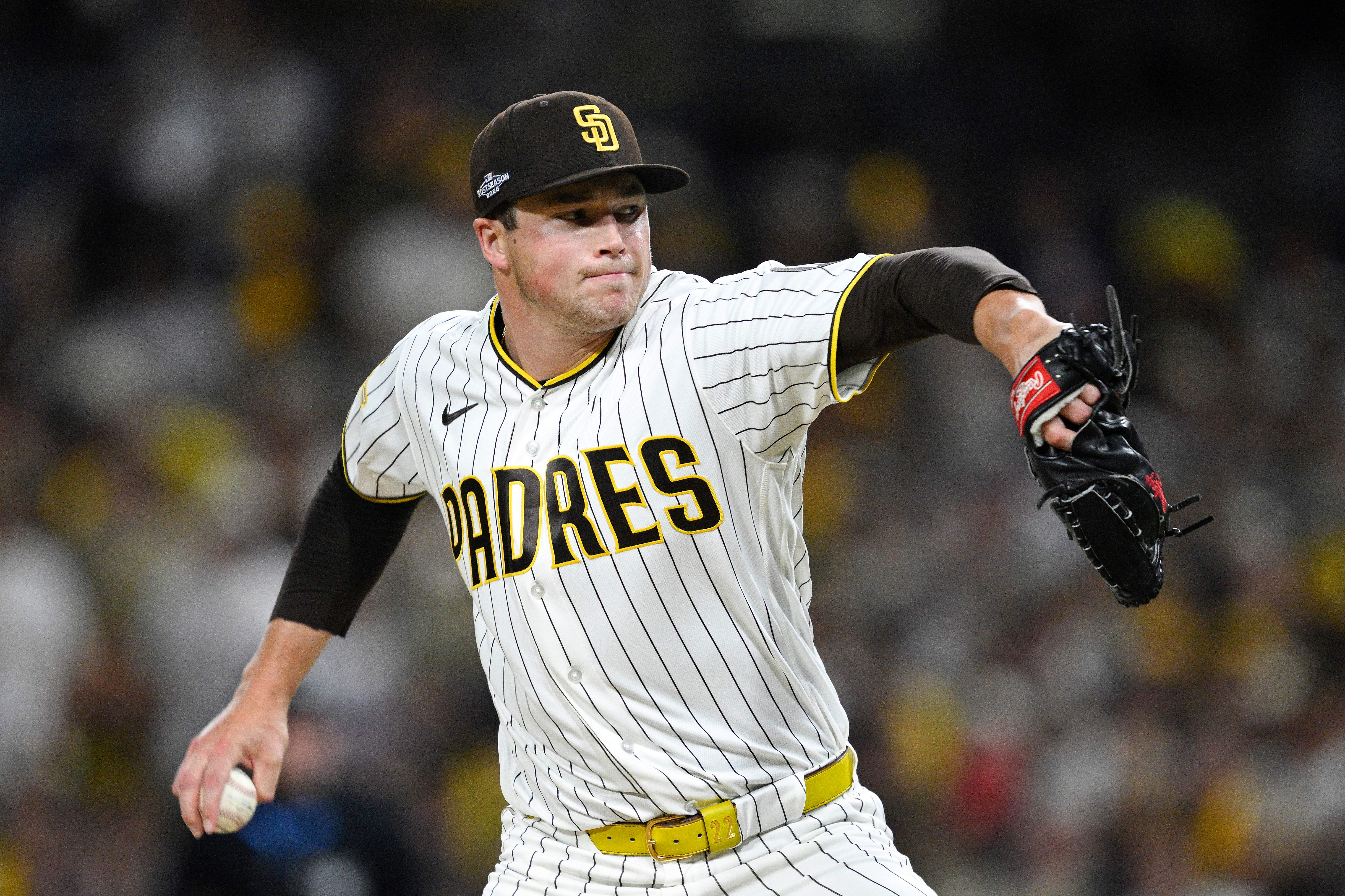
Proposed trade: Boston receives Miller. San Diego receives Gonzales, Juan Valera, and Mikey Romero.
Miller’s talent is easy to defend. In 2026, he posted a 1.67 ERA and 129 strikeouts in 70 innings.
The package becomes harder to defend against the article’s own assessment that Boston’s bullpen is not a major concern.
Using Gonzales, Valera, and Romero in relief would leave those players unavailable for an impact bat or a broader roster overhaul. An excellent closer can be worth a substantial return. Boston still has to establish that its biggest marginal improvement comes in the late innings.
San Diego’s incentive also needs work. The Padres acquired Miller and JP Sears in a 2025 package headlined by Leo De Vries. Miller remains controlled through 2029, giving San Diego time to keep benefiting from his production.
That past investment should not dictate a future decision. It does, however, show the scale of San Diego’s commitment to acquiring him.
A disappointing postseason alone does not explain why the Padres should reverse course.
5. Elly De La Cruz: Cincinnati Has Time and Leverage
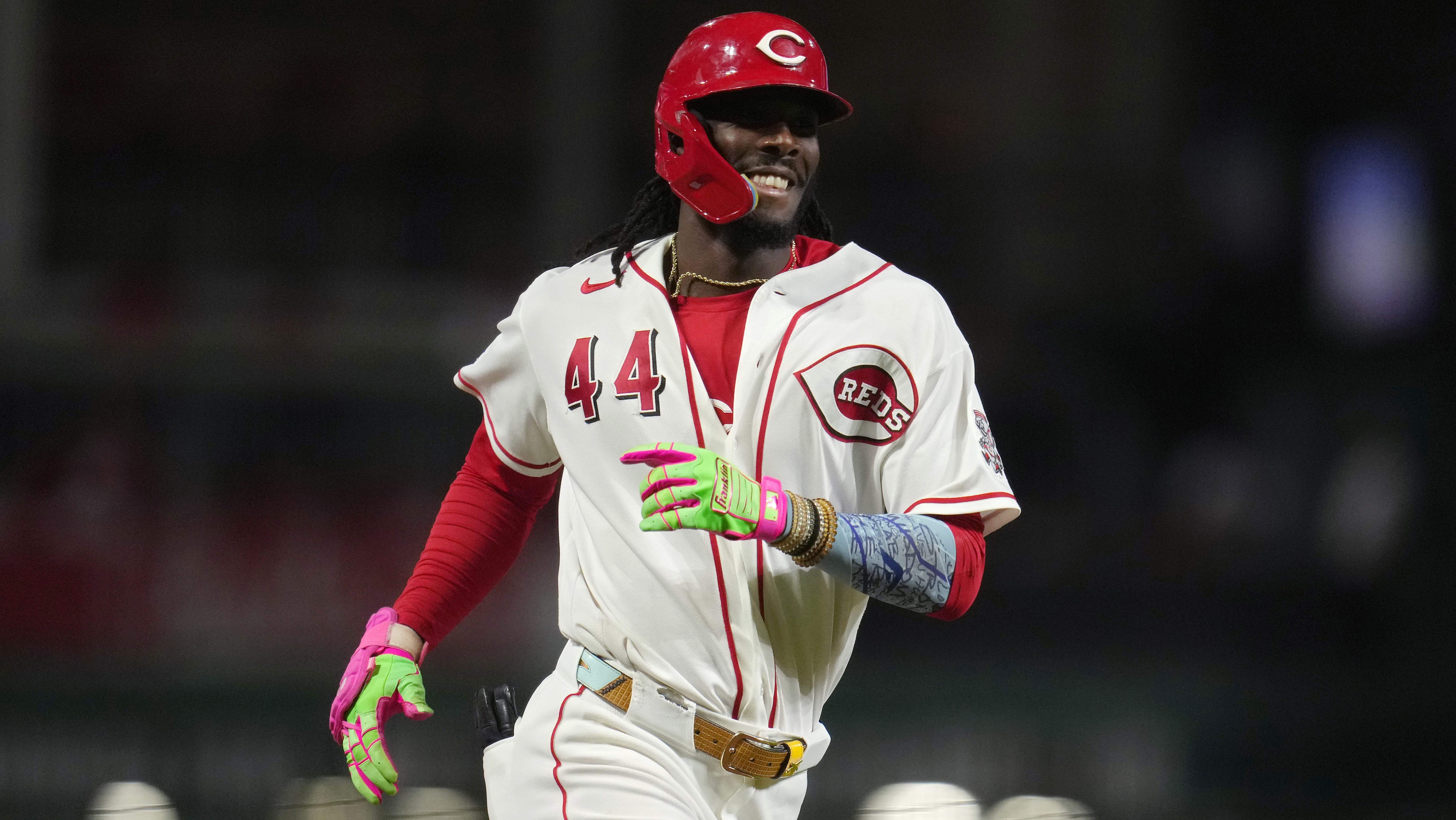
Proposed trade: Boston receives De La Cruz. Cincinnati receives Franklin Arias, Bennett and Godbout.
This proposal makes its weakest leap before discussing the return: treating De La Cruz’s departure as settled.
He rejected an extension. That establishes that one offer failed to produce an agreement.
It does not establish a trade request, a preferred destination, or an immediate need for Cincinnati to move him.
De La Cruz remains under club control through 2029. Those seasons give the Reds opportunities to win with him and substantial leverage in any discussion.
Arias would be a significant headliner, but calling him an immediate replacement understates the uncertainty of trading an established star for a prospect. The piece also lists Arias as 22; mlb.com/milb/prospects/redsox/franklin-arias-808265″ target=”_blank” rel=”nofollow noopener”>MLB Pipeline lists his birth date as November 19, 2005, making him 20.
Bennett and Godbout strengthen the offer. They don’t explain why Cincinnati should abandon the chance to build around De La Cruz now.
Boston can pursue ambitious upgrades. For these five proposals to be convincing, the expected improvement must justify the cost, fit the roster, and overcome the other club’s reasons to say no.
Red Sox Acuña Trade Proposal Deserves a Reality Check