
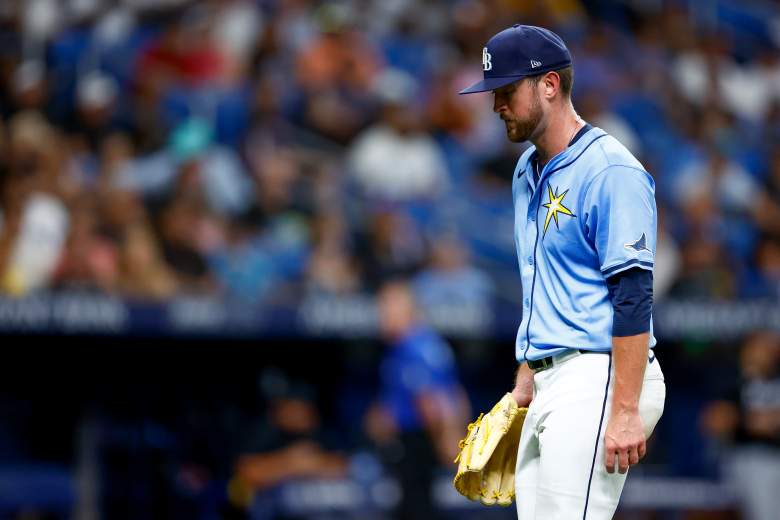
This is an idea, not a rumor. But let it be noted that the Tampa Bay Rays have an opportunity to reunite with one of their former pitching success stories – and for a much lower price than he would have cost this time last year.
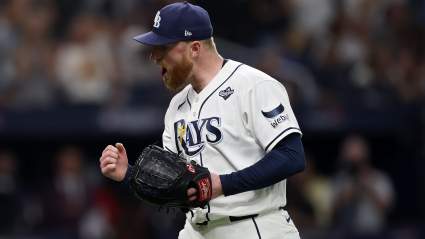
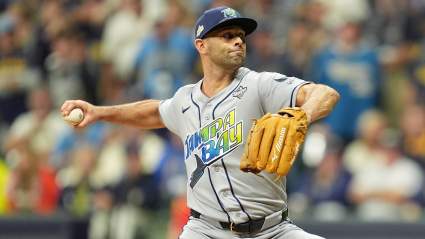
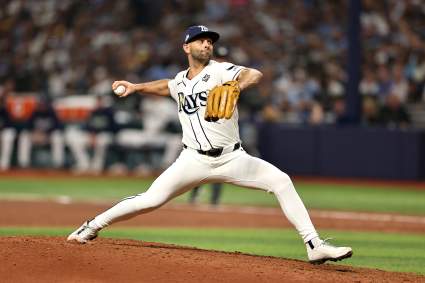
Yesterday, the Athletics declined their $15 million club option on veteran left-hander Jeffrey Springs for the 2027 season. Having endured a difficult two years since leaving Tampa Bay – especially the second one – Springs is now a free agent. And perhaps, the Rays should seriously consider bringing him back at a considerably reduced price. After all, they may have some vacancies.

The Good Days Of Yesteryear
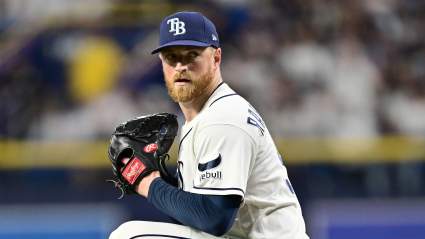
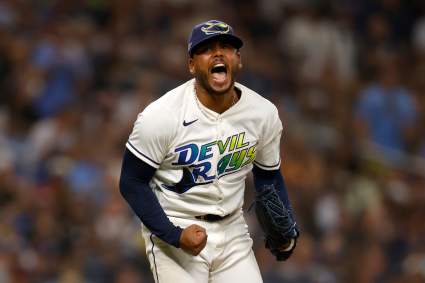
Springs, 34, was one of the more effective pitchers in Tampa Bay’s rotation before being traded to the Athletics in December 2024. He was not traded because he did anything wrong, but because the Rays’ model necessitates trading players at the peak of their value, even if it means weakening their own on-field product for a bit. Springs, clearly, had been great for the Rays hitherto. But he was not for the Athletics thereafter.
A disastrous 2026 campaign saw Springs finish with a 4-14 record, 6.18 ERA and 1.46 WHIP across 29 starts. In 142.2 innings, he struck out 112 batters, walked 57 and surrendered 35 home runs, the most in the American League. At that point, the Athletics – still very much in a transitional phase, and a long way off of having money to burn – correctly and inevitably felt that paying $15 million for another season of a pitcher coming off the worst campaign of his career would have represented a considerable (at best) “gamble”. Instead, the club will pay Springs a $750,000 buyout and allow him to test the open market.
For the Rays, however, the circumstances are rather different. Springs is not going to command anything approaching his previous salary, and his familiarity with the Rays’ coaching staff and pitching philosophy makes him an interesting candidate for a low-cost reclamation project. They are also about to have some space to fill, because the same model that necessitated Springs being traded two years ago now knows it is Drew Rasmussen’s time to hit the market as well.
Best Days With The Rays
After arriving from the Boston Red Sox in February 2021, Springs developed from an unremarkable middle reliever into one of the American League’s more effective starting pitchers. His breakthrough came with the Rays in 2022, when he posted a 2.46 ERA and 144 strikeouts across 135.1 innings, successfully transitioning into a full-time starting role.
That performance earned him a four-year, $31 million contract extension in January 2023. Unfortunately, though, just as he was getting going on it, Springs was sidelined almost immediately by an elbow injury that required Tommy John surgery, limiting him to just three appearances that season.
Springs eventually returned in July 2024 and recorded a respectable 3.27 ERA in seven starts before further elbow discomfort ended his campaign prematurely. He never was a velocity guy, and the injuries cost him nothing in that regard. With Tampa Bay possessing considerable starting pitching depth, with the pay checks about to increase and the age right behind them, the Rays subsequently traded him and fellow left-hander Jacob Lopez to the Athletics in exchange for Joe Boyle, Will Simpson, Jacob Watters and a competitive balance draft pick. Ultimately, it was not a great trade for either team.
To be fair to Springs, his first season with the Athletics was reasonably productive. Although his 4.11 ERA in 2025 was some way short of his Tampa Bay standards, he made 30 starts, pitched 171 innings and recorded 138 strikeouts. It was an encouraging demonstration of durability after several injury-interrupted years. Additionally, all players in Vegas seem to be having home run problems. That said, the subsequent collapse in 2026 is concerning, particularly given his age and the right hip discomfort that required a stint on the injured list in August.
Rays Are Good At This Sort Of Thing
Assuming the health holds up, there are however reasons to believe – or perhaps that should be, hope – that Springs’ decline might not be irreversible.
When at his best, Springs’ previous success was built on command, deception and pitch movement than overwhelming velocity, qualities that can potentially be restored through mechanical adjustments, pitch sequencing and improved health. There is also the matter of the Rays’ established ability to rehabilitate pitchers whose careers have stalled elsewhere. Springs himself is one of the clearest examples of that approach, having been transformed into a valuable starter during his original four-year stint with the organisation. (Cam Booser is but the latest.)
The Rays would not need to guarantee him a rotation spot. A modest one-year contract, potentially including performance incentives, would allow them to evaluate his condition during spring training and determine whether he could contribute as a starter, long reliever or swingman. A 6.18 ERA cannot simply be dismissed as bad luck, and his declining strikeout numbers and increasing susceptibility to home runs suggest genuine problems that would need addressing. But for a Rays organisation that helped make him an effective major league starter in the first place, and which always loves to save money, a reunion at the right price could be a sensible piece of offseason business. There may well still be a fire in that change-up that just needs a log throwing on it.

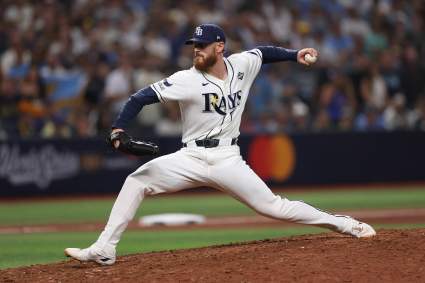
Rays Should Bring Back Jeffrey Springs