
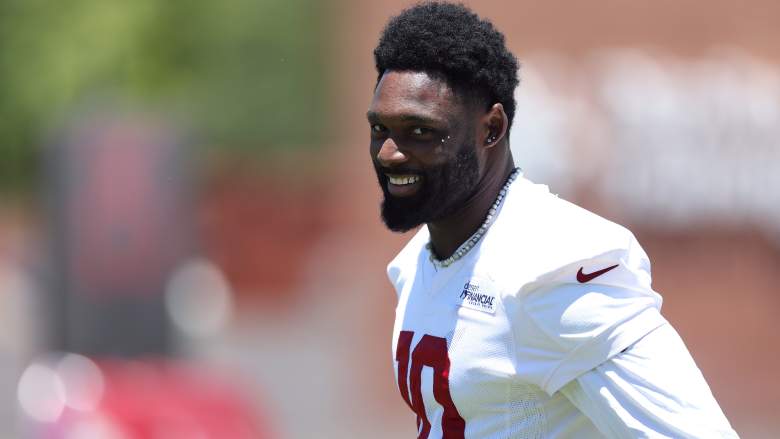
The Josh Sweat Bears trade idea is gaining traction as the Chicago Bears look to strengthen its defense for a potential playoff run. A recent Sports Mockery report makes the case for the Arizona Cardinals edge rusher as a natural fit, building on the trade speculation examined in Heavy’s report on the pressure facing Arizona five days ago. But there is a more important question for the Bears: would Sweat give Dennis Allen’s defense enough of a boost to justify the financial and football risks?
Josh Sweat Bears Trade Talk Comes With a Catch
The appeal is obvious. Sweat recorded a career-high 12 sacks in his first season with Arizona in 2025 after signing a four-year, $76.4 million contract. He is 29, has a Super Bowl title from his time with Philadelphia and would give Chicago another experienced edge rusher alongside Montez Sweat. For a 3-1 Bears team trying to turn a promising start into a serious postseason push, adding a proven pass rusher is an understandable temptation.
The trouble is that the narrative around his future has moved ahead of the facts. After ESPN’s Adam Schefter reported that Sweat was seeking a new contract, the Cardinals defender pushed back publicly, telling the team’s official website, “I didn’t say (expletive) to anybody.” He also said he wanted to concentrate on helping Arizona win. That does not rule out a trade, especially with the Cardinals struggling, but it makes claims that Sweat has demanded an exit too strong. Chicago would be evaluating a possible opportunity, not responding to a confirmed trade request.
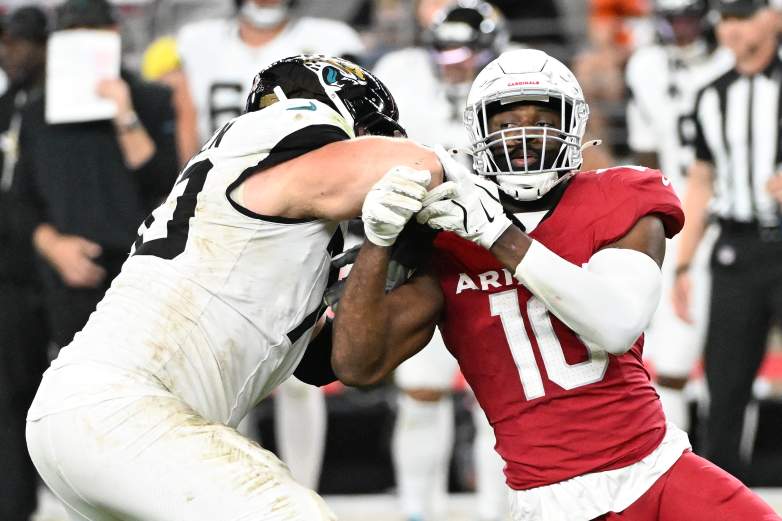
The Bears Need More Than a Name to Fix the Pass Rush
There is a football case for the move, but Sweat’s early-season numbers suggest caution. He entered Week 5 with one sack and six total pressures, according to Pro Football Focus. Those figures need context: Sweat began the season after spending time on the physically unable to perform list and has been working his way back from an undisclosed offseason procedure. A groin issue also appeared on the injury report. After his best performance of the season against the Giants, he said he was feeling healthier and getting off the ball faster.
That recovery makes Sweat an intriguing target — and a risk. Chicago should be asking whether his production is likely to rebound as he gets healthier, rather than assuming last year’s 12 sacks will automatically return. Allen could use another capable edge defender to help keep pressure on quarterbacks late in games, while a deeper rotation could reduce the workload on Montez Sweat, Austin Booker and Dayo Odeyingbo. But a trade only solves that problem if the player arriving in Chicago is healthy enough to make a difference from day one.
Ryan Poles Must Get the Price Right
The contract is the other major consideration. Sweat’s deal carries a $16.385 million cap figure in 2026, according to Over the Cap, with larger cap numbers scheduled for the next two seasons. His remaining guaranteed money and the precise cost of a midseason acquisition would need to be examined before Chicago could decide what it could afford. A trade would not automatically mean the Bears inherit every dollar of his listed cap figure, but neither would it be a simple bargain-bin addition.
That is why the Bears should be interested without getting carried away. If Arizona becomes willing to negotiate and the medical evaluation checks out, Sweat could give Chicago a meaningful boost for the stretch run. But surrendering a valuable draft pick and taking on a substantial financial commitment based mainly on his 2025 sack total would be a gamble. For Ryan Poles, the smart play is to investigate the opportunity — and make sure the price reflects the uncertainty.
Josh Sweat Bears Trade: The Risk That Could Make Chicago Hesitate