
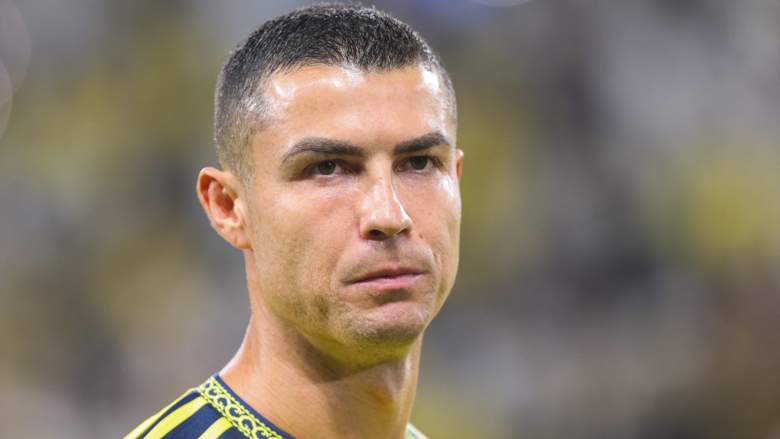
Cristiano Ronaldo has just declared himself the best player in history. Seriously? In an interview with CNN, excerpts of which were published by The Athletic, the 41-year-old insisted that whether he finishes with 920, 925 or 930 career goals, “the best player in history is me, full stop.” Apparently, football’s greatest debate is over. Ronaldo has settled it himself.
The Best Player in History? Effort Isn’t Genius
Let’s give Ronaldo his due. There probably isn’t another footballer who has dedicated so much of his life and body to staying in peak physical condition for so long. His discipline, his training, his diet and his determination to keep scoring deep into his 40s are extraordinary. He has earned his place among the most prolific players the sport has ever seen. But there is a difference between being the most dedicated and being the most gifted, and no amount of gym work can erase it.
Lionel Messi, Diego Maradona and Pelé had something that cannot be built through repetition or measured on a fitness tracker. Their relationship with the ball was different. A touch, a turn, a pass that nobody else saw — they made the impossible look ordinary. Ronaldo was 19 and at Manchester United when a 17-year-old Messi began appearing for Barcelona. The Argentine did not need years of headlines announcing his greatness. His skills announced it for him. Ronaldo’s work ethic helped him become a phenomenon; Messi’s genius made him the man Ronaldo could never quite escape in the debate over who was better.
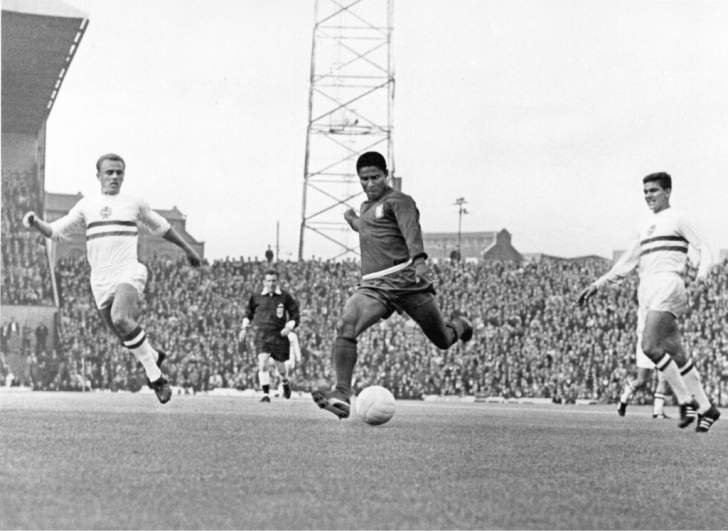
And for the record, I do not even believe that Ronaldo is the best Portuguese player in history. That title goes to the one and only Eusébio. And unlike Ronaldo, Eusébio didn’t need to announce his greatness. The “Black Panther” led Portugal to third place at the 1966 World Cup, finished as the tournament’s top scorer with nine goals, and won the 1965 Ballon d’Or. He was a force of nature who helped put Portuguese football on the world map long before Ronaldo was even born.
Messi Didn’t Just Share Ronaldo’s Spotlight — He Beat Him
Imagine dedicating your entire life to being the best at your profession, only to spend your defining years being compared with a rival who keeps winning the argument. Ronaldo’s frustration is understandable. His goals, trophies and longevity deserve enormous respect. But the fact that he has to insist on his superiority tells us something about the debate: it has never been settled by his statistics alone. Messi has eight Ballon d’Or awards to Ronaldo’s five, and he has the World Cup that eluded his rival. The numbers do speak — just not always in the direction Ronaldo wants.
Their direct rivalry offers another reality check. In the 30 El Clásico matches in which both played for Barcelona and Real Madrid, respectively, Messi’s side won 14 times, Ronaldo’s won eight, and eight matches ended in draws. That does not prove Messi was the better player in every respect, but it hardly supports Ronaldo’s claim of unquestionable superiority. And the argument does not end with Messi. Many consider Maradona the greatest, while Pelé’s place in football history remains almost untouchable for those who watched him or studied what he achieved. Calling yourself the greatest is easy. Making a convincing case across generations is considerably harder.
Greatness Is Also About What Happens When You Don’t Get Your Way
Then there is the Portugal episode. Ronaldo left the national team camp after warming up against Norway but not being brought on, saying coach Jorge Jesus had broken a promise about his playing time. Ronaldo later apologized for his reaction and said he accepted that there could be consequences. His explanation deserves to be acknowledged. Still, walking away from the team because you are unhappy with a decision is not exactly the example of leadership expected from a veteran captain. The team comes first. Even when you’re Cristiano Ronaldo.
There is no need to pretend Ronaldo has not had a magnificent career. He has scored goals at a historic rate, won major trophies and pushed himself to extraordinary physical limits. But greatness is not a personal award that you can hand yourself because you believe your numbers settle everything. It involves talent, influence, judgment, leadership and the ability to make teammates and supporters believe they are witnessing something special. Ronaldo can make his case, and fans can make theirs. But the moment he declares the debate closed, he exposes the very insecurity that makes his claim so unconvincing. If you have to tell the world you’re the greatest, perhaps you should ask yourself why at least half the world hasn’t already agreed.
Cristiano Ronaldo Just Called Himself the Best Player in History. Seriously?