
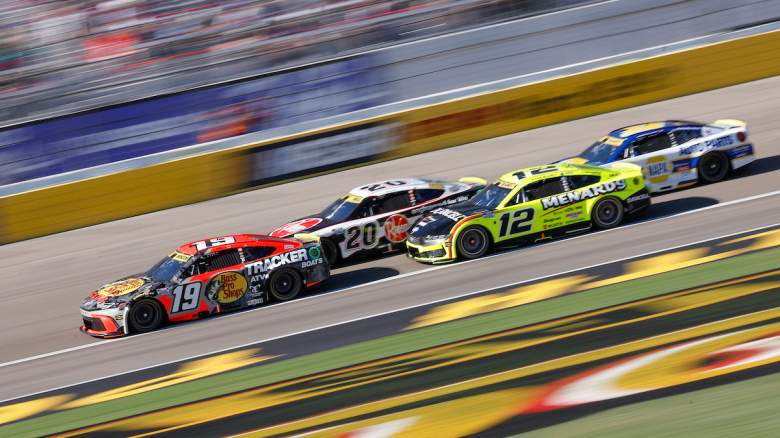
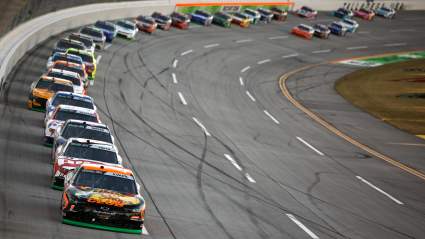
NASCAR drivers started overheating on the opening laps of the South Point 400 at Las Vegas Motor Speedway Sunday, according to The Racing Experts.
Cockpits are routinely reaching 130 degrees Fahrenheit, according to Men’s Fitness, and a 97-degree afternoon leaves the field testing how much heat it can handle.
That 130-degree figure is long-standing industry shorthand for a hot race, and a broadcast image from the interior of Christopher Bell’s No. 20 Toyota showed a digital thermometer registering 129.6 degrees. Carson Hocevar reported a broken helmet hose blowing hot air onto his head, according to The Racing Experts.
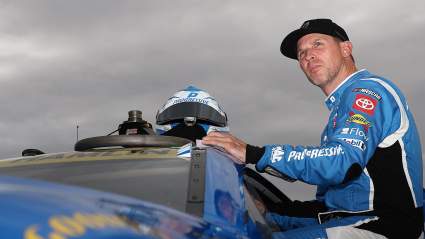
“Balance was more of a factor than it had been in qualifying in quite some time,” pole-sitter Denny Hamlin said, as quoted by Speedway Media. He credited temperature-related car adjustments. A USA Sports camera also overheated during a live interview with Hamlin.
The forecast called for sunny skies, a high near 97 degrees, light east winds, humidity in the teens and no chance of rain. A clear night follows, with lows in the low-to-mid 70s, according to the National Weather Service.
Dry air matters, too. Cockpits at humid Southeast tracks often feel worse than desert ones at the same air temperature, according to Flowracers‘ cockpit temperature guide.

South Point 400 Heat and NASCAR’s Hottest Races
Nothing in Sunday’s coverage establishes the South Point 400 as the hottest Cup race on record, despite the USA Sports commentators’ assertions of that status. Darrell Waltrip’s feet burned so badly at Nashville in 1982 that his wife held ice packs on his heels during interviews, according to Foster’s Daily Democrat.
Buddy Baker recalled 107 degrees outside and about 137 in the car at the 1986 Southern 500 at Darlington, and he collapsed when cooler air hit him, according to Speedway Media.
Ricky Rudd won the Sept. 27, 1998, NAPA 500 at Martinsville despite a cooling system that was not working and a cockpit near 150 degrees, according to the Tampa Bay Times.
Fall 2007 at Fontana brought ambient air near 107 degrees, with in-car readings cited as high as 170. “It’s hot, it’s definitely hot. Hotter than we’d prefer,” Jeff Burton said, as quoted by Daily Downforce.
The Next Gen car traps more heat, with sealed bodywork, limited air ducts and exhaust on both sides, according to Building Speed.

How Extreme Heat Affects NASCAR Drivers
“A literal oven,” Truck Series driver Toni Breidinger said of a 130-degree cockpit, as quoted by Men’s Fitness. Heart rates can sit near 190 beats per minute for long stretches, and a core temperature rise of about 0.8 degrees Celsius is enough to degrade hand-eye coordination and decision-making.
Cool shirts circulate chilled fluid through tubes under the firesuit and can remove roughly 40% to 60% of the heat load, according to data published by Tech Briefs.
Nomex firesuits protect drivers from fire, not overheating, according to NASCAR.com. Cabin air conditioning is off the table because of weight and horsepower costs, according to Speedway Media.
When the chiller stops, the fluid heats up and leaves a driver worse off than with no shirt. A.J. Allmendinger needed medical attention at COTA this year after a failure, according to a Motorsport.com report.






Is NASCAR Las Vegas Race the Hottest Ever? How Extreme Heat Affects Drivers