
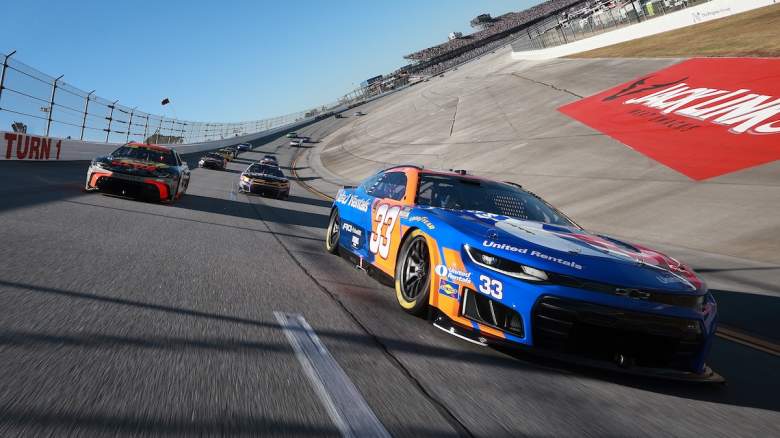
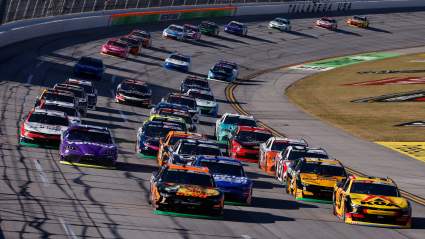
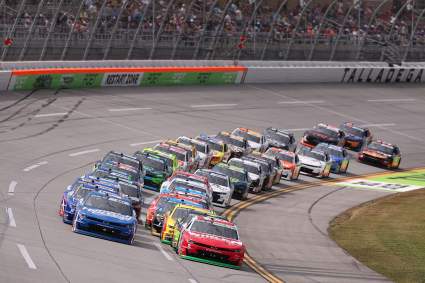
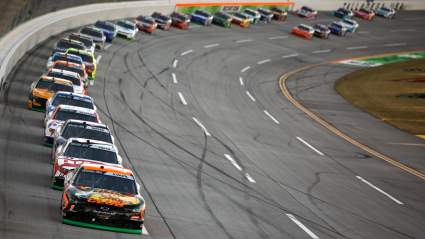
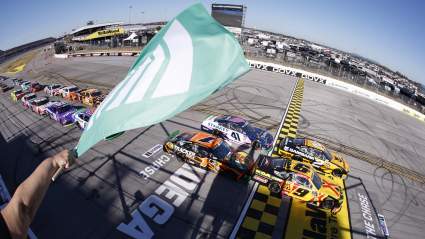
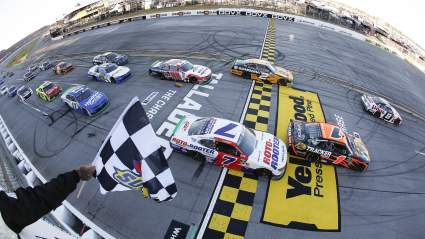
NASCAR is “incredibly pissed” after the field opened Sunday’s YellaWood 500 at Talladega Superspeedway in a fuel-saving crawl, wrote Jeff Gluck of The Athletic in the early stages of the race.
Chase Briscoe won the pole at 186.065 mph. A few hours later, the pack was circling in tight bunches at a fraction of that speed, with 98 laps in Stage 1 still to burn.
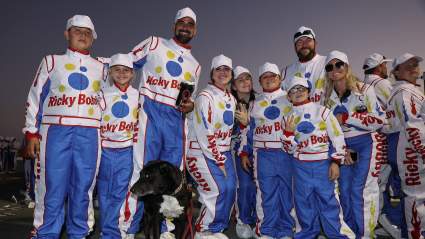
Gluck has no inside information, he stressed. He framed the pace as the opposite of what officials want, with NASCAR president Steve O’Donnell likely frustrated, according to his online post. The speeds, he wrote, looked like a Richard Petty Driving Experience outing.
The throttle numbers backed him up. Joey Logano ran about 43% throttle after his team radioed “max saving,” as Gluck detailed. Cars farther back dipped as low as 25%, Gluck added in a follow-up post.
Gray Gaulding, Daniel Dye and Cody Ware all led early laps while the field logged slow circuits, Gluck reported in yet another post.
Christopher Bell was in the thick of it.
“This is wild. 58 and a half second laps,” Bell said, as quoted by Gluck. Briscoe’s pole lap took 51.466 seconds, as AutoRacing1 reported after qualifying, which puts Bell’s pace more than seven seconds off.
Then RFK Racing broke the pattern. Brad Keselowski in the No. 6, Chris Buescher in the No. 17 and Ryan Preece in the No. 60 pulled clear of the field and built a lead of roughly six seconds. The gap grew to 17 seconds, and then to as much as 21 seconds.
“First group just pitted! The RFK cars are close to lapping the rest of them,” Gluck wrote after 50 laps. Two laps later, the RFK cars also pitted.
Keselowski had opened the throttle earlier and flown past the field to the lead on the bottom. The rest of the pack stayed in conservation mode.

Why NASCAR Drivers Opened Talladega in Fuel-Saving Mode
Why the slow start? It’s a Next Gen problem, and a stubborn one. The car’s drag makes pulling out of line to pass alone costly, so track position rules, and teams protect it by spending as little time on pit road as possible. Less fuel means a shorter stop, as The Athletic reported.
The race format feeds the incentive. NASCAR set the stages at 98, 143 and 188 laps, scrapping the 60-120-188 layout first planned for October, as RACER reported. The rear spoiler also shrank to 3.5 inches, down from 4 inches at Daytona in August, and horsepower dropped.
The last two stages run 45 laps each, short enough to finish without a fuel stop, as NASCAR announced on Oct. 1. The 98-lap opener gets no such relief.

How the Talladega Race Plays Out From Here
RFK arrived with the résumé for a run like this. The organization placed a car in the top five in both Daytona races and at Talladega this spring, where Buescher finished second after leading 22 laps, and Preece won at Daytona in August, according to an RFK release.
The rest of the field still has to manage the green-flag fuel cycle in a 98-lap opener. Gaps at Talladega can close in a hurry once a caution flies or the pack decides to race. Then the race changes character.
Charles Denike, crew chief for Bubba Wallace, previewed the later stages.
“Stage 2 and 3 will be go hard the whole time, and so will be the end of stage one. So you’ll have the hardest racing that we’ve had probably with this package in a long time,” Denike said, according to MotorBiscuit.
James Small, crew chief for Briscoe, was asked about Denny Hamlin’s forecast of big crashes at the end of each stage.
“So are we now going to start pushing earlier? Is it going to start getting racy with 20 to go or 15 to go, rather than five to go?” Small said, according to MotorBiscuit.
Stage 1 ends on lap 98, with stage points and track position both at stake in the Chase. After that come two 45-lap sprints, the format NASCAR built to put the throttle back on the floor.
Why Did Talladega Race Start So Slow? NASCAR Said To Be Unhappy