
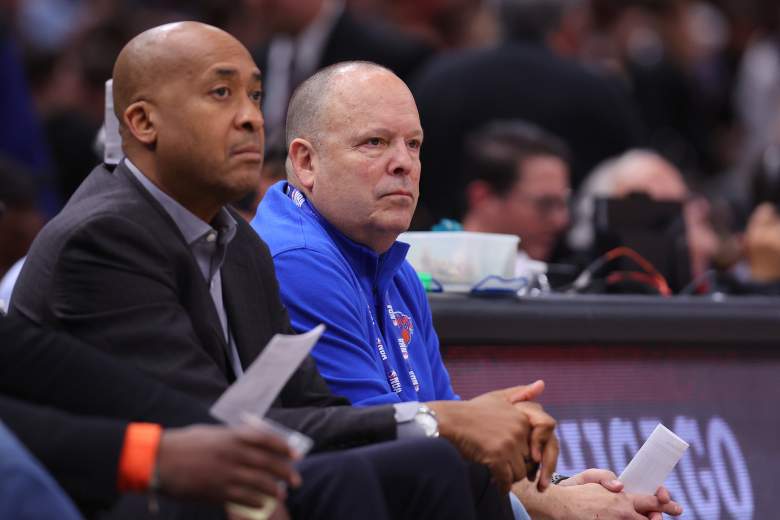
The New York Knicks want to put contract negotiations aside until later in the season. But waiting could come with a price.
The defending NBA champions announced Friday that they were suspending extension talks with their eligible players, hoping to eliminate distractions before their title defense begins.
NBA salary cap analyst Keith Smith quickly identified a complication: An Oct. 19 deadline could force the Knicks and some of their most important players to make decisions that potentially open the door to unrestricted free agency next summer.
Karl-Anthony Towns and Josh Hart are at the center of that uncertainty.
Keith Smith Reveals Complication in Knicks’ Contract Decision
The Knicks made their position clear in a statement provided to ESPN’s Shams Charania.
“As an organization, our entire focus is on preparing for the upcoming season and delivering another year for our fans to be proud of,” the team said.
“As a result, we will not be negotiating contract extensions until later in the season and will remain solely focused on preparing for the start of the season.”
Smith explained on X that four Knicks players are currently eligible for extensions: Towns, Hart, Miles McBride and Tyler Kolek.
However, only players on expiring contracts can sign extensions after Oct. 19 without first addressing their contract options.
For Towns, that means declining his $61.1 million player option for the 2027-28 season to become eligible for an in-season extension.
Hart faces a different decision because the Knicks control his $22.4 million team option for 2027-28. New York would have to decline that option to extend him during the season.
The same requirement applies to Kolek, whose contract also contains a team option.
Towns and Hart Could Become Free Agents in 2027
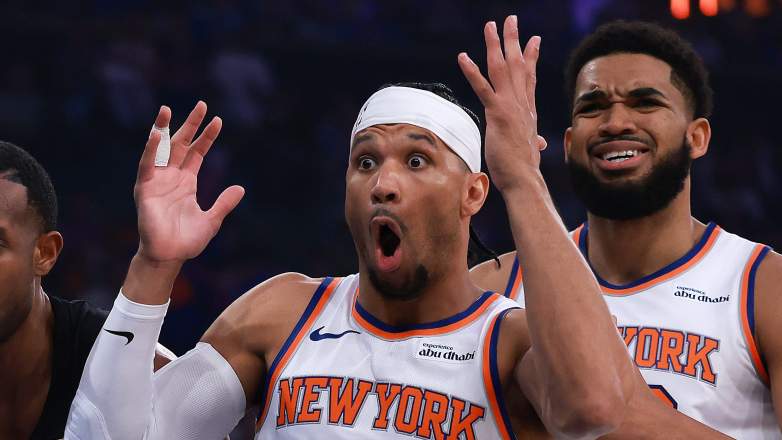
The potential consequences go beyond negotiating deadlines.
If Towns declines his player option and the Knicks decline Hart’s team option to facilitate extensions, both players could become unrestricted free agents in July 2027 if they fail to reach new agreements.
That would create considerable risk for a franchise trying to preserve the core that delivered its first championship since 1973.
There is an important distinction, however. Neither player is required to give up his existing contractual protection simply because the Knicks have postponed negotiations.
Towns can retain his $61.1 million option, while New York can keep Hart under contract for another season by exercising its team option.
Smith clarified in a follow-up post that declining an option to facilitate an extension isn’t unusual. It can allow a new contract to begin at a different salary rather than extending from the salary attached to the option year.
Still, negotiations carry no guarantee of success.
That uncertainty is especially significant for Towns, who is eligible for a four-year extension worth up to $276 million.
According to NBA insider Chris Haynes, the Knicks previously offered approximately $200 million over four years, but Towns’ representatives rejected that figure.
Towns has expressed a willingness to accept less than the maximum while seeking a deal that reflects his role in New York’s championship.
Miles McBride Has More Time to Negotiate
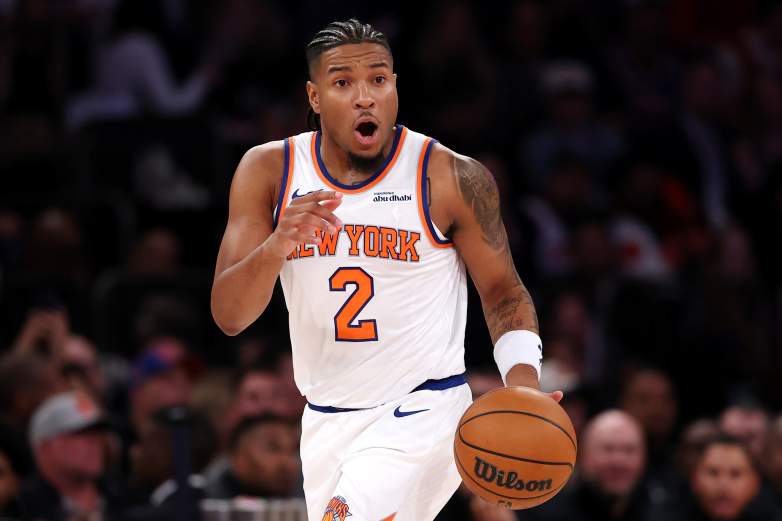
McBride faces a different situation.
Because the guard is already entering the final season of his contract, he remains eligible for an extension through June 30, 2027, without needing an option declined.
That gives both sides considerably more flexibility.
Hart, meanwhile, has already acknowledged the emotional toll of unresolved negotiations and warned that the conversation could change by February if no progress is made.
The Knicks open their championship defense Oct. 20 against the Philadelphia 76ers.
Their intention is to keep the focus on basketball.
But Smith’s explanation underscores a difficult reality: Postponing negotiations doesn’t necessarily postpone the decisions that could shape the franchise’s future.
Knicks’ Surprising Contract Decision Comes With Hidden Catch for 3 Players