
The Green Bay Packers have got an explanation from an NFL referee following two controversial penalties during Sunday’s 20-17 loss to the Detroit Lions.
And one of his answers raises more questions about a third-quarter decision.
Referee Alex Moore addressed the unnecessary roughness penalty against defensive tackle Devonte Wyatt, noting that he couldn’t determine whether a whistle had sounded before the controversial tackle.
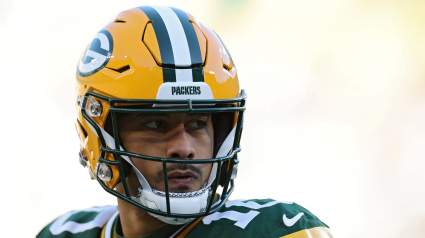
The official also talked about the reasoning behind a disputed intentional grounding call against quarterback Jordan Love.
ESPN’s Rob Demovsky shared Moore’s comments from a postgame pool report conducted by MLive reporter Ben Raven on Sunday, Oct. 25.


Packers Referee Addresses Devonte Wyatt’s Controversial Penalty

The most consequential disputed call occurred with 7:46 left in the third quarter.
Detroit faced second-and-11 from Green Bay’s 27-yard line when Jared Goff completed a short pass to Amon-Ra St. Brown.
Packers linebacker Isaiah McDuffie initially brought St. Brown down, but the receiver got back up and appeared to continue the play.
Wyatt responded by tackling him again, and St. Brown’s leg appeared to strike umpire Terry Killens Jr., knocking the official to the ground.
Killens threw a flag for unnecessary roughness, handing Detroit a first down at Green Bay’s 11-yard line.
Asked whether a whistle had blown before Wyatt tackled St. Brown, Moore said the following.
“We ruled that the play was over. I can’t honestly hear if there was a whistle or not, but the tackler made the tackle, the play was over,” Moore said. “Then, there was an additional action, and he basically tackled him again with force after the play was over.”
When asked whether that additional contact was responsible for the penalty, Moore confirmed the reasoning.
“It was exactly the additional action.”
The explanation is notable because the Packers argued that no whistle signaled the play was dead.
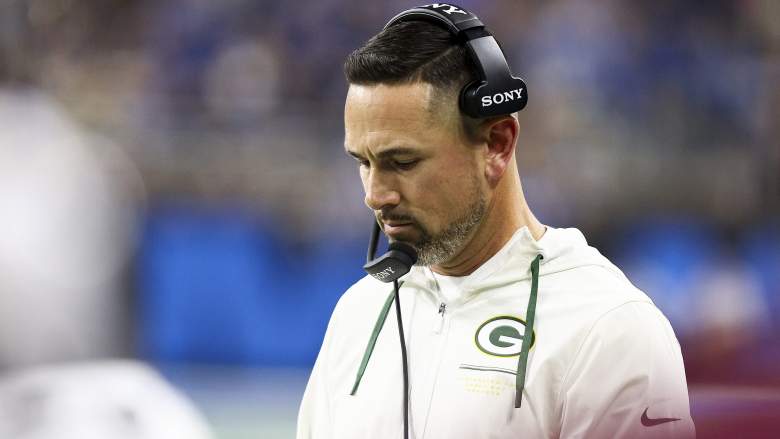
LaFleur questioned the ruling afterward, per the Packers’ official website.
“There was no whistle blown and the guy continued to run,” LaFleur said.
Wyatt also defended his decision, arguing that allowing St. Brown to continue without another tackle could have ended in a touchdown.
The penalty was a key occurrence since Detroit no longer had to face a third-and-7, receiving a fresh set of downs and scored two plays later on Goff’s 10-yard touchdown pass to Jameson Williams.
That score gave the Lions a 17-14 advantage.
Referee Also Explains Jordan Love’s Intentional Grounding Call
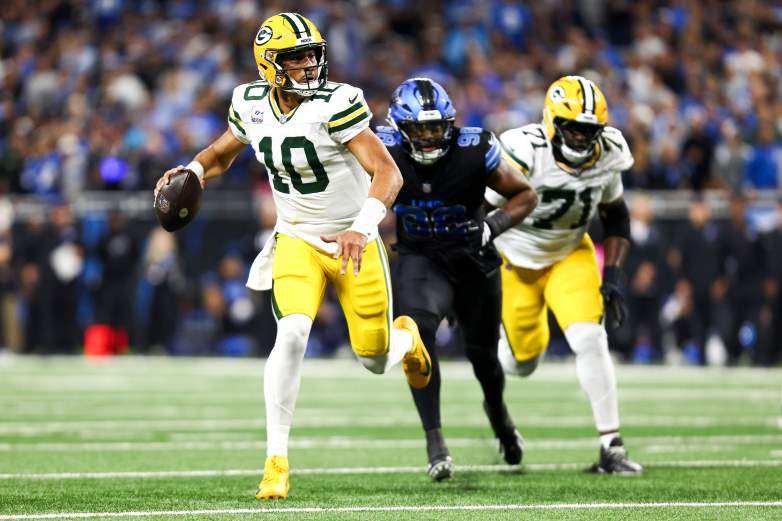
Moore addressed another contentious ruling involving Love and tight end Tucker Kraft.
At the beginning of the fourth quarter, Love was penalized for intentional grounding after attempting to throw the ball away while facing pressure.
The referee mentioned that officials determined Love had moved outside the tackle box but failed to get the pass back to the line of scrimmage.
“So we ruled that although the quarterback was outside of the tackle box, the pass did not make it to the line of scrimmage,” Moore said.
A reporter followed up by asking whether Kraft’s position as the intended receiver mattered.
Moore clarified that the pass needed to reach either the line of scrimmage or the area occupied by Kraft to avoid the penalty.
The grounding call resulted in an 11-yard loss, leaving Green Bay to deal with second-and-21 from its own 8-yard line.
Two plays later, Love was intercepted by Lions defensive back Brian Branch.
The disputed decisions were part of a discouraging afternoon for Green Bay, which committed eight penalties totaling 81 yards.
The Packers also drew two roughing the passer penalties, while safety Xavier McKinney publicly criticized the officiating after the defeat.
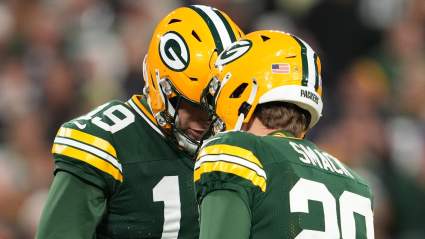
Nevertheless, Green Bay had other shots to win. Kicker Trey Smack missed two field goals, including a 35-yard attempt late in the fourth quarter.
Detroit then secured the victory on Jake Bates‘ game-winning 22-yard field goal.










NFL Referee Makes Admission on Controversial Packers Penalty