
Thursday, August 20 marked an important anniversary for the Native American community. But it wasn’t just a day for celebrating. Bravest ATL used the anniversary as a reminder for how much work remains.
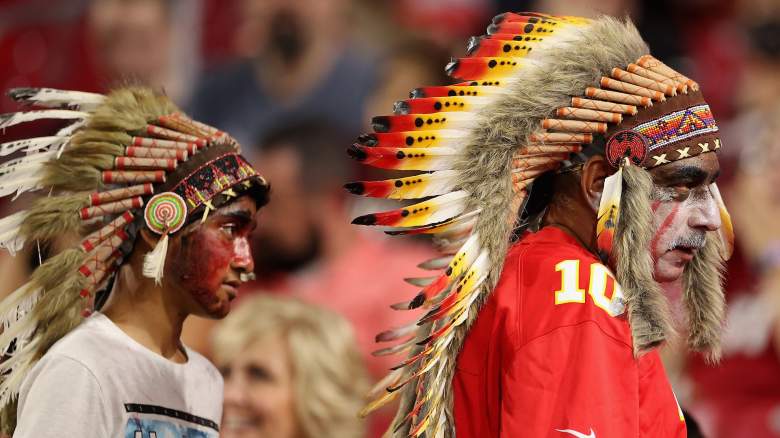
On August 20, 2020, the Kansas City Chiefs banned headdresses and Native-themed face and body paint at Arrowhead Stadium.
Bravest ATL, an Atlanta Braves baseball fan club, called the ban a step in the right direction. To honor the six-year anniversary, though, the fan club posted arguments for stricter enforcement of the policy on its social media channels.
The club also again called on the Braves to change their team nickname to move away from Native American imagery.
“Six years ago, Kansas City banned headdresses and Native-themes face paint at Arrowhead,” said Executive Director of Bravest ATL Nic Barkley in a statement emailed to Heavy Sports. “They acknowledged the brand was the problem, and then they put it on the fans.”
“But if I dress as a bear because your team is called the Bears, I’ve simply followed your lead. The same held true in Kansas City, and it applies in Atlanta. The case isn’t just clear, it’s closed. So why are they still doing the chop?”
“We understand there are bigger issues facing Native communities, and every one of them gets harder to address while we’re still debating whether Native people should be portrayed as stereotypes and cartoons or as real human beings,” the statement continued. “How we portray people shapes how we treat them every single time.
“[This anniversary] is about reflecting on how far this movement has come and the ground still left to cover. We can all be brave enough to change.”
A 2020 Summer of Change
The summer of 2020 wasn’t only a tumultuous time in America because of the COVID-19 pandemic. It was also a summer of protests and social change fueled from George Floyd’s death in Minneapolis on May 25.
Less than six weeks after Floyd’s tragedy, the Cleveland Indians announced it would consider new nicknames. About a year later, the team officially revealed its identify shift to the Cleveland Guardians.
On July 13, 2020, the NFL’s franchise in Washington DC, due to corporate pressure from Nike and FedEx, formerly announced it would retire the “Redskins” nickname.
After two seasons as “The Football Team,” Washington officially adopted “Commanders” as its new nickname in February 2022.
The Chiefs followed suit in August 2020.
Kansas City Chiefs Banned Native American Headdresses at Arrowhead Stadium
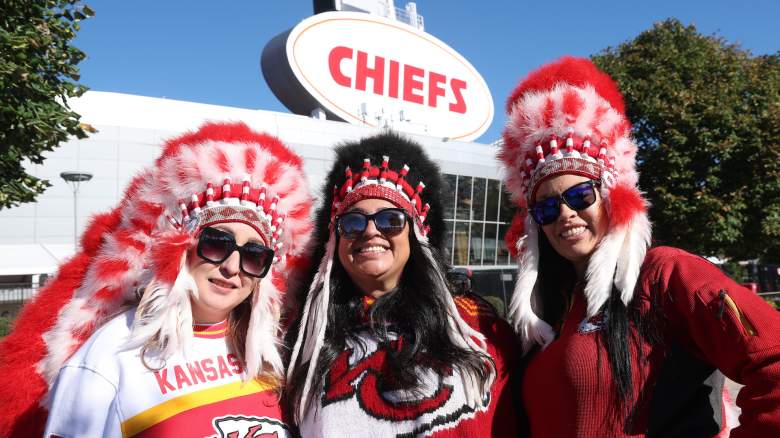
The Chiefs didn’t change their nickname. But the franchise put a ban in place at Arrowhead Stadium on Native American headdresses and face paint.
It was another significant win for the Native American community. It’s a policy, though, that Indigenous Peoples groups would like to see more strictly enforced.
“Six years later, we still see people wearing headdresses and face paint walking past us while we’re outside the stadium protesting,” said Rhonda LeValdo, founder of Not in Our Honor. “The ban was Kansas City’s way of admitting they know it’s wrong, but announcing a policy and not enforcing it speaks volumes.”
At Chiefs road games, headdresses are also still common according to Kansas City Indian Center Executive Director Gaylene Crouser.
“Kansas City’s policy was a step in the right direction, and it came after more than 60 years of Native people fighting for it,” said Crouser. “Six years later, we wish it were enforced both in Kansas City and in stadiums throughout the NFL with the same conviction it was announced with.
“Atlanta and Kansas City both have an opportunity to do the right thing.”
Bravest ATL Calling for More Change
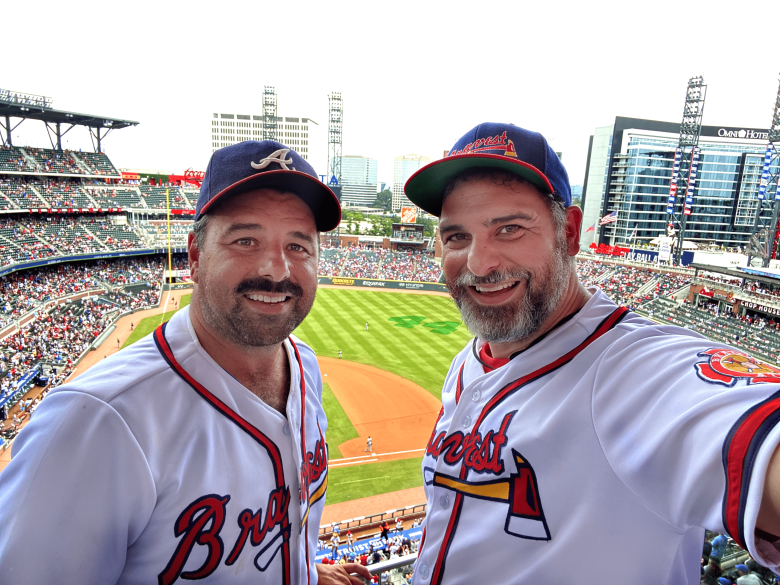
One of the more popular arguments of pushback Bravest ATL receives is pretty simple. The Chiefs’ headdress and Braves’ tomahawk actually honor Native American history and culture.
Why change that?
Truthfully, that’s an opinion that some Native American people hold. But lots of other Native Americans don’t.
“Native people don’t all agree on this issue, and honestly that’s the point. We’re real communities with different opinions and different dreams,” said enrolled member of the Eastern Band of Cherokee Indians Dr. Natalie Welch. “We’re not one singular warrior frozen on a logo.
Welch, an expert on Native American athletes and the program director of the MBA in Sports and Entertainment Management at Seattle University, strongly emphasized that the data doesn’t waver. Headdresses at Chiefs games and chopping at Braves contests are overwhelming hurtful to a lot of people with Native American heritage.
“This imagery harms Native kids no matter how it’s intended. My work focuses on what sport actually gives Native communities,” she continued. “It builds connection and confidence and creates a path to success.
“Where I grew up in Cherokee, North Carolina, we still play stickball the way our people have for generations. That’s real Native sport, living and changing with us. We’re still here, and that’s what’s worth honoring.”
Chiefs Reach Milestone But Fan Club Still Pushing Against Native American Stereotypes