
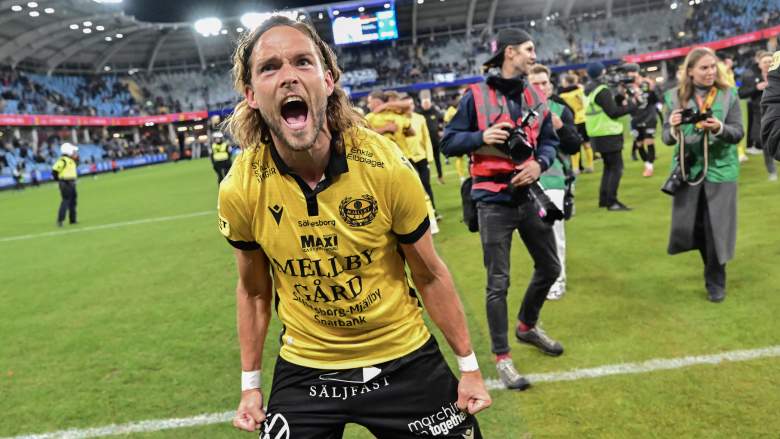
Imagine a major European soccer league where a goal goes in and nobody immediately waits for someone in a room upstairs to decide whether they can celebrate. That is still the reality in Sweden, where the Allsvenskan continues to operate without VAR. In an era when video review has become almost unavoidable across European soccer, Sweden has gone the other way — and the reason has surprisingly little to do with technology.
It has to do with who actually has a say in Swedish football. The country’s clubs operate under a membership-based system in which members retain at least 51% control, meaning supporters are not simply customers buying tickets. They have a genuine voice in how their clubs are run, including major issues such as VAR. When enough Swedish clubs and their members said no, the Swedish Football Association ultimately decided to respect that decision.
How Allsvenskan Fans Were Able To Say ‘No’ to VAR
Sweden’s resistance to VAR has been growing for years. But the most important aspect is who gets to make the decision. Allsvenskan clubs operate under Sweden’s 51-percent rule, meaning the member association must retain majority control. That gives supporters a meaningful voice in the direction of their clubs — and when Swedish football’s clubs pushed back against VAR, the federation ultimately respected that decision. In 2024, Swedish FA chairman Fredrik Reinfeldt said 18 elite clubs and two regional districts had opposed the technology, making it clear there was little appetite to force it through.
Sweden is not alone in giving supporters that kind of influence. Germany’s Bundesliga has its own 50+1 rule, which requires club members to retain a majority of voting rights and prevents outside investors from having the final say. The systems are not identical, but the philosophy is similar: the club is supposed to remain accountable to its members rather than simply becoming another asset controlled by an outside investor. And in Sweden, that structure has helped fans do something supporters elsewhere have largely been unable to do — say no to VAR and have the decision stick.
Swedish Fans Aren’t Exactly Staying Home
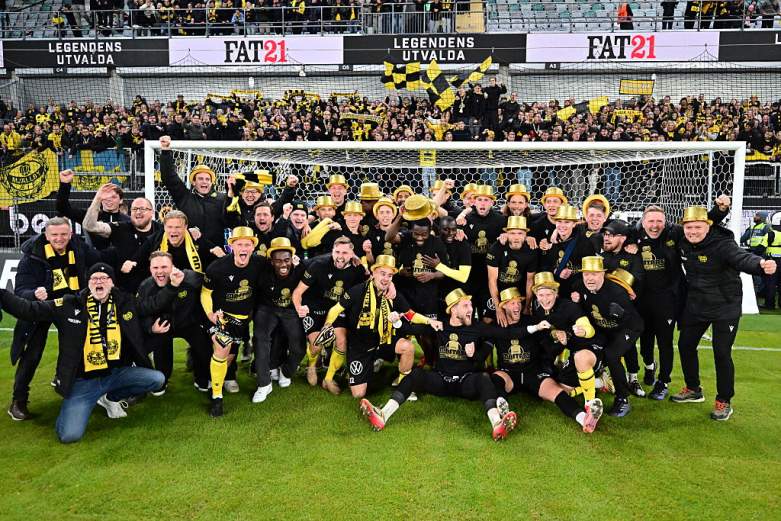
And here is where the Swedish experiment gets particularly interesting. You might assume that a league without one of the biggest technological changes in modern soccer would struggle to maintain interest. The opposite is happening in some of Sweden’s biggest football cities. AIK, Hammarby and Djurgården are drawing crowds of roughly 20,000 per game or more in 2026, while Malmö FF is also averaging well over 16,000. Some individual games have attracted crowds above 40,000, including more than 47,000 for AIK-Hammarby in August.
Those numbers do not prove that fans attend games because there is no VAR. But they certainly undermine the idea that modern supporters will only embrace soccer if the sport keeps adding technology. The atmosphere around Stockholm’s biggest clubs remains one of the most distinctive features of Swedish football, and the supporters’ influence over their clubs is part of that culture. They are not merely being asked what they think after a decision has already been made. They can help make the decision.
Sweden Chose a Different Kind of Soccer
That does not mean Swedish football believes VAR is useless. There are legitimate arguments on the other side, particularly when a major refereeing mistake changes the outcome of a game. Players and clubs competing in European competitions also have to deal with VAR elsewhere, while Swedish officials do not get the same domestic experience with the system. In 2024, more than 80% of player representatives at an Allsvenskan preseason meeting opposed bringing VAR into the league, according to SVT Sport.
What makes Sweden different is that the argument ultimately isn’t just about whether VAR is good or bad. It is about who gets to make that choice. Malmö FF’s explanation of its membership democracy makes that unusually clear: members decide, clubs decide and the league follows that structure. In most of Europe’s biggest leagues, fans can complain about VAR, protest outside stadiums or argue about it on social media. In Sweden, supporters helped make sure their objections actually changed policy.
The Swedish Experiment Is About More Than VAR
There is a bigger question underneath all of this. Soccer is becoming increasingly shaped by television, technology, billionaire owners and investors who can spend enormous sums chasing success. Sweden has not completely escaped that modern football economy, but its clubs have retained a structure that gives ordinary members a meaningful degree of control. That is why the VAR debate became about something much larger than refereeing.
For now, the Swedish approach is producing a fascinating contradiction. The Allsvenskan is one of Europe’s top-flight leagues, yet it has deliberately rejected a technology that has become standard almost everywhere else. The supporters who helped keep it out are still turning up in large numbers. And when the referee points to the center circle after a goal, Swedish fans get to celebrate first and argue about the decision afterward. In modern soccer, that is becoming a fairly radical idea.
Sweden Said No to VAR — And Its Soccer Stadiums Are Packed