

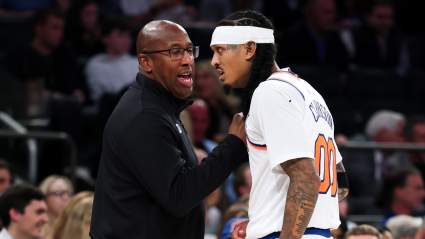
The New York Knicks watched as Dalton Knecht made his debut, giving their offense an encouraging glimpse of what he could provide. However, coach Mike Brown’s explanation of Knecht’s game quickly became a story of its own.
Knecht finished with 10 points on 4-for-6 shooting. That is a productive introduction, although Brown wanted the conversation about his newest offensive weapon to extend beyond whether his jumper was falling. Then came a remark that demanded attention.
“He’s a scorer, not just a shooter. A lot of people think he’s a shooter because he’s white,” Brown said, in comments shared by NBA New York. “I said it for you. I hope I don’t get in trouble. I hope I don’t get in trouble, but he can go and get it.”
Mike Brown Sees More Than Shooting From Dalton Knecht
Brown’s wording will understandably generate discussion. His basketball evaluation, however, offered Knicks fans something worth examining beyond the attention-grabbing line.
“He can shoot from range. He’s got a medium game. He can get to the rim. He can pass,” Brown continued. “He’s got to work defensively, and I thought tonight he tried to play within himself and contributed the best way he could.”
That is an important distinction for Knecht’s potential role. A shooter can help an offense simply by forcing defenders to stay attached around the perimeter. A scorer who can attack that attention gives a coach more ways to punish defensive decisions.
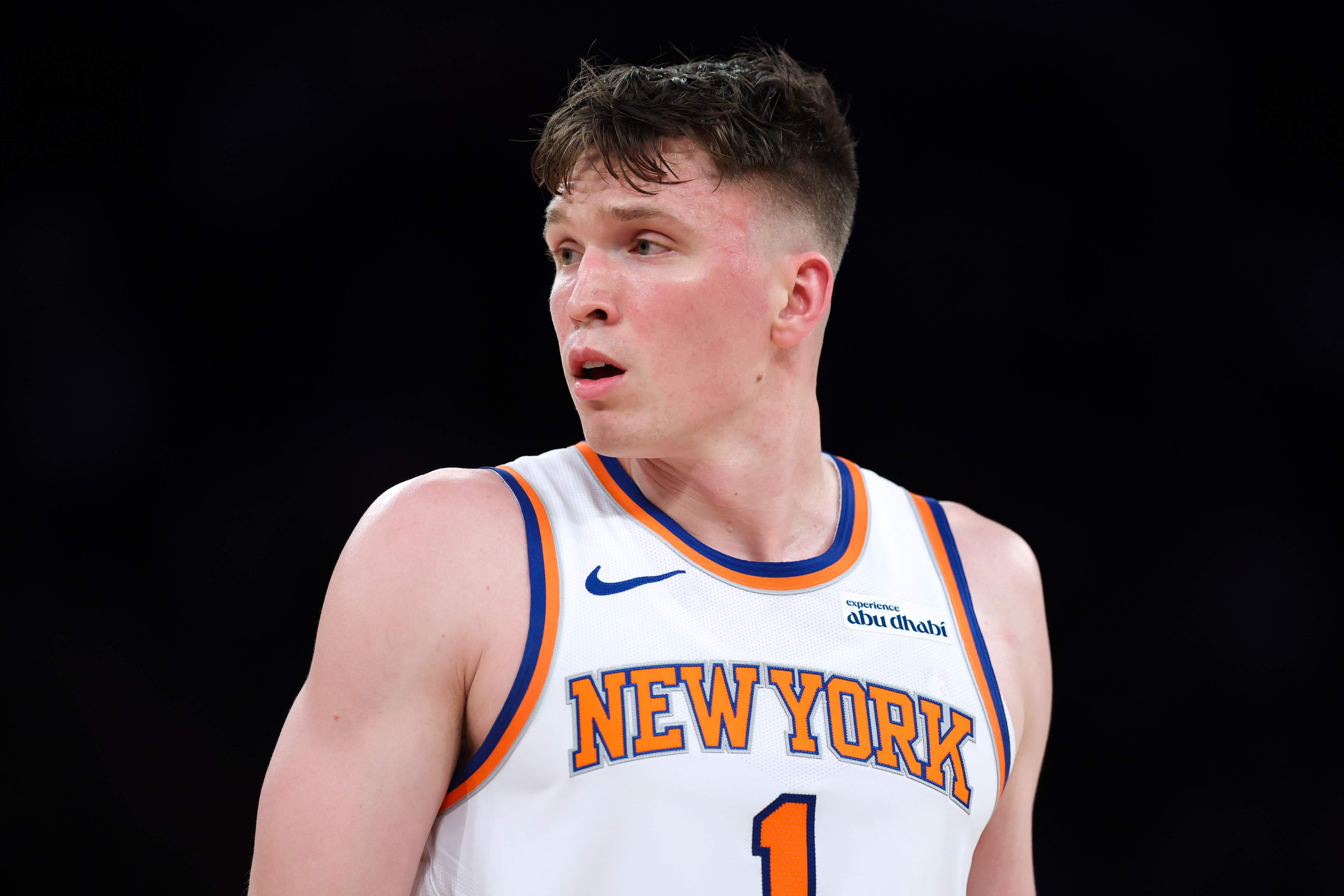
If an opponent closes out too aggressively, there is an opportunity to drive. If the defense takes away the rim, a reliable intermediate shot can keep the possession alive.
Passing matters within that sequence, too. Turning an advantage into a better opportunity for a teammate can make a player useful even when he is not taking the final shot.
Brown’s comments suggest he sees those possibilities in Knecht. Whether they become consistent parts of New York’s offense remains something Knecht must demonstrate.
Dalton Knecht’s Defense Could Shape His Knicks Opportunity
The most consequential part of Brown’s evaluation might have been his reminder about defense. Offensive talent can create an opening, but defensive reliability helps a player remain on the floor when opponents start targeting matchups.
For Knecht, that means the path toward a larger role cannot depend entirely on scoring efficiently. Brown also needs possessions where his presence does not require teammates to compensate for preventable mistakes.
That includes staying engaged away from the ball, executing rotations and competing through difficult assignments. Those details can determine whether a promising scorer becomes someone a coach trusts in tighter situations.
His debut provided a useful first step. Scoring 10 points while taking six shots suggests he contributed without needing a heavy volume of attempts.
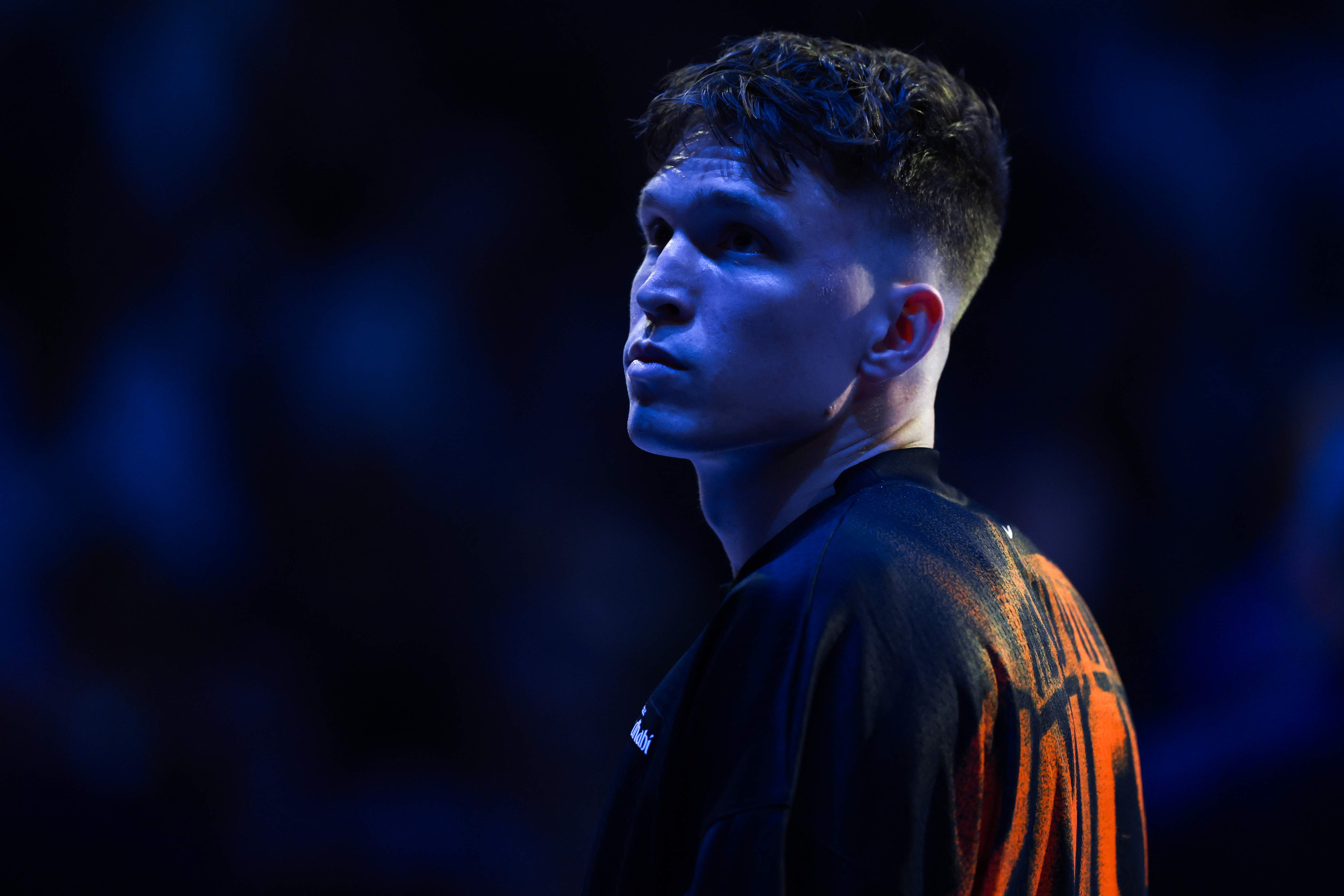
Brown’s observation that Knecht played within himself is also encouraging. Learning where to attack and when to move the ball can help a newcomer fit into an established offense. Still, one appearance cannot settle the bigger questions about his eventual place in the rotation.
For Knicks fans, the takeaway is that Brown recognizes a broader offensive skill set than the shooter label suggests. He also identified the area that needs work.
Knecht now has the opportunity to turn both parts of that assessment into progress. The scoring can draw attention. The defensive improvement could help turn that attention into sustained playing time.





Knicks’ Mike Brown Says ‘I Hope I Don’t Get in Trouble’ After Dalton Knecht Remark