
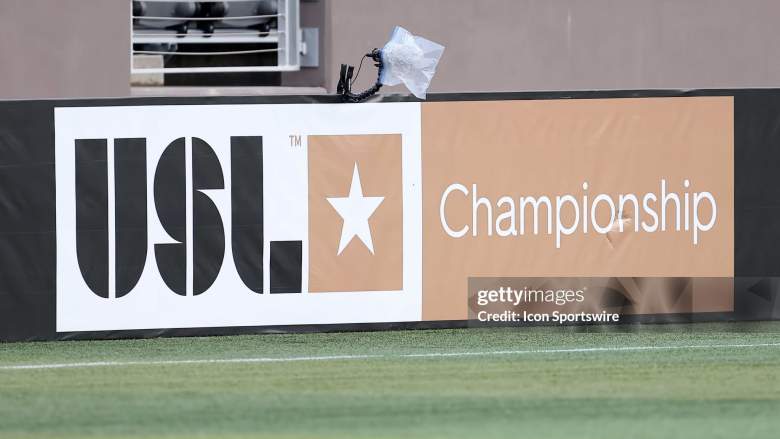
For years, American soccer fans have watched European clubs fight for more than trophies. A place in the Premier League can transform a club’s future, while relegation can put years of progress at risk. Now, that same high-stakes drama is coming to the United States — and it could change how American soccer works.
The United Soccer League (USL) plans to introduce promotion and relegation in 2028, creating a three-division men’s professional system in which clubs can move up or down based on their performance. The new structure will put USL Premier at the top, above the USL Championship and USL League One. It is a major departure from the closed-league model that dominates American professional sports, although the change will apply within the USL rather than across the entire U.S. soccer landscape.
The question is whether the system can deliver the excitement of European soccer while overcoming the financial and practical challenges that have kept promotion and relegation out of America’s major professional leagues.
How USL Promotion and Relegation Will Work
The centerpiece is USL Premier, the new Division One men’s league scheduled to launch in 2028. According to the USL’s official announcement, Premier will eventually target a single national table of 20 clubs. The USL Championship is also intended to move toward a national table of 20 teams, while League One will continue to develop through a more regional structure.
Those numbers describe the league’s long-term plan, not a finished competition format. The USL has been reviewing applications from clubs interested in joining Premier, with its inaugural membership still to be announced. The league has not yet published a complete set of final rules explaining exactly how many teams will be promoted or relegated each season.
The principle, however, is clear. Clubs will have a route to a higher division through their results, while underperforming teams will face the prospect of dropping down. Rather than relying exclusively on expansion opportunities and ownership investment to reach the top, clubs will have a sporting route to climb the pyramid.
Why This Could Change the Way American Fans Watch Soccer
In a traditional closed American league, finishing last is disappointing, but it does not cost a team its place in the competition. In a promotion-and-relegation system, the consequences can be much more dramatic. A club near the bottom is fighting to survive, while a team outside the title race may still have a promotion place to chase.
That changes the stakes throughout the season. A late winner could mean the difference between a shot at the top division and another year in the second tier. A club that starts badly cannot simply write off the campaign and look toward the next draft or offseason. There is something tangible to fight for — or something significant to lose.
USL club owners approved the move in March 2025, and the league formally unveiled the USL Premier name and its three-division framework in January 2026. The project is part of a wider effort to build a connected system that gives clubs in more American communities a pathway toward the highest level of domestic professional soccer.
It also comes as the United States hosts the 2026 World Cup and prepares for the 2028 Los Angeles Olympics. Those events offer a chance to attract new fans, but lasting growth will depend on what happens after the spotlight moves elsewhere. A league structure that gives supporters a meaningful reason to follow their club every week could help turn that attention into a lasting connection.
The Big Obstacle: Money, MLS and the Rules
The excitement of promotion and relegation does not make the practical challenges disappear. Clubs moving into a higher division may need to meet tougher stadium, financial and operational standards. Relegation can also mean lower revenue at precisely the moment a club needs stability. The USL will have to establish clear standards and a workable financial framework if teams are going to move between divisions without putting their futures at risk.
There is also one important limit: this is not a promotion route into Major League Soccer. MLS remains a separate, closed league, and the USL’s planned system will operate within its own three-division men’s structure. A successful USL club will not automatically earn a place in MLS by winning its division.
That distinction matters. The USL is not replacing the American soccer model overnight; it is building an alternative structure alongside it. Its challenge will be to make that structure competitive, financially sustainable and compelling enough to attract clubs and supporters.
The 2028 launch is still ahead, and several crucial details remain to be settled. But the direction is no longer just an idea discussed by fans who admire European soccer. The USL has committed to a promotion-and-relegation system, and the next test is turning that promise into a competition that works.
For American supporters, the most important change may be simple: in this new USL pyramid, a season will not just be about winning a trophy or making the playoffs. It could decide a club’s entire future.












Promotion and Relegation Soccer Is Finally Coming to America