
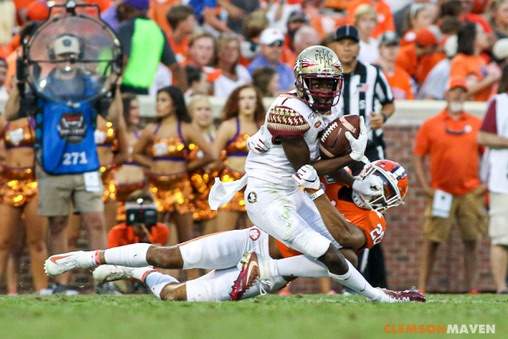
On paper, a casual observer might look at Saturday night’s Atlantic Coast Conference clash between Clemson and Florida State and see an opponent ripe for the picking. The Seminoles enter Doak Campbell Stadium with a losing record at 3-4 overall and 1-3 in league play, carrying a defense that ranks No. 131 nationally in total yards allowed (466.0 yards per game).
Yet oddsmakers tell a vastly different story. Florida State opened as a six-point favorite with an over/under total of 49.5 points. That betting line is a blaring warning siren. Despite Florida State’s defensive woes, Clemson travels to Tallahassee facing severe schematic mismatches and statistical landmines that make this Halloween weekend showdown an absolute trap.
Here is why Clemson must exercise extreme caution heading into kickoff.
1. Florida State’s Offense Is Quietly Potent and Explosive
Writing off Florida State due to its sub-.500 record ignores an offense operating at a top-40 national level. Florida State averages 31.2 points per game (No. 38) and 413.8 total yards per contest (No. 38). By comparison, Clemson’s offense has sputtered for most of the season, putting up just 18.8 points per game (No. 121) and 315.7 yards per game (No. 119).
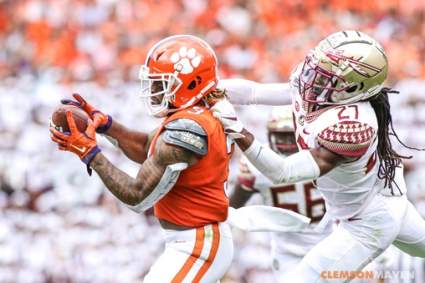
Florida State’s air attack is especially lethal. While the Seminoles pass on just 43.47% of downs (No. 107), they generate 8.4 yards per pass attempt, ranking No. 23 in the country. Florida State does not need heavy passing volume to inflict damage; it relies on high-efficiency vertical strikes. If Clemson’s defense suffers even a single coverage breakdown, Florida State possesses the firepower to put Clemson in an early multi-score hole that its low-scoring offense is ill-equipped to climb out of.
2. Pass Protection Nightmares Against a Disruptive Front
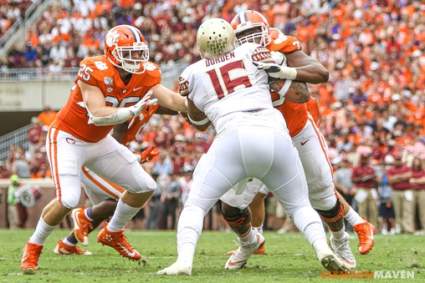
Clemson’s single most glaring weakness this fall has been its inability to keep the pocket clean. Clemson ranks No. 131 in the nation in quarterback sack percentage, conceding a sack on an alarming 10.50% of dropbacks.
That deficiency could prove fatal against Florida State’s defensive front. While Florida State has struggled against the pass overall, its pass rush remains dangerous, generating sacks at a 7.77% clip (No. 29 in FBS). If Clemson falls behind the sticks, Florida State’s pass rush can pin its ears back. Clemson already ranks No. 125 in the country on third-down conversions, succeeding on just 29.89% of attempts. Allowing negative plays on early downs will completely stall the visiting offense.
3. Florida State’s Lockdown Situational Defense
While Florida State’s defense yields copious yardage between the 20-yard lines, it transforms into an elite unit when backed up against its own goal line. Florida State ranks No. 27 nationally in red zone scoring defense, permitting opponents to score on only 77.27% of trips inside the 20. Even more daunting is Florida State’s fourth-down defense, which ranks No. 7 in the nation by holding opponents to a 27.27% conversion rate.
Clemson, which averages just 4.6 yards per play (No. 128) and 0.272 points per play (No. 123), cannot rely on long, 12-play drives that stall inside the red zone. In high-leverage short-yardage situations, Florida State has proven it can slam the door shut.
4. Severe Red Zone Vulnerability on Defense
On the other side of the ball, Clemson’s defense faces a critical crisis inside its own 20-yard line. Clemson allows opponents to score on 93.75% of red zone possessions, ranking No. 119 nationally. Florida State capitalizes in the red zone 87.50% of the time (No. 48) and boasts the nation’s No. 1 field-goal unit, having converted a perfect 100% of its attempts this season.
Florida State also runs the ball on 56.53% of its plays (No. 32), generating 180.3 rushing yards per game (No. 34) and 4.5 yards per rush (No. 50). That heavy ground workload allows Florida State to lean on defenses and control scoring territory. When Florida State penetrates the 20-yard line, points are virtually guaranteed. Clemson cannot afford to bend and hope for red-zone stops that the numbers say rarely happen.
5. Self-Inflicted Wounds: Penalties and Field Position
In a matchup projected to be decided by less than a touchdown, discipline and execution on special teams often dictate the final outcome. Florida State is one of the most disciplined squads in the country, committing just 5.3 penalties per game (No. 30) for 46.0 penalty yards (No. 28) and 0.04 penalties per play (No. 25).
Clemson routinely hurts itself with mental mistakes. Clemson commits 7.0 penalties per game (No. 83) for 64.2 yards (No. 97), giving up 9.2 yards per infraction (No. 105). Additionally, both teams enter with an identical -0.5 turnover margin per game (tied for No. 103) and 1.5 giveaways per contest (No. 99). If Clemson hands Florida State unearned field position through drive-extending penalties or careless turnovers, an upset bid will slip away quickly.
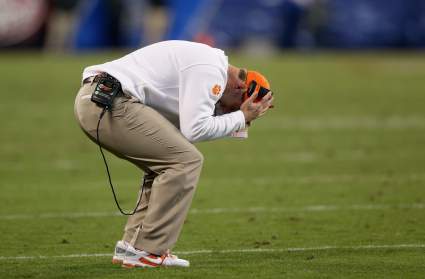
Florida State’s 3-4 record may look comforting at first glance, but the matchup metrics paint a treacherous picture. Facing an explosive offense, an automatic kicking unit, and an elite fourth-down defense in a hostile road environment, Clemson must play its cleanest game of the autumn to avoid walking straight into an ambush.







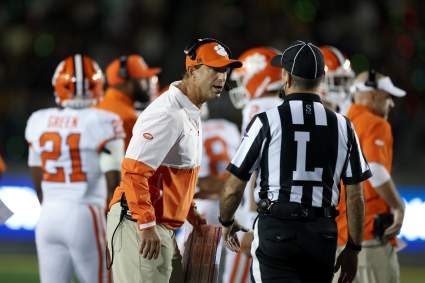
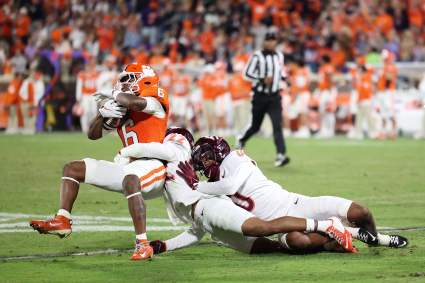
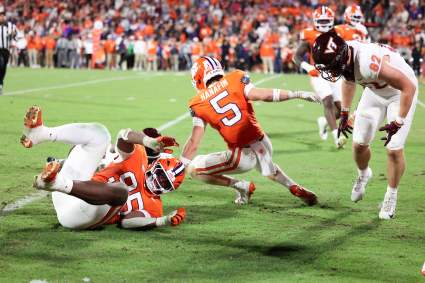
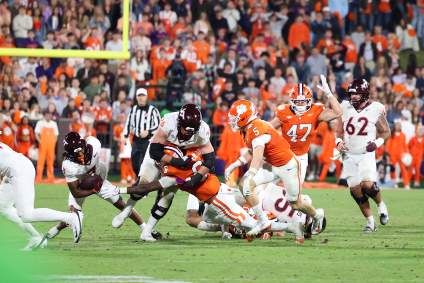

5 Terrifying Reasons Clemson Must Be on High Alert Saturday Night in Tallahassee