
Several recognizable names are preparing to compete in the second stage of the 2026 PGA Tour Q-School presented by Korn Ferry, which begins on December 1.
Among those attempting to improve their playing status for the 2027 season are former PGA Tour winners, a former Ryder Cup participant and a former LIV Golf player.
The qualifying tournament represents the final opportunity for golfers to earn PGA Tour cards for next season, with just five players securing membership at the conclusion of the final stage in December.
Three-Time PGA Tour Winner Among Notable Names
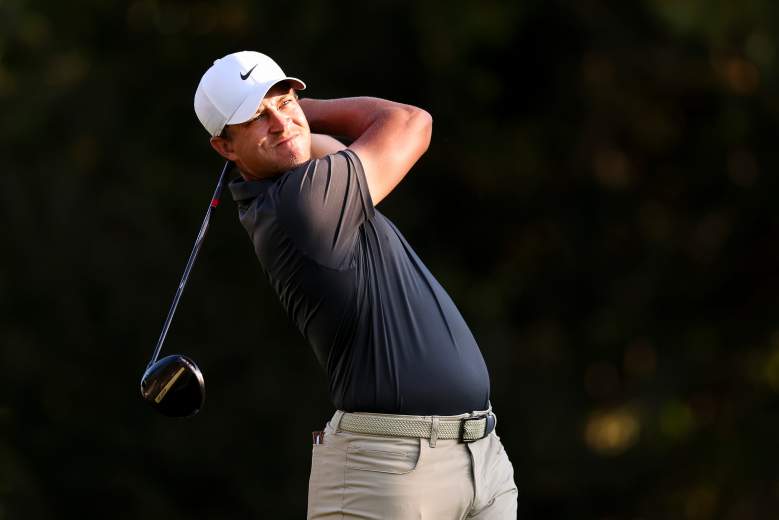
Few players entering Q-School have demonstrated as much raw potential as Cameron Champ.
The 31-year-old established himself as one of the longest hitters in professional golf after joining the PGA Tour, winning the 2018 Sanderson Farms Championship, the 2019 Safeway Open and the 2021 3M Open.
However, Champ has struggled to rediscover the consistency that accompanied his early success. After finishing 207th in the 2026 FedExCup standings, the California native finds himself attempting to regain his PGA Tour card through qualifying.
Champ is scheduled to compete at Valencia Country Club in California, one of five venues hosting second-stage qualifying, according to secondary reporting on the Q-School field.
Another intriguing name entering qualifying is James Piot, the 2021 U.S. Amateur champion who joined LIV Golf during its inaugural season in 2022.
Piot’s decision to pursue a career outside the traditional PGA Tour developmental system makes his attempt to earn playing privileges particularly noteworthy.
Former PGA Tour Champions Look to Revive Their Careers
Some of the most experienced golfers attempting to advance through second-stage qualifying will compete at The Club at Starr Pass in Tucson, Arizona.
Sean O’Hair, Scott Piercy, Chez Reavie and Kyle Stanley are among the veterans looking to work their way back toward regular PGA Tour competition.
The four golfers have combined for 13 PGA Tour victories, with their careers spanning multiple generations of professional golf. O’Hair won four times on the circuit, while Piercy and Reavie collected four and three victories, respectively. Stanley won twice, including the 2017 Quicken Loans National.
Their presence at Q-School serves as a reminder of how quickly a player’s standing in professional golf can change. Tournament victories provide exemptions, but those benefits do not necessarily last for the remainder of a golfer’s career.
Ted Potter Jr. is another former winner attempting to improve his playing opportunities. Potter memorably won the 2018 AT&T Pebble Beach Pro-Am, finishing three strokes ahead of a group that included Dustin Johnson, Phil Mickelson and Jason Day.
Meanwhile, former U.S. Ryder Cup participant Jeff Overton is also pursuing a return to the PGA Tour. Overton became a fan favorite during the 2010 Ryder Cup at Celtic Manor, where he partnered with Bubba Watson.
PGA Tour Rule Changes Have Made Q-School Even More Unforgiving
Beginning with the 2026 season, the PGA Tour reduced the number of players retaining exempt status through the FedExCup standings from 125 to 100. The organization also reduced the number of PGA Tour cards available through the Korn Ferry Tour to 20.
The changes were designed to provide exempt members with more reliable access to tournament fields. However, they also increased the competition for full playing privileges.
Previously, golfers who finished tied for fifth at the final stage could all earn membership. Under the revised format introduced in 2025, exactly five cards are available, with a playoff required to determine the final recipient if necessary.
Dylan Wu and Ben Silverman experienced the consequences of that change firsthand last December.
Both golfers completed the final stage of 2025 Q-School at 11-under, leaving them tied for fifth. Under the previous format, both would have secured PGA Tour cards.
Instead, they were forced into a playoff, which Wu won by converting a birdie putt from more than 20 feet on the first extra hole, according to the PGA Tour.
After four rounds of golf, the difference between earning a PGA Tour card and falling short came down to a single putt.
PGA Tour’s Upcoming Overhaul Adds Significance to 2026
Earlier this month, the PGA Tour finalized details of its new competitive model, which is scheduled to launch in 2028. The restructuring will introduce two competitive tiers known as the Championship Series and Challenger Series.
According to Reuters, the new system was developed under the leadership of PGA Tour CEO Brian Rolapp, with Tiger Woods chairing the Future Competition Committee.
Under the new structure, Q-School will award five cards to the Challenger Series rather than providing direct access to the Championship Series. The developmental pathway will also change, with PGA Tour Americas concluding operations after the 2027 season.
For golfers attempting to regain their footing in professional golf, establishing themselves on the PGA Tour before the new competitive model takes effect could prove particularly valuable.
Earning a card for 2027 will not automatically guarantee a place in the Championship Series in 2028. However, it will give successful qualifiers an opportunity to improve their standing before the restructuring takes effect.
When and Where Will the 2026 PGA Tour Q-School Take Place?
Second-stage qualifying will run from December 1-4 across five locations in California, Arizona, Georgia, Alabama and Florida.
Players who successfully advance will compete in the final stage from December 10-13 in Ponte Vedra Beach, Florida, where TPC Sawgrass’ Dye’s Valley Course and Sawgrass Country Club will host the decisive four rounds.
According to the PGA Tour’s official qualifying guidelines, golfers who finish outside the top five can still earn varying levels of Korn Ferry Tour membership.
Those opportunities could provide an important safety net for veterans attempting to rebuild their careers.









Familiar PGA Tour Names Face Unforgiving Challenge at Q-School