
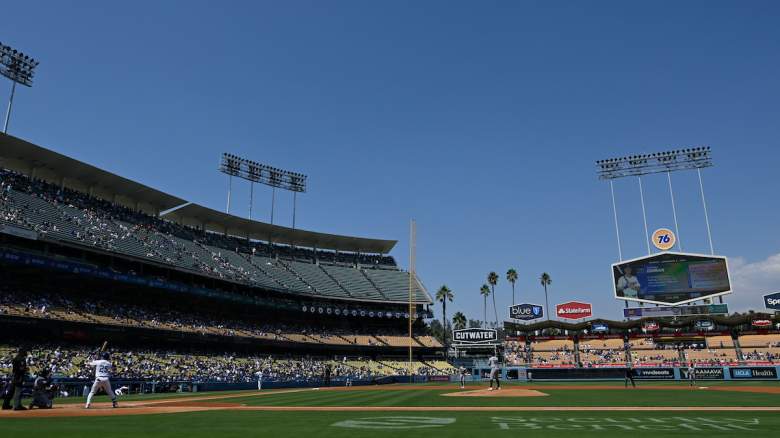
The Atlanta Braves and Los Angeles Dodgers open the National League Division Series at 1 p.m. PDT today in forecast 103-degree heat, according to US Stormwatch meteorologist Colin McCarthy.
That reading would tie the hottest first pitch in postseason history, and an Extreme Heat Warning stays in force through Oct. 8, so Game 2 on Sunday offers no relief, according to the National Weather Service Extreme Heat Warning.
The Dodgers issued a warning to fans planning to attend the game at Chavez Ravine, shortly before first pitch.
“With high temperatures expected this weekend, the Dodgers encourage fans to prepare accordingly with caps, sunscreen and other protections if you’re attending NLDS Game 1 and Game 2 at UNIQLO Field at Dodger Stadium,” the team posted on its official social media channels.
But how will the extreme heat affect the game, and is there a chance that there could be a delay? Scheduling a game at 1 p.m. PDT in the downtown Los Angeles area in the midst of a historic heat wave may not have been the best idea. Will MLB be willing to push the game later, when the sun starts to set?
The National Weather Service hourly forecast shows downtown Los Angeles near 100 degrees at 11 a.m. and 92 by 2 p.m., which puts first pitch in the mid-to-upper 90s. The daytime high reaches 103. Humidity drops to the low 20s, wind holds at 4 to 6 mph, rain chance sits at 0% and sunset arrives at 6:34 p.m. Dodger Blue lists a 99-degree high with a feels-like temperature above 105, while USA TODAY projects a 105-degree afternoon, just short of the 108-degree Oct. 3 record set in 1987.

Dodgers and Braves Face Heat Effects on Players
No league-wide temperature threshold forces a delay, according to a Herald Business report on MLB weather rules. Lightning, storms and unplayable fields stop games. Heat alone does not. With no rain in the forecast, the odds of a weather delay sit near zero, though a brief hydration or injury delay remains possible. Game 1 of the 2017 World Series started at 103 degrees in this same ballpark and ran without interruption.
Pitching suffers first. Researchers link declining performance to a core body temperature above 101.3 degrees, and a Journal of Strength and Conditioning Research study found slugging climbed to .467 and WHIP to 1.60 in “extremely hot” pro games.
The ball also travels farther. Fly balls in games above 90 degrees have flown about 16 feet farther than in games below 50, according to research cited by the Journal of Strength and Conditioning Research. The Society for American Baseball Research noted that the 2017 heat thinned the marine air at Dodger Stadium.
Bodies take a toll. The Athletic reported on players’ cooling methods, noting Elly De La Cruz vomiting in the outfield in 96-degree St. Louis and Casey Mize leaving a start in Tampa with cramps. Fans face large unshaded sections, though KTLA reported sealed bottled water is allowed inside.
Both clubs have played in the 90s this year. The Dodgers went 5-2 in such games and the Braves 6-7, according to WSB-TV meteorologist Brian Monahan.

Los Angeles Dodgers Postseason Heat Records Ahead of Game 1
The hottest postseason game on record came Oct. 24, 2017, when the Los Angeles Dodgers hosted the Houston Astros in World Series Game 1 at 103 degrees, according to SABR. Chris Taylor led off the bottom of the first with a home run, and the Dodgers won.
The previous mark was 94 degrees at Game 1 of the 2001 World Series between the New York Yankees and Arizona Diamondbacks at Chase Field, according to Fox News coverage.
The hottest regular-season games came at Arlington Stadium, at 109 degrees in 1980 and 1988. Dodger Stadium’s own record is 103, shared by the 2017 opener and a Sept. 8, 2024 game against Cleveland.

Will the Braves-Dodgers Game be Delayed Today? How 103° Heat Affects NLCS Opener