
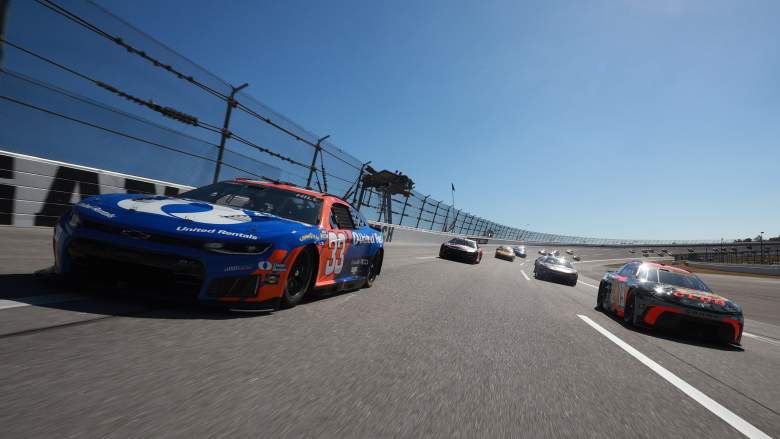
Kyle Larson’s dramatic Talladega victory is still generating questions, and NASCAR has now revealed that another driver came surprisingly close to facing a black flag during the race’s controversial closing moments.
While much of the attention following Sunday’s YellaWood 500 centered on whether Larson crossed the double-yellow line during his winning move, NASCAR officials were also reviewing a separate incident involving Austin Hill.
And according to NASCAR vice president of racing communications Mike Forde, the outcome could have been considerably different had Hill reached Victory Lane.
Speaking on this week’s episode of NASCAR’s “Hauler Talk” podcast, Forde explained why officials considered penalizing Hill, why they ultimately chose not to and what might have happened if the No. 33 Chevrolet had won the race.
NASCAR Explains Why Austin Hill Escaped a Black Flag at Talladega
Hill’s potential violation occurred as he attempted to make a pass on Larson’s No. 5 Chevrolet while racing near the double-yellow line.
According to Forde, NASCAR reviewed the incident both during the race and afterward, ultimately determining that Hill had moved below the boundary before Larson made contact.
“In our judgment, he went down before he was ever pushed,” Forde said.
That distinction mattered.
Under NASCAR’s superspeedway rules, drivers cannot improve their position by passing beneath the double-yellow line. However, officials must also consider whether a competitor was forced below the boundary.
Forde said NASCAR discussed issuing Hill a black flag but ultimately decided against it because Hill had already fallen to the final position among cars on the lead lap.
“The result would have been the same,” Forde explained. “He would have been that last car in the lead lap. We did not call that, essentially, for that reason.”
In other words, officials determined that issuing the penalty would not have changed Hill’s position.
But NASCAR’s decision came with an important caveat.
NASCAR Says Talladega Win Could Have Forced a Different Decision
Forde acknowledged that the situation would have been much more consequential if Hill had managed to win.
“But that was one where there was discussion of if the 33 won that race, would we have to take hypothetical, but that was one where it did look like he’d go down the line,” Forde said. “So that was probably a call we would have had to make.”
It was a revealing admission from NASCAR, particularly after a finish that had already sparked considerable debate over the enforcement of the double-yellow-line rule.
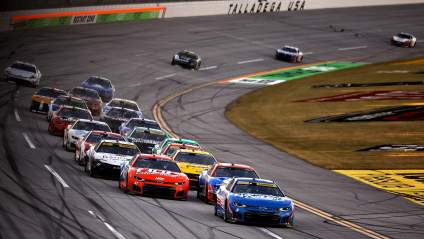
Larson ultimately won the YellaWood 500 by just 0.041 seconds over William Byron, with Ricky Stenhouse Jr. finishing third.
The victory gave Larson valuable ground in the Cup Series championship battle, but the closing laps left officials with several difficult judgment calls.
Forde also addressed incidents involving Carson Hocevar and Ross Chastain, explaining that NASCAR determined both drivers had been forced below the line by Todd Gilliland rather than deliberately moving there to advance their positions.
For Hill, the difference between receiving a penalty and escaping one came down to where he finished.
And NASCAR’s explanation makes one thing clear: Had the No. 33 been the car celebrating at Talladega, officials might have faced a much tougher decision.

NASCAR Reveals Black Flag Could Have Changed Talladega Finish