
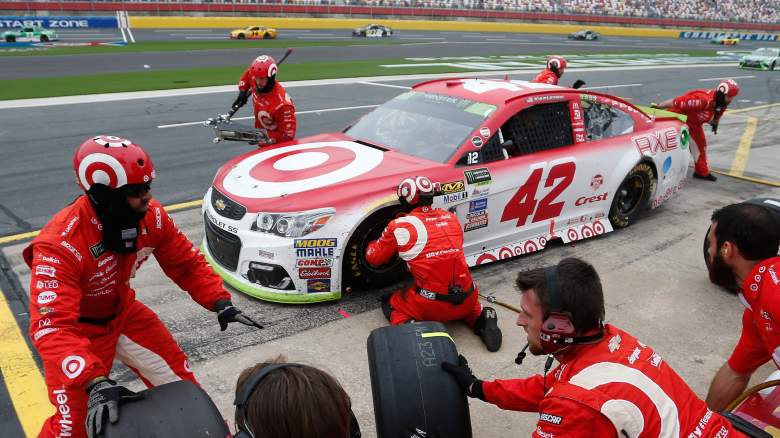
For more than a decade, one of America’s biggest retailers had a place on the NASCAR starting grid. The red-and-white paint scheme was unmistakable, the bullseye logo needed no introduction, and the company had backed some of the biggest names in American motorsports.
Then, in 2017, Target decided it was done.
The retail giant announced in July 2017 that it would end its 16-year NASCAR sponsorship of Chip Ganassi Racing at the conclusion of the season, leaving a young Kyle Larson without an announced sponsor for the majority of the following year.
But why would one of NASCAR’s most recognizable sponsors abandon a multimillion-dollar partnership just as its driver was emerging as one of the sport’s brightest stars?
The answer had more to do with what was happening away from the racetrack.
Inside Target’s Multimillion-Dollar NASCAR Sponsorship
Target had built one of the more sophisticated sponsorship programs in American motorsports.
According to a 2014 Sports Business Journal report, Target initially spent $4 million on its motorsports sponsorship in 1990. By the following year, the retailer had secured enough supporting sponsors to offset that expense entirely.
After expanding into NASCAR in 2002, Target developed a three-tier sponsorship program with corporate partners reportedly paying upward of $5 million, $3 million and $1.5 million, respectively.
The arrangement allowed Target to leverage its relationships with retail vendors, selling advertising space on its race cars and providing other companies with exposure to NASCAR’s national audience.
While the exact annual value of Target’s NASCAR sponsorship was not publicly disclosed, the financial scale of the program was substantial.
Why Target Ended Its NASCAR Sponsorship
Target wasn’t getting out of sports marketing altogether. It was betting on a different sport.
As ESPN reported in July 2017, the Minneapolis-based retailer was redirecting its sports marketing budget toward soccer.
“As we looked to evolve our sports marketing program, soccer provided Target with a unique opportunity to reach our guests in new places, and at all levels of the sport,” Target said in a statement at the time.
The company had established partnerships with Major League Soccer, Minnesota United FC, US Youth Soccer and the U.S. Soccer Foundation, giving the retailer a presence in everything from professional competition to grassroots youth programs.
Target’s departure from NASCAR also came just one year after the company ended its longtime IndyCar sponsorship with Ganassi following the 2016 season.
By the end of 2017, a 28-year relationship between Target and Ganassi across multiple forms of motorsports was coming to a close.
Kyle Larson Was in the Midst of a Breakout NASCAR Season
What made Target’s departure particularly striking was its timing.
Larson, who had been backed by the retailer since his rookie Cup Series season in 2014, was second in the championship standings when the announcement was made.
He would go on to win four races in 2017.
Despite losing his longtime sponsor, Ganassi made it clear that Larson wasn’t going anywhere.
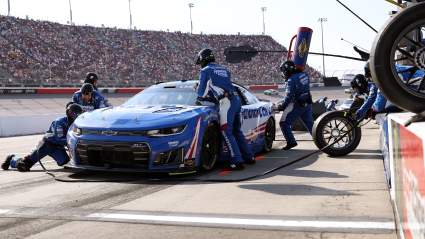
“Kyle Larson is a once-in-a-generation talent,” Ganassi said in a statement at the time. “He and the No. 42 Chevrolet will still be on the track for a long time.
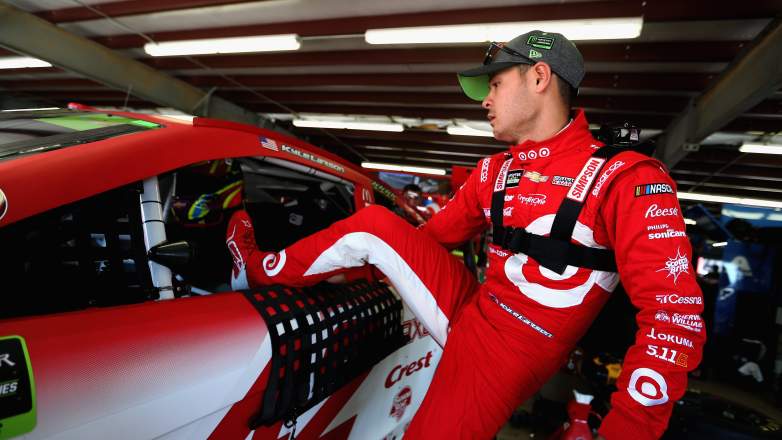
“The only difference is that they will have different colors.”
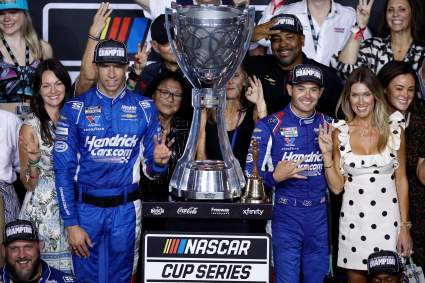
Larson has since become one of the most accomplished NASCAR drivers of his generation.
And for longtime NASCAR fans, that red-and-white No. 42 remains a reminder of an era when some of America’s biggest retailers poured millions of dollars into stock car racing.
Why Target Walked Away From Its Multimillion-Dollar NASCAR Sponsorship