
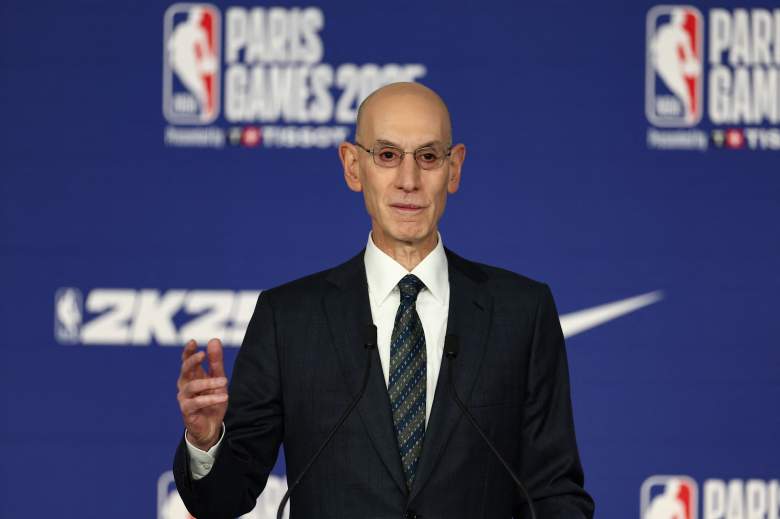
The NBA could look different if commissioner Adam Silver’s preference for shorter games ever becomes reality. According to Sports Illustrated’s Chris Mannix, Silver likes the idea of reducing games to 40 minutes. That would remove eight minutes of regulation basketball from a format built around four 12-minute quarters.
For fans, the question is: would a shorter game create a better experience, or would it mean receiving less basketball? The answer involves more than changing the clock. Rotations, statistics and the value of every possession could all be affected.
Adam Silver Has Discussed Shorter NBA Games Before
Silver’s interest is not new. During a January 2025 appearance on “The Dan Patrick Show,” he expressed support for four 10-minute quarters and discussed how a shorter broadcast might fit viewing habits. He also acknowledged that others might not share his enthusiasm.
“I am a fan of four 10-minute quarters,” Silver said at the time.
His preference should not be confused with an approved rule change. The NBA’s rules still specify 12-minute regulation periods. A commissioner expressing interest does not mean teams are preparing to play 40-minute games next season.
The appeal is understandable. A shorter contest could make the viewing commitment more manageable and give each stretch of basketball urgency. However, removing playing time would not automatically resolve complaints about reviews, stoppages or the rhythm of broadcasts.
That distinction matters because game length and entertainment value are related without being identical. Eight fewer minutes on the scoreboard would guarantee less regulation action. It would not, by itself, guarantee a more enjoyable product.
What Would Forty-Minute Games Mean for Fans?
The basketball consequences could be substantial. Coaches would have fewer minutes to distribute, potentially changing how often reserves appear and how long starters remain on the floor. Teams would need to reconsider which combinations deserve opportunities within a smaller window.
That could create difficult questions about player development. Younger players and deeper bench options might face greater competition for minutes. Alternatively, teams could distribute the reduced workload differently, making the effect dependent on coaching decisions rather than one universal outcome.
Historical comparisons would become more complicated. Counting statistics accumulate through opportunities, and reducing available minutes would change the environment in which those numbers are produced. Records would remain records, but comparisons across eras would require context.
Fans paying to attend would have another question: what changes about the value of their ticket? Less playing time does not necessarily mean a smaller experience, but the league would need to explain the benefit.
Silver’s idea deserves scrutiny because it changes the basketball itself. Before embracing shorter games, the NBA needs an explanation of why less action would deliver more value.













NBA’s Adam Silver Causes Fan Backlash With Idea to Match WNBA’s Game Length