
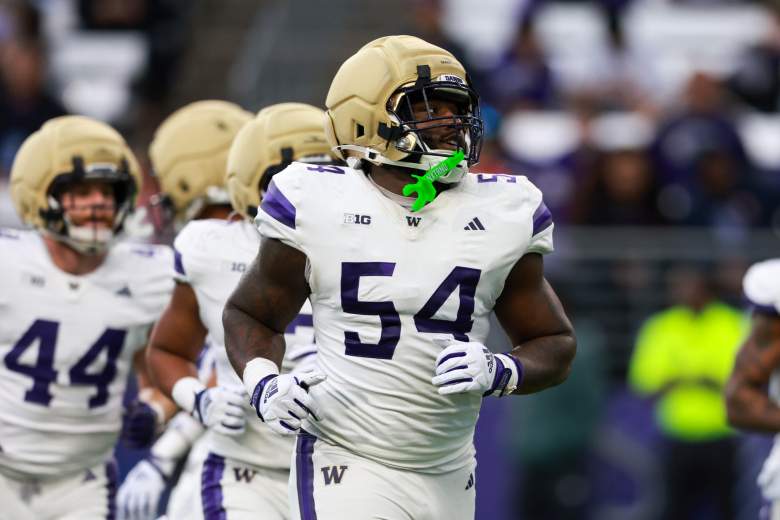
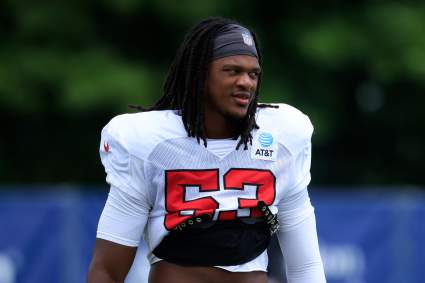
Atlanta Falcons rookie defensive tackle Anterio Thompson revealed this week that a genetic mutation in his spinal cord has ended his football career before it could begin in the NFL.
The 24-year-old posted on Instagram that doctors informed him he would never play the game again after the discovery of the condition he did not previously know about. Thompson has remained on the team’s reserve/non-football injury list since training camp and has not practiced with the club since the spring.
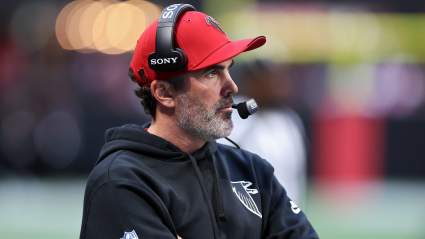
Falcons coach Kevin Stefanski, asked about Thompson on Friday before the Instagram post became widely known, said he had no update on the player’s status. League rules would have allowed Thompson to return from the reserve/non-football injury list later this season, but that option now appears irrelevant.
“Mentally, I’ve been better than anyone would be in my situation,” Thompson wrote on Instagram. “I was told I would never play football again due to a genetic mutation in my spinal cord that I had no idea about.”
Thompson added: “As a football player you know one day you’ll have to hang up your cleats but you just hope it’s on your own terms. It’s hard to explain what it feels like to go through the highest of highs to the lowest of lows in the [sic] matter of seconds.”
College Career and Draft Selection
Thompson arrived in Atlanta as a sixth-round selection, taken 208th overall in the 2026 NFL Draft out of the University of Washington. He spent time earlier in his college career at Iowa Western Community College, Iowa and Western Michigan before transferring to Washington for his final season.
In 13 games with the Huskies last year, Thompson recorded 30 tackles, including 2.5 tackles for a loss and 1.5 sacks, while starting three contests. Scouts viewed him as a raw but athletic interior lineman with enough size and strength to develop into a rotational contributor.
The Falcons placed him on the active/non-football injury list ahead of training camp and later moved him to the reserve list, requiring him to miss at least the first four games of the regular season. He has not appeared in any team practices or games since the spring.
Spinal Cord Conditions and League Context
Spinal injuries remain a concern across levels of football, though catastrophic spinal cord cases have declined sharply since rule changes in the 1970s banned spear tackling. A long-term review of NFL data from 2000 to 2010 found that spine and axial skeleton injuries accounted for roughly seven percent of all injuries, with spinal cord injuries specifically resulting in an average of 77 days missed.
Most modern NFL spine issues involve disc problems, fractures or stingers rather than genetic or congenital spinal cord abnormalities. Career-ending outcomes from cord-level issues remain uncommon among professionals, with one analysis noting only about 14 spinal cord injuries across 11 seasons in that earlier period.
Thompson’s situation differs because it stems from a previously undiagnosed genetic mutation rather than an on-field collision. The Falcons selected him expecting developmental snaps behind more established defensive tackles, but the medical finding has closed that path.
The organization has not issued a formal statement on the Instagram post. Thompson’s absence leaves Atlanta’s defensive line depth thinner than projected heading into the second half of the season.
At 24, Thompson becomes one of the rare recent draft picks whose professional career ended due to a pre-existing condition discovered after selection. The timing—roughly two weeks after the draft, according to his account—turned a celebratory period into an abrupt end.
League medical protocols screen for many issues, yet genetic spinal cord mutations can evade standard evaluations until symptoms or specialized testing arise. Thompson’s case highlights the limits of those screenings for certain rare conditions.
The Falcons continue their season without him on the active roster. No timeline exists for any further updates from Thompson or the team.


Atlanta Falcons Rookie Announces Career-Ending News