
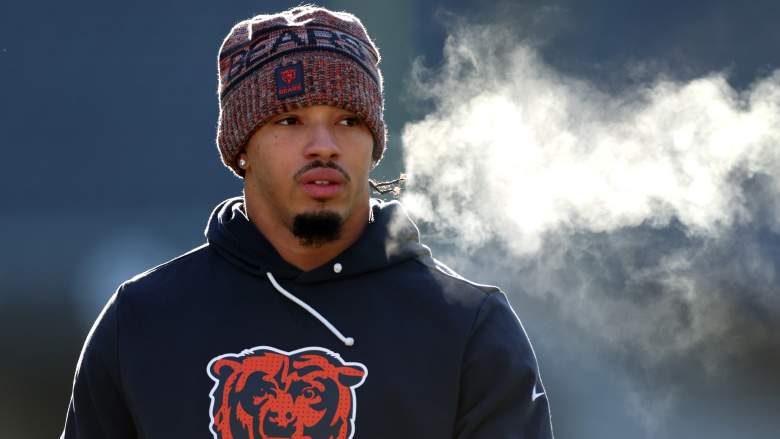
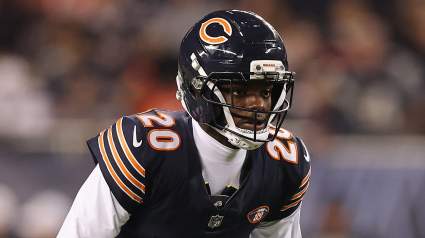
Daniel Hardy spent the first five weeks of the season barely registering on defense for the Chicago Bears. He played seven defensive snaps, all in Week 1. The rest of the time, the former seventh-round pick did his work on special teams and waited for another opportunity.
Then Montez Sweat was suspended and Dayo Odeyingbo went on injured reserve. Hardy suddenly had a chance to show what he could do as a pass rusher. In the next two games, he played 56 defensive snaps and produced 1.5 sacks and four quarterback hits. The Bears now have a decision to make: how much playing time should a defender earn when he starts producing the moment he gets his chance?
Daniel Hardy’s Production Gives the Bears a Real Decision
Hardy finished the two-game stretch with 1.5 sacks, eight quarterback pressures, four quarterback hits, seven tackles and a tackle for loss. His first career sack came against Atlanta, a milestone he described as “awesome” after admitting there had been times during his five years in the NFL when he wondered whether it would ever happen.
The pressure numbers make his emergence more than a feel-good story. According to Pro Football Focus, Hardy generated eight pressures on 55 pass-rush snaps, a 14.5% pressure rate. His reported 19.6% pass-rush win rate also suggests he was doing more than cleaning up plays made by teammates.
The sample is small, but the production is real. Hardy did not simply survive an expanded role; he gave the Bears a reason to keep using him.
The Bears’ Pass-Rush Rotation Just Got Complicated
Montez Sweat remains Chicago’s established edge rusher, and two games are not enough to declare Hardy the better player. PFF’s October 16 update credited Sweat with two sacks and 13 pressures on 121 pass-rush snaps. Hardy produced eight pressures in fewer than half as many pass-rush opportunities. That comparison is worth examining, even with the small sample and the extra attention Sweat draws from opposing offenses.
Chicago does not need to demote Sweat to make use of Hardy. It needs to find a meaningful role for him alongside Sweat and Austin Booker, particularly in situations where the Bears need to disrupt the quarterback.
Head coach Ben Johnson made that possibility clear Wednesday, saying Hardy had done as good a job as anyone affecting the passer over the previous two weeks and “certainly warrants a little bit more playing time on defense.” The question now is whether that means a lasting role or a brief reward before the rotation returns to normal.
The reported acquisition of Tennessee Titans defensive tackle Jeffery Simmons adds another layer to that decision. Chicago is reportedly sending two first-round picks and a fourth-round selection to Tennessee for the star interior defender, who has four sacks this season. Simmons should strengthen the middle of the defensive front, potentially making life harder for opposing quarterbacks and creating opportunities for edge rushers.
His arrival does not make Hardy’s recent production less valuable; it makes the question of how Chicago deploys its pass rush even more interesting. The Bears have invested heavily in improving the defense, and Hardy has given them another option worth using.
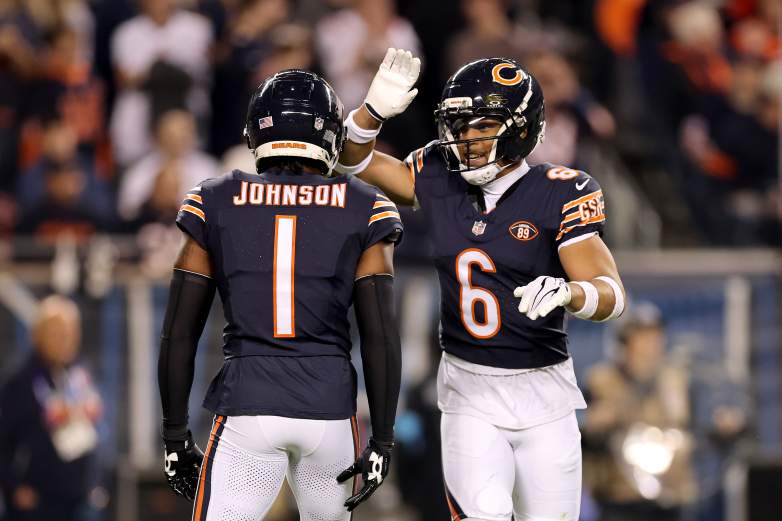
Jaylon Johnson’s Mistakes Put Accountability Under the Microscope
Johnson’s comments took on added significance when he was asked about cornerback Jaylon Johnson’s uneven play. The coach said there had been “some ups and some downs” and explained that the staff evaluates players after every game, separating winning performances from losing ones. He then returned to the principle Hardy illustrates: players who take advantage of their opportunities can earn more playing time.
Jaylon’s performance against New England gave that message some bite. With Chicago leading 20-7 and the first half about to end, Rhamondre Stevenson caught a short pass and turned it into a 48-yard touchdown. The breakdown involved multiple defenders, but Jaylon also had a chance to stop Stevenson and failed to finish the tackle.
Later, a defensive pass-interference penalty against Jaylon helped keep a Patriots drive alive. The breakdowns were not his alone, but a veteran cornerback on a four-year, $76 million contract has to do more in those moments.
That does not mean Jaylon is about to lose his starting job. Johnson has not announced such a move, and Chicago’s alternatives at cornerback matter. But the coach has publicly explained that playing time depends on performance. If that standard applies to Hardy, it must apply to established players, too. Reputation cannot be the deciding factor when the defense needs better results.
Seattle Will Show Whether the Bears Mean It
The Bears face a difficult test Monday night against Seattle. Jaxon Smith-Njigba has been one of the NFL’s most productive receivers, recording nine catches for 150 yards and a touchdown against Kansas City. Chicago needs its pass rush to disrupt the quarterback and give a secondary that struggled against New England more help.
Hardy does not have to become a starter overnight, and Jaylon does not need to be benched for the Bears to prove they take accountability seriously. But Chicago should give Hardy a meaningful opportunity to build on his recent production, while demanding that its veteran defenders finish plays and avoid costly mistakes.
Daniel Hardy has made the most of his opening. Now the Bears must show that production—not pedigree—is what earns a bigger role.


Daniel Hardy Has Put Bears Veterans on Notice