
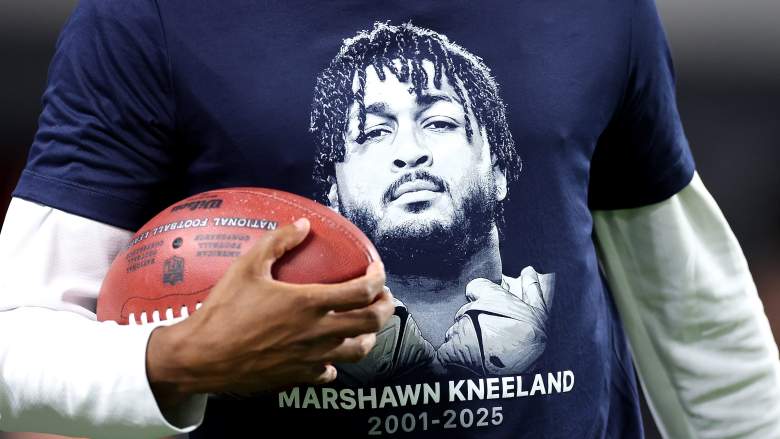
For the Dallas Cowboys, it’s been nearly one year since arguably the darkest day in the history of the franchise–the day that troubled young defensive lineman Marshawn Kneeland, the team’s 2024 second-round pick, took his own life after a high speed chase with police and a welfare check call from his pregnant girlfriend, Catalina Mancera, telling police he was armed and would “end it all.” It was a dark day for the team, and if there are questions now–with the Cowboys in the midst of a nasty on-field downturn–as to why players tend to rally around coach Brian Schottenheimer, a lot of it has to do with his graceful and sensitive handling of Kneeland’s tragic death one year ago on November 6.
Kneeland’s suicide came as the Cowboys were heading into a bye week, and that left ample time for Schottenheimer to meet with players, let them grieve, and then get them ready to play football again. That moment heralded in a three-game winning streak for Schottenheimer and the Cowboys, the only winning streak of his head coaching career.
Cowboys ‘Honor Him and His Legacy’
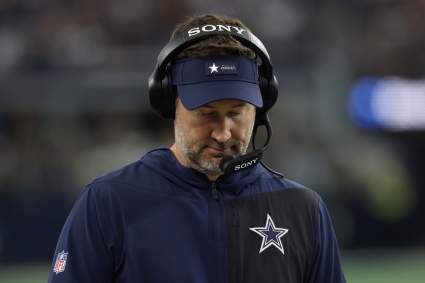
On Wednesday, with the anniversary of the tragedy looming, Schottenheimer was asked about remembering Kneeland and how the Cowboys keep his spirit alive.
Said Schottenheimer: “We miss Marshawn so much, and what we do to honor him and his legacy will probably stay between us. But there’s not a day that doesn’t go by that we don’t miss him. Obviously the grief is real, the pain is real, and we’ve got a number of things here in the facility that honor him in different ways that are in areas that only the players see.”
Marshawn Kneeland Had CTE in His Brain
Kneeland’s death was amplified by the fact that his football career–including his time with the Cowboys–probably drove him to the mental health crisis that preceded his suicide. As a release from the Concussion & CTE Foundation at Boston University revealed, Kneeland had stage 1 chronic traumatic encephalopathy (CTE).
“Unfortunately, I was not surprised to find CTE in the brain of Mr. Kneeland, because we have found this progressive brain disease in nearly half of the athletes we’ve studied who have died before the age of 30,” Dr. Ann McKee, director of the Boston University CTE Center, said. “Thanks to the generosity of our brain donor families, we now better understand the earliest stages of CTE, and it is bringing us closer than ever to diagnosing it during life. My team and I are fully dedicated to finding effective treatments and a cure for CTE.”




Cowboys’ Brian Schottenheimer Makes Emotional Statement on Tragic Day