

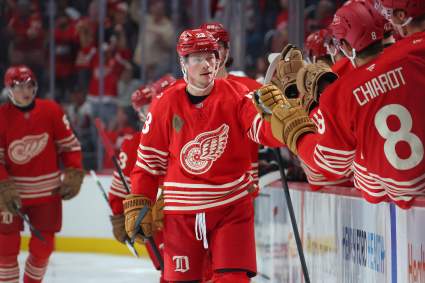
The Detroit Red Wings let a winnable game slip through their hands. And one player’s numbers looked painful.
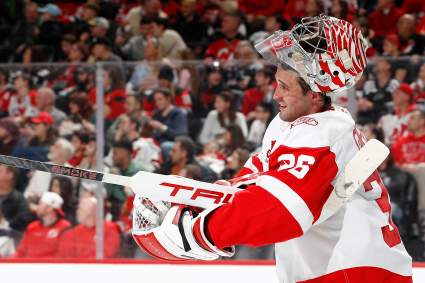
Despite allowing just 15 shots on goal, the Red Wings still lost 5-4 to the St. Louis Blues. Allowing five goals on 15 shots will make a contingent of people point their fingers at goaltender John Gibson.
But head coach Todd McLellan didn’t place the blame squarely on Gibson’s shoulders. Via Dave Hogg of NHL.com, McLellan said, “You can’t put this on John Gibson. You can look at five goals on 15 shots, but he had no chance on the first two, then two lasers from the hash marks and then a tip.”
While goaltenders are expected to defend the net and make big saves when a team breaks down defensively, asking them to do this while allowing high-quality shots over high-quantity shots will warrant a result similar to what the Red Wings saw on Saturday.
No, Gibson didn’t step up and play the hero on Saturday. But the Red Wings didn’t give him much help during high-stakes moments. Surprisingly, Detroit broke down, considering how well they have played defensively this season.
Red Wings Defense Broke Down At The Wrong Time
What’s worse? None of St. Louis’ goals came on the power play. Detroit has been notorious for breakdowns on the penalty kill all season, warding off opposing power plays 66.67 percent of the time before Saturday’s matchup. Instead, they went 3-for-3 on the penalty kill, and their usually solid 5-on-5 defensive play was the culprit.
Heading into the game, Detroit allowed just 20 goals at 5-on-5, and 21.1 in expected goals allowed (xGA). Both were substantially better than the league averages of 27 and 28.6, respectively.
The Red Wings naturally haven’t allowed many shots on goal, entering Saturday having allowed just 25.15 per game in all situations. Also, at 5-on-5, Detroit had allowed 239 scoring chances, which were 46 better than the league average. Their 75 high-danger chances allowed were 25 better than the average.
The catch with these numbers is that they accounted for how Detroit performed all season long, and not in a single afternoon. Detroit has played well limiting quality scoring chances, but the Blues took advantage of the opportunities they received on Saturday. The Red Wings may have controlled shot totals, but they couldn’t maintain their usual defensive standards when the game was on the line.
While Gibson could have stopped a couple of those shots McLellan mentioned, it is also fair to account for the defense breaking down and failing to make things tougher for St. Louis’ scorers.
Detroit Should Have Learned A Tough Lesson On Saturday
Allowing 15 shots on goal and having decent season-long defensive metrics indicates that the Red Wings are good at shutting down opponents. Or, at least limiting opportunities.
But when they give opponents golden opportunities? Even those few and far between, and those opponents capitalize? Allowing five goals can and will happen.
For the Red Wings, this was a tough learning experience. They gave Gibson a lot of help by limiting shots on goal. But they still left the door wide open for the Blues to mount a comeback.
Going forward, the Red Wings must understand that there is never a good moment to put the game in cruise control. Even when seemingly making things tough for the opposing team to generate any offense.

Red Wings Coach Defends Veteran After Ugly Number In Loss To Blues