
Every November, the streets of New York City become the stage for one of the world’s most recognizable sporting events. Thousands of runners cross bridges, navigate crowded avenues, and push themselves through 26.2 miles while millions of spectators turn the five boroughs into a celebration of endurance and community.
In 2026, the New York City Marathon marks the 50th anniversary of its historic five-borough course. Although the marathon itself began in 1970 and celebrated its 50th running in 2021, it was the introduction of the citywide route in 1976 that transformed the event into the international spectacle recognized today.
The inaugural marathon on September 13, 1970, looked nothing like the modern competition. Organized by New York Road Runners, the race featured just 127 entrants, a $1 registration fee, and a budget of approximately $1,000.
Only 55 runners crossed the finish line after completing multiple laps around Central Park.
Fred Lebow and Vince Chiappetta helped establish the event, but its eventual expansion required a much larger vision. By 1976, organizers had moved the marathon beyond Central Park and into all five boroughs, creating a course that connected Staten Island, Brooklyn, Queens, the Bronx, and Manhattan.
That first citywide race attracted 2,090 entrants, signaling the beginning of a new era in distance running.
Celebrating the People Who Built the Race
As part of the anniversary, New York Road Runners recognized five foundational figures known as the Trailblazers: Ted Corbitt, George Hirsch, Fred Lebow, George Spitz, and Percy Sutton. Each played a distinct role in establishing the five-borough marathon, from imagining a citywide course to building the political and organizational support necessary to make it happen.
Corbitt, a pioneering Black distance runner and former Olympian, received particular recognition following historical research commissioned by New York Road Runners.
Researchers concluded that he was the first person within the organization to propose expanding the race beyond Central Park. Sutton, then Manhattan borough president, was instrumental in securing support for the ambitious expansion.
The original five-borough race also carried a larger cultural purpose. Held during the United States Bicentennial in 1976, the marathon offered New York an opportunity to present itself as a united city at a time when it faced substantial economic and social challenges.
Legendary Champions and the Evolution of Marathon Running
Throughout its history, the New York City Marathon has helped elevate distance runners into international sports stars. Bill Rodgers dominated the men’s competition with four consecutive victories from 1976 through 1979, while Norway’s Grete Waitz established an extraordinary legacy with nine women’s titles.
Waitz’s breakthrough victory in 1978 was especially significant. Competing in her first marathon, she set a world record of 2:32:30, helping demonstrate the extraordinary potential of women’s distance running. Her success contributed to the growing visibility and popularity of women’s marathon competition.
The race has also become an important platform for wheelchair athletes, reflecting the broader evolution of competitive distance running. Champions such as Marcel Hug, Catherine Debrunner, Susannah Scaroni, and Daniel Romanchuk have helped bring elite wheelchair racing to a worldwide audience.
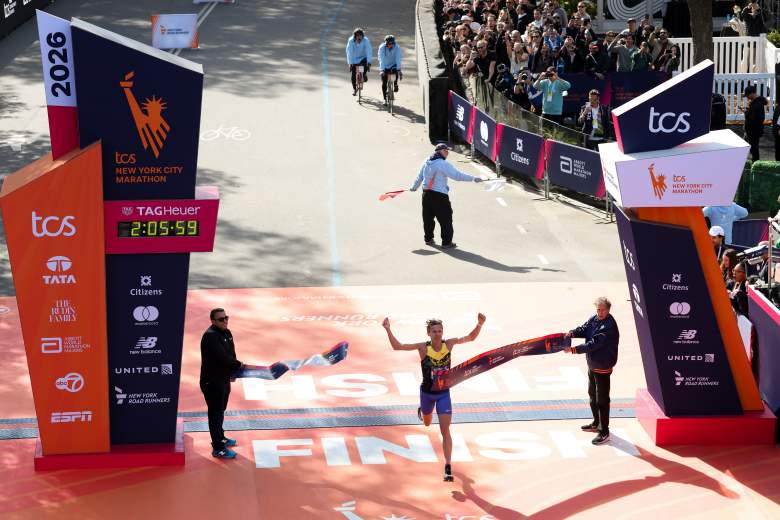
The 2026 anniversary edition added another memorable chapter. Sweden’s Andreas Almgren captured the men’s open title in his marathon debut, finishing in 2:06:01.
Kenya’s Sheila Chepkirui won the women’s competition in 2:24:36, while Hug and Debrunner claimed the men’s and women’s wheelchair championships. Nearly 60,000 athletes participated in the landmark event.
The Marathon’s Economic Impact Across Five Boroughs
For decades, New York City’s small businesses have experienced the race as both an economic opportunity and a logistical challenge. Neighborhood restaurants, coffee shops, bars, convenience stores, and retailers all feel the effects of the enormous crowds gathering outside their doors.
The financial impact has become increasingly significant. According to a 2025 economic impact study commissioned by New York Road Runners, the 2024 marathon generated approximately $692 million in economic activity across New York City, representing a 139% increase compared with 2019.
The study identified approximately $109 million in food and beverage spending by out-of-town visitors, $178 million in accommodations spending, and $51 million in retail shopping.
Although these figures represent broader citywide economic activity rather than revenue exclusively earned by independent businesses, they illustrate the enormous commercial influence of marathon weekend.
For independent businesses operating on tight margins, those increases can make marathon weekend one of the most valuable periods of the year. Restaurants can attract customers looking for breakfast before the race, coffee while watching runners, or celebratory meals afterward.
Bars can become gathering spots for spectators, while neighborhood shops benefit from visitors discovering establishments they might otherwise never encounter.
Mastercard Highlights NYC Marathon’s Impact on Small Businesses
Mastercard has helped highlight the New York City Marathon’s economic impact through research examining consumer spending at small businesses along the race’s 26.2-mile route.
According to the Mastercard Economics Institute, small restaurants and bars experienced a 22% increase in spending during the 2025 marathon, with spending increases peaking at approximately 40% between 2 p.m. and 4 p.m.
“One of the things that we try to do at Mastercard is we put the wind at the back of small businesses,” Ginger Siegel, Mastercard’s North America small business lead, said in an interview with Heavy Sports. “We actually look at our economic data to see, do things change in terms of spending? Do restaurants and bars do better when they’re along the route?”
Ahead of the 2026 marathon, Mastercard introduced its Race Ready guide, designed to help small businesses prepare for increased customer traffic through better staffing, inventory management, and demand forecasting.
“For a lot of businesses, it’s not just, we just got to grow, but they want growth that’s predictable, protected, and easier to manage,” Siegel explained. “They don’t just want to attract more customers, but they want to make sure they’re prepared to serve them when they come.”
Mastercard also highlighted neighborhood establishments such as LIC Bar in Queens and IndiCo Coffee Co. in Manhattan, which prepare for marathon crowds by increasing staffing and inventory. Siegel emphasized that understanding spending patterns can help these businesses turn a single busy day into a more manageable economic opportunity.
The company’s research also points to the growing importance of digital payments, as spectators increasingly rely on contactless transactions. For small businesses, adapting to those preferences could be just as important as preparing for larger crowds.
How the Marathon Became an Economic Engine
The marathon’s commercial influence has grown alongside its international reputation. As the event expanded from hundreds of participants into a competition drawing tens of thousands, the surrounding tourism economy developed with it.
Runners frequently travel with family members and friends, extending their spending beyond race registration and athletic equipment.
Hotels benefit from visitors staying multiple nights, restaurants serve travelers before and after the race, and retailers attract customers purchasing souvenirs, clothing, and other merchandise.
The 2024 marathon alone generated approximately $425 million in spending from out-of-town visitors, according to New York Road Runners. That figure helps explain why the marathon has become such a valuable fixture on the city’s annual events calendar.
The race also provides opportunities for neighborhood businesses to introduce themselves to an international audience. A visitor who stops at a Brooklyn coffee shop or Queens restaurant during marathon weekend may return during another trip or recommend the establishment to others.
Still, increased tourism does not eliminate the costs of hosting a major sporting event. Temporary road closures can complicate employee commutes, deliveries, and customer access.






50 Years, Five Boroughs: How the NYC Marathon Became a Global Phenomenon