
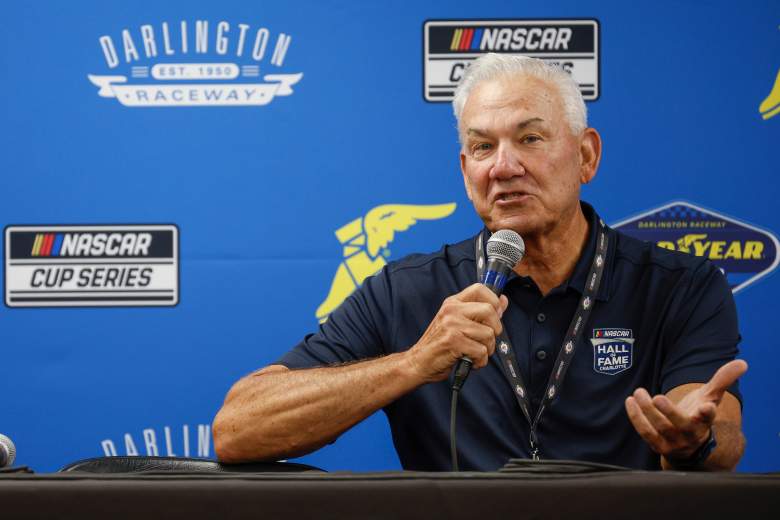
Dale Jarrett has opened up about the lasting impact of hard crashes in NASCAR after Darrell Waltrip’s family revealed his diagnosis of frontotemporal degeneration, with possible chronic traumatic encephalopathy (CTE).
The news has brought renewed attention to NASCAR concussion risks and the head injuries drivers faced for decades. Jarrett, who raced in NASCAR from 1982 to 2008, said drivers from his era often did not understand how repeated head impacts could affect them later in life.
He also recalled a time when drivers treated serious impacts as part of racing. Waltrip, 79, built a Hall of Fame career with 84 Cup Series wins and three championships before becoming one of NASCAR’s best-known broadcasters.
Darrell Waltrip’s CTE Diagnosis Brings NASCAR Concussion Risks Into Focus
Waltrip’s family said last month that the three-time NASCAR Cup Series champion has been diagnosed with frontotemporal degeneration complicated by possible CTE. They believe repeated injuries during his racing career could have played a role.
The Mayo Clinic describes CTE as a progressive brain disease linked to repeated head trauma. Doctors can only verify CTE postmortem. Researchers at Boston University found CTE in Fred Lorenzen after his death in 2024.
Jarrett said the news was difficult for former drivers who knew Waltrip.
“First and foremost, every one of us who have known Darrell for many years and understand the impact that he had in helping grow the sport of NASCAR, we’re saddened by what we were told and what we know at this point, and we’re all thinking and praying for him, Jarrett told USA TODAY Sports.”
Waltrip won 84 Cup races, three championships, the 1989 Daytona 500, the 1992 Southern 500 and five Coca-Cola 600s. His family said his symptoms remain limited and he is otherwise healthy.
Dale Jarrett Recalls How NASCAR Drivers Treated Head Injuries
Jarrett said NASCAR safety improved during his career, but drivers still faced major risks. Changes included restrictor plates at Daytona and Talladega in 1988, roof flaps, the HANS device and SAFER barriers.
“The side of it that we tend to forget sometimes is the dangerous side of the sport. Even though things had improved somewhat with safety initiatives as I came along versus what my dad and many of those competed in, it is a dangerous sport and competition to do.”
He said NASCAR concussion injuries were often dismissed. Jarrett compared the culture to his high school football days, when a hard hit was described as getting your bell rung.
“There was never even a thought that it might have been a concussion,” he said. “But once you understand what concussions are, you find out the impact of them and how many you may have had.”
Jarrett pointed to crashes at speeds above 150 mph and sometimes close to 200 mph.
“I go back to, you know, we used to hit concrete walls at well over 150 miles-an-hour and sometimes close to 200 miles-an-hour. And so, I’m not surprised. I know things that I go through myself from concussions through the years.”
NASCAR Safety Has Changed, But Concussion Concerns Remain
Jarrett suffered a documented concussion at Kansas Speedway in 2001 after contact with Bobby Labonte sent him into the outside wall. A major crash at New Hampshire in 2003 also helped end drivers’ racing back to the caution.
Jarrett said former NASCAR drivers have since been warned about the possible long-term effects of repeated concussions.
“I can assure you that many of us have been told that the possibility (of CTE) is there because of either the severity of some of the concussions that we may have had, or maybe just the sheer number of concussions. It wasn’t just getting your bell rung or just a headache. There was much more involved.”
He expects more former drivers to support research by donating their brains to science.
“I think that, now that we know more about (CTE), as these things happen, we will hear of more (former drivers) that are willing to give their brains (to science).”
NASCAR concussion monitoring has also improved. Jarrett said researchers at Wake Forest use a mouthpiece sensor to record head motion when impacts exceed 4 Gs.
“There always is more to do, and there are many doctors involved. (Concussions) will certainly be something that will always be at the forefront, even though it may not be talked about a lot. It’s happening behind the scenes. The drivers now have much more help in that regard than what has ever been available to NASCAR drivers through the years.”
NASCAR Hall of Famer Opens Up on the Dangers and Dark Side of Racing