
NASCAR’s revised short-track bumper package faces its biggest test yet at Martinsville Speedway, with Chase Briscoe warning that the changes could bring back a type of damage rarely seen in recent seasons.
The Joe Gibbs Racing driver believes the new rules will have a greater impact at the Virginia track because of the frequent contact between cars during restarts and tight turns.
NASCAR introduced the revised bumper structure in June to make contact more costly after drivers raised concerns about the Next Gen car absorbing heavy hits without suffering serious damage.
The package has already appeared at Bristol, Richmond and North Wilkesboro, but Martinsville presents different challenges. Briscoe believes the new NASCAR rules could even lead to damaged radiators during Sunday’s Xfinity 500.
Chase Briscoe Warns of NASCAR Bumper Package Impact at Martinsville
NASCAR introduced the revised front and rear bumper structure to make contact more consequential. The changes removed two Y-brackets from the front bumper frame and eliminated the high-density foam between the frame and bodywork. NASCAR also removed similar foam from the rear bumper.
Briscoe believes Martinsville will show the biggest difference because drivers regularly make heavy contact as they fight for position.
“I definitely think this will be the one that makes the most difference,” Briscoe said. “You know, truthfully, just I think a lot of the changes for this bumper structure came for Martinsville.”
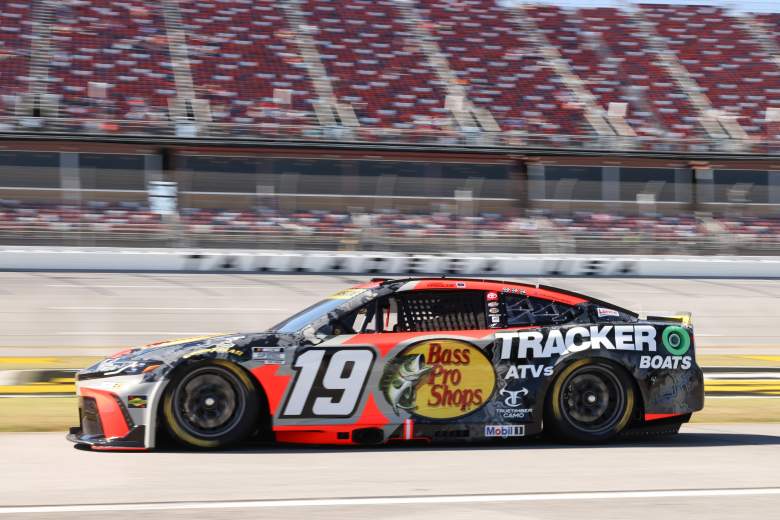
The No. 19 Toyota driver also recalled a heavy impact during the spring race at Martinsville.
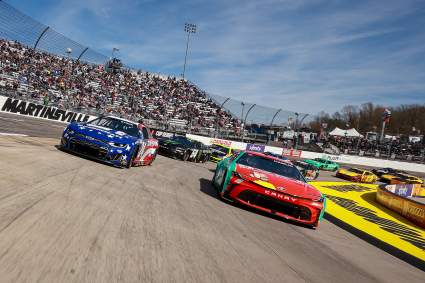
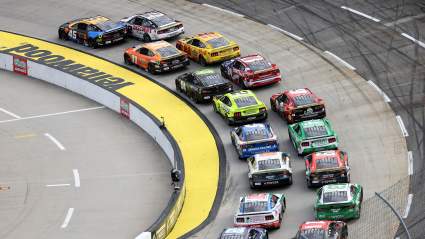
“You kind of have that big stack up a lot of the time getting into the corner and yeah, I think I maybe it was in the spring race this year. I mean, I had like a 25G bumper tag thing, which is just insane,” Briscoe said. “It’s bigger than a lot of wrecks sometimes. So yeah, this will be the one I think has the biggest difference maker.”
He explained that Bristol, Richmond and North Wilkesboro do not produce the same regular bumper-to-bumper contact seen at Martinsville.
NASCAR Could See Radiators Knocked Out at Martinsville
Briscoe believes the revised NASCAR short-track package could bring back mechanical damage associated with earlier generations of stock car racing.
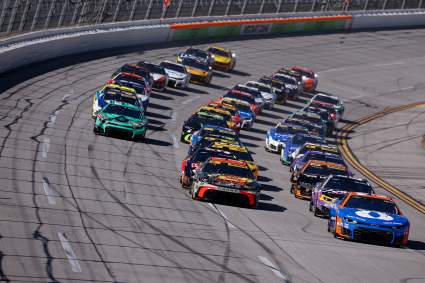
“You know, Bristol, you just don’t really get a lot of stack-ups per se, and even North Wilkesboro and Richmond when we ran it, you just don’t have those big stack-ups where Martinsville, you have that all the time.”
He warned that the changes could lead to radiator damage when several cars make contact.
“I definitely think that is something that it would not surprise me if somebody knocks a radiator out this weekend, as we did in the old days, just because it is very different at Martinsville than other places we go,” Briscoe said. “So yeah, it’ll be interesting to see how that plays out.”
Martinsville’s tight corners and limited space often force drivers into contact, especially during restarts. The revised bumper structure leaves less protection against those impacts.
Steve Letarte Explains Why NASCAR Changed the Bumpers
Former Cup Series crew chief and NBC analyst Steve Letarte said drivers pushed for the bumper changes after experiencing repeated heavy hits without enough damage to slow the cars.
“The rule change was kind of a driver-requested rule change,” Letarte said. “The front and rear bumpers in these cars are very firm. They have high-density foam in the rear and front of the bumper and the nose. We’ve seen at Martinsville where these cars make very significant contact without the car sliding or wrecking.”
Letarte explained that drivers wanted NASCAR to make those impacts carry greater consequences.
“And for that reason, these drivers, lap after lap after lap, are getting major hits from the car behind them. They said, ‘Hey, man, it shouldn’t be this way.’ You shouldn’t be able to hit someone that hard without doing damage or wrecking the car.”
Although he supports the idea, Letarte admitted that the results remain uncertain.
“So, the removal of the foam and some of the bumper structure. I like the concept. I don’t know it will work out. If I was a crew chief, I’d be nervous as well. If there’s a stack-up on a restart, we could absolutely see some radiators knocked out.”
Letarte also compared the expected racing to the sport’s earlier years, when heavy contact often caused mechanical failures.
“I could tell you in 1996 if there was a stack-up on the restart, you’re knocking the radiator out,” he said.
The Xfinity 500 will provide NASCAR with its most significant test of the revised short-track package so far. Briscoe and Letarte both expect Martinsville’s frequent contact to reveal whether the changes will lead to more mechanical damage.




NASCAR Short-Track Package Faces Biggest Test Yet as Driver Warns of Martinsville Damage