
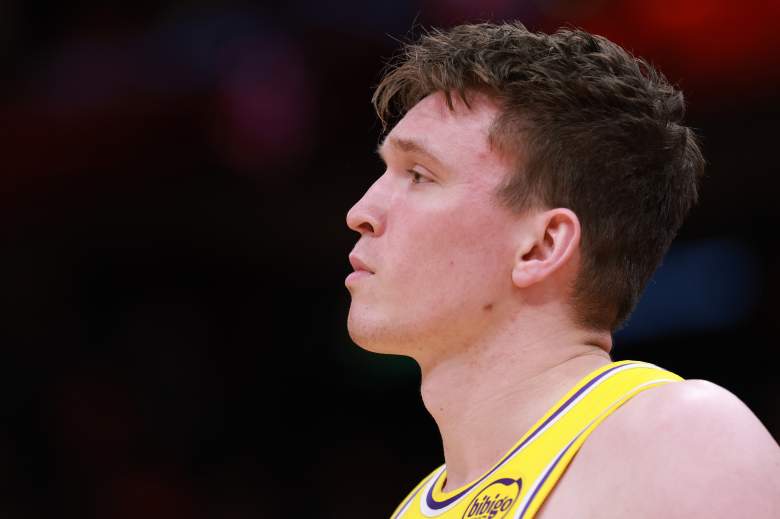
Not long ago at all, Dalton Knecht looked like one of the steals of the 2024 NBA Draft. Selected 17th overall by the Los Angeles Lakers, the Tennessee standout wasted little time making an impression, producing some eye-catching performances and briefly looking like a potential long-term starter. If not that, at least he had the one skill that would keep him in work – jump shooting.
Less than two years later, however, the Lakers had already given up on him. They tried to (quite literally) give him away in trade, could not even do that, and ended up waiving him outright. Not even the shooting was enough.
So, what went wrong?

Knecht’s Hot, Hot Start
Knecht arrived in Los Angeles as an accomplished college scorer, and supposedly much more ready to go than most. He was already 23 years old on draft night, which is almost unheard of in the modern game, making him older than almost all of his fellow rookies. Even with the reduced perceived upside this conveyed, though, Knecht’s shooting ability and offensive confidence made him an attractive prospect.
His first few months in the NBA appeared to justify it. In just his first month in the league, Knecht exploded for a 37-point performance against the Utah Jazz, making nine three-pointers and tying the NBA rookie record for threes in a single game. He also enjoyed a nine-game stretch in which he averaged 18.9 points per contest. For a Lakers team looking for additional perimeter scoring, Knecht appeared to be an excellent find.
All in all, in his rookie season, Knecht appeared in 78 games, averaging 9.1 points and 2.8 rebounds in 19.2 minutes per game. He shot 46.1% from the field and 37.6% from three-point range, respectable figures for a young perimeter player. He even started 16 of them, and keeping him out of the so-bad-it-got-its-own-Wikipedia-page Luka Doncic trade was supposed to be a big part of the heist.
However, there were warning signs beneath the promising scoring numbers. Knecht’s biggest problem was his defence, an area that became increasingly difficult for the Lakers to overlook. And even as a shooter, his impact became quickly limited.
The Double Downfall
While Knecht possesses good athleticism and touch from all over, he struggles to stay in front of opposing players going the other way, making him a target who can be drawn into any match-up and be attacked. His lateral movement, defensive positioning and ability to navigate screens were all concerns; opponents could target him in isolation situations, forcing the Lakers to make a choice between keeping his shooting on the floor and protecting themselves defensively. It is a choice Knecht often lost – he put forth defensive effort, but not defensive instincts.
His offensive production also became less reliable. After an impressive start, Knecht experienced a significant shooting slump, including a particularly difficult December. His ability to generate open looks through movement dwindled, while his defensive limitations remained. A shooter needs to find spaces, anticipate plays and cut hard – too often, Knecht would just stand there, or be out of position entirely.
Then came an unusual episode that may have had a knock-on effect on his confidence. In February 2025, having kept him out of the Doncic deal, the Lakers subsequently agreed to trade Knecht, Cam Reddish and draft considerations to the Charlotte Hornets in exchange for centre Mark Williams. However, the deal was rescinded after Williams failed his physical examination, sending Knecht back to Los Angeles.
It will have been an awkward situation for a young player who had effectively been told that his team was prepared to move on from him. It is however, part of the business of basketball. While it is impossible to know exactly how much the experience affected Knecht’s confidence, his standing within the organisation never really recovered. And he did not seem to get any better on the court.

Knecht Needs A Second Wind Already
The arrival of Doncic changed the Lakers’ offensive requirements. The team needed players who could complement its two ball-handling superstars, space the floor and contribute defensively. Knecht’s shooting remained useful, but his inability to consistently defend or find open space made him a difficult fit.
The numbers from his second season tell the story. In just 54 games in 2025-26, Knecht averaged just 4.2 points and 1.4 rebounds in 10.2 minutes per game. His three-point percentage dropped from 37.6% to 34.2%, while his appearances became increasingly limited, starting just once and eventually falling out of J.J. Redick’s regular rotation.
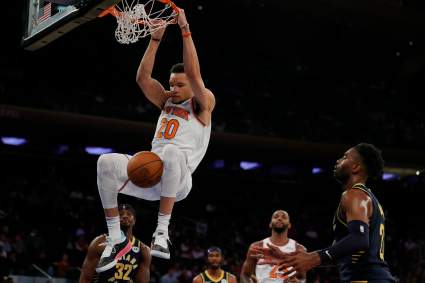
As of today, Knecht’s career NBA regular-season averages consequently stand at 7.1 points and 2.2 rebounds across 132 games, with 36.8% shooting from three-point range. Most of it came early. Of course, the scoring outbursts, physical profile and smooth stroke still draw both the eye and the flourish of the pen; just three days after the Lakers waiver, the New York Knicks signed Knecht to a two-way contract, giving him an opportunity to bounce back. At his advanced age, however, he will have to take it.
There is still a reason to believe Knecht can become a useful NBA player. His shooting ability has not disappeared, and his rookie season demonstrated that he can produce points against NBA opposition. At 25, he also has time to improve, if only as a bounce-back to where he was. That time is short, though. By way of example, Knecht is older than all of Cade Cunningham, Anthony Edwards and Scottie Barnes. This is not an upside play.
The challenge is that being a good shooter is no longer enough. To earn consistent minutes, Knecht must become a more dependable defender, improve his understanding of defensive rotations and demonstrate that he can contribute when his shot is not falling. Or failing that, maybe he just needs to become a great shooter.

What Happened to Dalton Knecht?